| Indigenous Term | Yee naaldlooshii (Navajo): "by means of it, it goes on all fours," referring to the animal skin worn by the practitioner. The most feared category of Navajo witch. One of several varieties of ánti'įhnii witchcraft. |
| Location | Navajo Nation, Four Corners region. Sightings extend throughout the American Southwest and beyond. Skinwalker Ranch, Uintah County, Utah: 512 acres bordering the Ute tribal reservation. |
| Key Historical Event | The Navajo Witch Purge, 1878. Forty suspected witches killed within the tribe following the trauma of the Long Walk and return. Reflects the practical weight the tradition carries within the community. |
| Skinwalker Ranch | Sherman family, 1994 to 1996. Robert Bigelow / NIDS investigation, 1996 to 2004. US government AAWSAP programme, 2008 to 2010, $22 million. Brandon Fugal, 2016 to present. Trademarked as an entertainment property, 2020. |
| Primary Source | Kelleher, Colm and Knapp, George. Hunt for the Skinwalker. Simon and Schuster, 2005. |
| The Central Question | The Navajo tradition and the non-indigenous Dogman file describe entities that share physical features through entirely different frameworks. Whether they describe the same thing is the most contested question this series has encountered. |
| Status | Unresolved on all counts. No physical evidence. No peer-reviewed findings from the ranch. The Navajo tradition is explicitly not for outside examination. The Dogman file cannot proceed as if those facts do not exist. |
Contents
- A Note on Sources and Method
- A Witch, Not a Creature: The Navajo Tradition on Its Own Terms
- Clyde Kluckhohn and the Anthropological Record
- The Uintah Basin: A Territory with a History
- The Ute, the Navajo, and the Canine Figure in the Basin
- The Sherman Family, 1994 to 1996
- Bigelow, NIDS, and the Science of High Strangeness
- The Pentagon Takes Notice
- The Canine Element: Where the Dogman File Intersects
- A Skinwalker Is Not a Dogman: Separating the Traditions
- Neither Alien Nor Animal: The Ultraterrestrial Hypothesis
- Hoax, Hallucination, or Something Else: Assessing the Ranch
- Final Thoughts
- Primary Sources
- The Dogman Files Series
- FAQ
The word skinwalker has become one of the most saturated terms in paranormal media. Six seasons of a History Channel series, a $22 million US government research programme, a succession of books, podcasts and documentary films, a branded Utah ranch operating as a tourist and research destination, a Reddit folklore subculture producing thousands of encounter stories: by 2025, the term had infiltrated mainstream entertainment so completely that it risked becoming interchangeable with the generic language of horror content. In 2020, Adamantium Real Estate, the company that owns Skinwalker Ranch, trademarked the name for entertainment services, cups, mugs and shirts. The transformation from living sacred tradition to branded merchandise was, by that point, complete.
Behind the drone footage, the radiation sensors and the production meetings, there is a tradition considerably older, darker and more serious than anything so far conceived by the media executives: a tradition belonging to the Navajo people that their community explicitly does not want discussed by outsiders, that carries genuine spiritual weight within the culture, and that describes entities with a direct and documented relationship to the canine creature phenomenon this series has been investigating.
When J. K. Rowling incorporated skinwalker lore into the Pottermore website in 2016, reframing the yee naaldlooshii as a benign Animagus figure in an invented North American wizarding tradition, Cherokee Nation academic Adrienne Keene responded with a statement that applies equally to the History Channel, to the paranormal tourism industry, and to any investigation, including this one, that approaches the tradition from outside: these are not things that need to be discussed by outsiders, at all. That is how our cultures survive.
"It's not 'your' world. It's our (real) Native world. And skinwalker stories have context, roots, and reality. You can't just claim and take a living tradition of a marginalised people. That's straight up colonialism and appropriation." — Adrienne Keene, Cherokee Nation academic, responding to J.K. Rowling, March 2016. Full account at Native Appropriations. Guardian coverage: theguardian.com
A living, sacred tradition belonging to a community that endured colonial dispossession, forced marches, and the systematic destruction of its cultural practices has been transformed into a commercial product so thoroughly that most people engaging with it have no idea they are not encountering a piece of American folklore, but a fragment of a tradition to which they were never meant to have access.
This case file will not attempt to examine the Navajo tradition from within. Instead, it turns to the documented public record: the anthropological literature that predates its transformation into entertainment, the specific history of the Uintah Basin and its non-indigenous witness accounts, the government-funded investigation triggered by a Utah ranch, and the central question on which this entire series rests. The yee naaldlooshii, the Beast of Bray Road, the Michigan Dogman, Black Shuck and whatever has been moving through the forests, fenlands and boundary places of three continents for nine centuries: are they the same thing, described through different cultural vocabularies? The answer may never be established with the certainty that scientific investigation demands. The question is real, and the Navajo tradition offers information the non-indigenous witness record does not.
A Note on Sources and Method
The Navajo skinwalker tradition is documented in anthropological literature from the 1940s onward, most substantially in Clyde Kluckhohn's 1944 study Navaho Witchcraft. Beyond Kluckhohn, there is Margaret K. Brady's 1984 work on skinwalker narratives among Navajo children, Kimberly Jenkins Marshall's 2016 study of the tradition's persistence in neo-Pentecostal Navajo communities, and a broader sociological literature examining how the tradition functions within Navajo society. All of it consistently notes the same thing: the tradition is not fully available for outside examination, accounts reaching researchers are partial and filtered, and the cultural context within which the yee naaldlooshii makes sense is not accessible to people outside the community.
The Skinwalker Ranch material rests on a different evidential base entirely: testimony from a non-indigenous Utah farming family, published findings from a privately funded science team, partly declassified US government records, and the ongoing output of a History Channel television series now in its sixth season. Conflating this with the Navajo tradition, which most popular treatments do routinely, distorts both. This article holds them separately.
A Witch, Not a Creature: The Navajo Tradition on Its Own Terms
Within Navajo culture, the yee naaldlooshii is not a creature but a person: specifically, a witch who has deliberately chosen to acquire supernatural powers by committing the most serious acts that transgress Navajo moral code, most commonly the killing of a close family member. This distinction is almost universally lost in non-indigenous treatments of the subject, and it is the point on which everything else in the tradition turns.
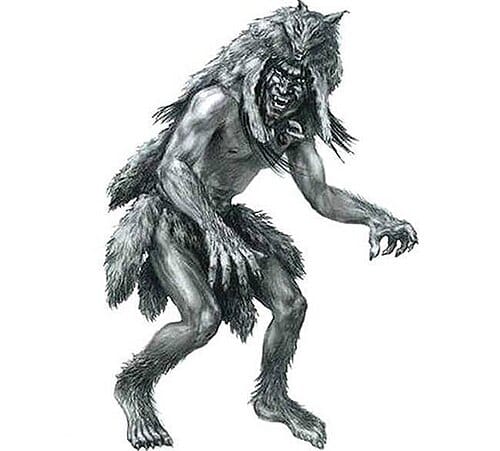
The Navajo understand the relationship between good and evil power as one of parallel practice rather than opposition. Medicine men and medicine women who work for healing and community wellbeing draw on the same spiritual forces as those who choose to work against the community. The yee naaldlooshii is the dark inversion of the healer: a practitioner who has turned knowledge toward harm, wearing the skins of predatory animals to acquire their speed and attributes, moving at night among people who would recognise them by day. The word itself describes the mode of movement, going on all fours, encoding a deliberate choice rather than a natural state.
For those who know what to look for, the skinwalker tradition carries within it a set of specific physical markers: in animal form, the entity's eyes are recognisably human; in human form, they look like those of an animal. It can move with unnatural speed, mimic human voices and animal sounds to draw targets into vulnerable positions, and possess the bodies of those whose eyes meet its gaze. The tradition is not concerned with the physical form that results from the transformation, but with the moral weight of the choice that produced it.
The taboo against discussing the yee naaldlooshii with outsiders is not incidental; it is part of the tradition's internal logic. Speaking of the entity is believed to draw its attention, and explaining its powers to those without the cultural framework to handle them safely risks both misrepresentation and harm. As Adrienne Keene has noted, this is not an appeal to sentiment but a means of survival. The taboo functions as a protective boundary: remove it, and the tradition becomes vulnerable to extraction, distortion, and eventual loss.
Clyde Kluckhohn and the Anthropological Record
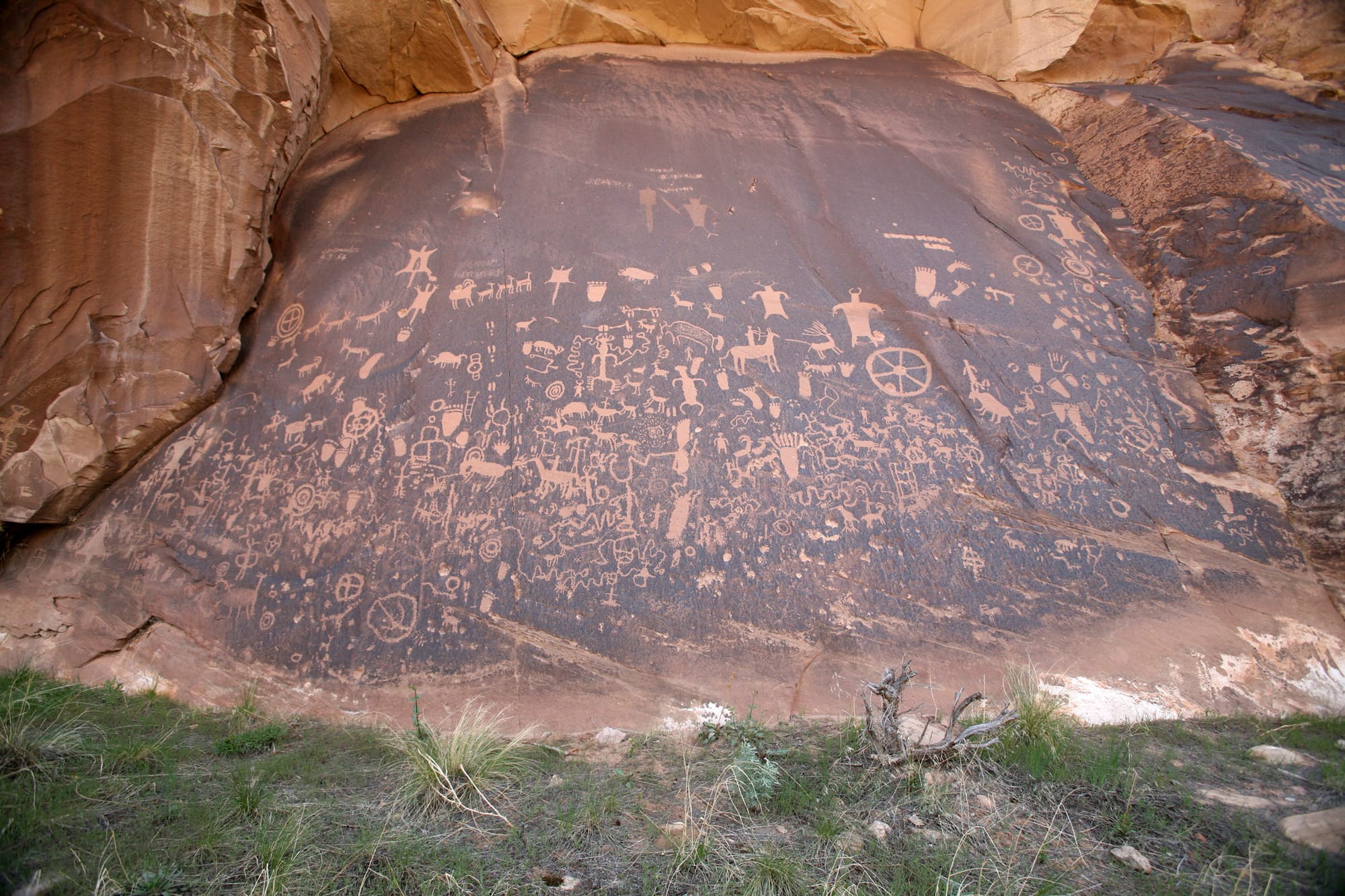
Clyde Kluckhohn's Navaho Witchcraft, published in 1944 after two decades of fieldwork in the Southwest, remains the most thorough external examination of the tradition available to non-Navajo researchers. Kluckhohn, working within the anthropological conventions of his era and with the access that a long-established relationship with Navajo communities afforded him, described the skinwalker complex as a coherent social institution serving specific community functions rather than a body of superstition awaiting rational debunking.
His core finding was that Navajo witchcraft beliefs, including the yee naaldlooshii, function to regulate social anxiety, provide explanatory frameworks for misfortune, and reinforce the community's moral code. The skinwalker is the person who chose power over community, and became something that can no longer live among people as a result. That social function does not require the skinwalker to be literally real to operate. Kluckhohn was equally careful not to collapse function into fiction. The consistent accounts he gathered from individuals describing actual encounters were not straightforwardly explicable as pure social mythology, and he noted the distinction without resolving it.
In the eighty years since Kluckhohn's fieldwork, the tradition has not diminished within Navajo communities. The 1878 Witch Purge, in which forty suspected witches were killed within the tribe following the trauma of the Long Walk and the return to the reservation, demonstrates the practical weight the tradition carries. The Purge occurred because people within the community believed themselves to be under active attack from yee naaldlooshii, not in a metaphorical sense but in the immediate and mortal sense that drove them to take lethal action.
The Uintah Basin: A Territory with a History
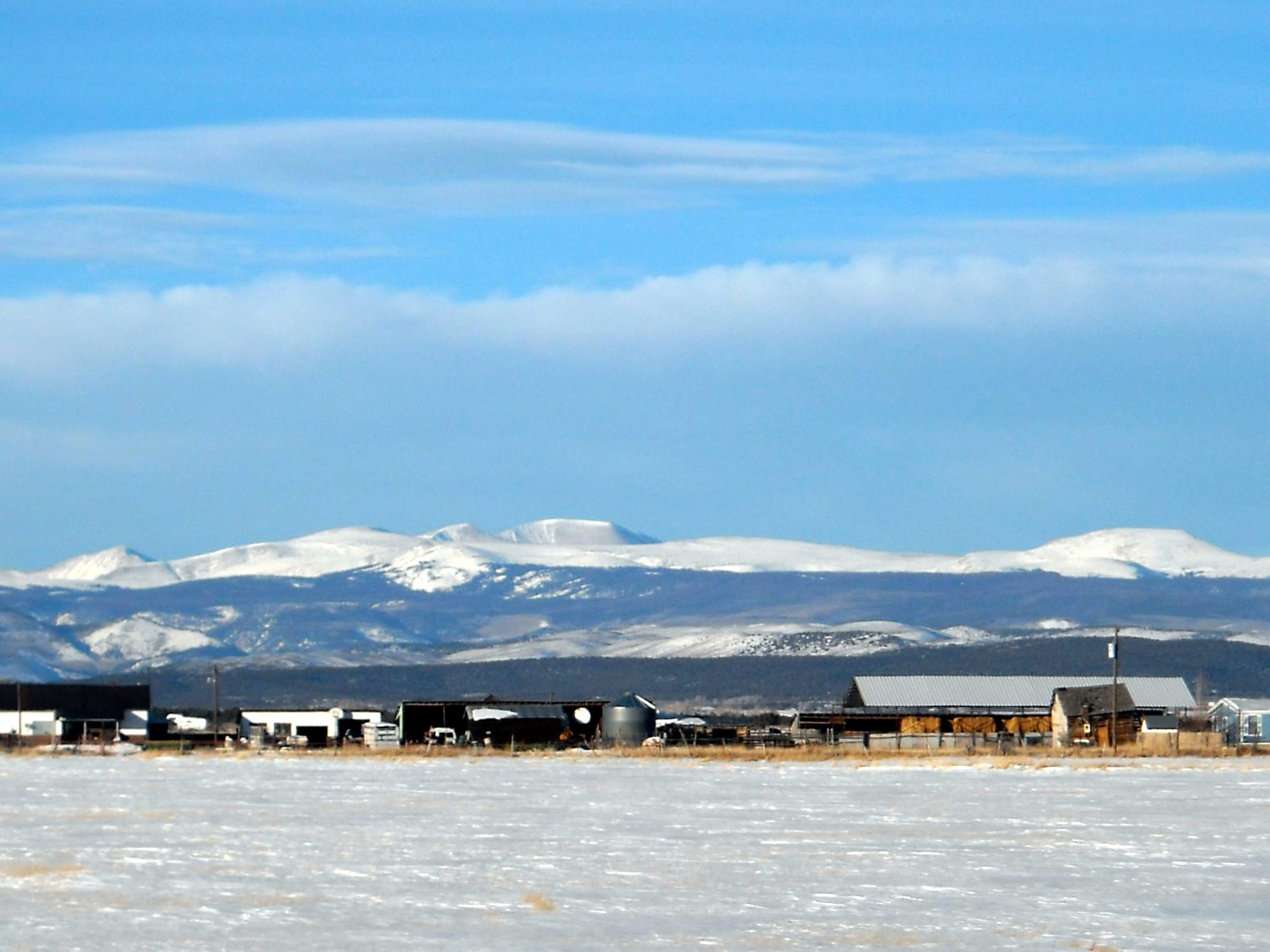
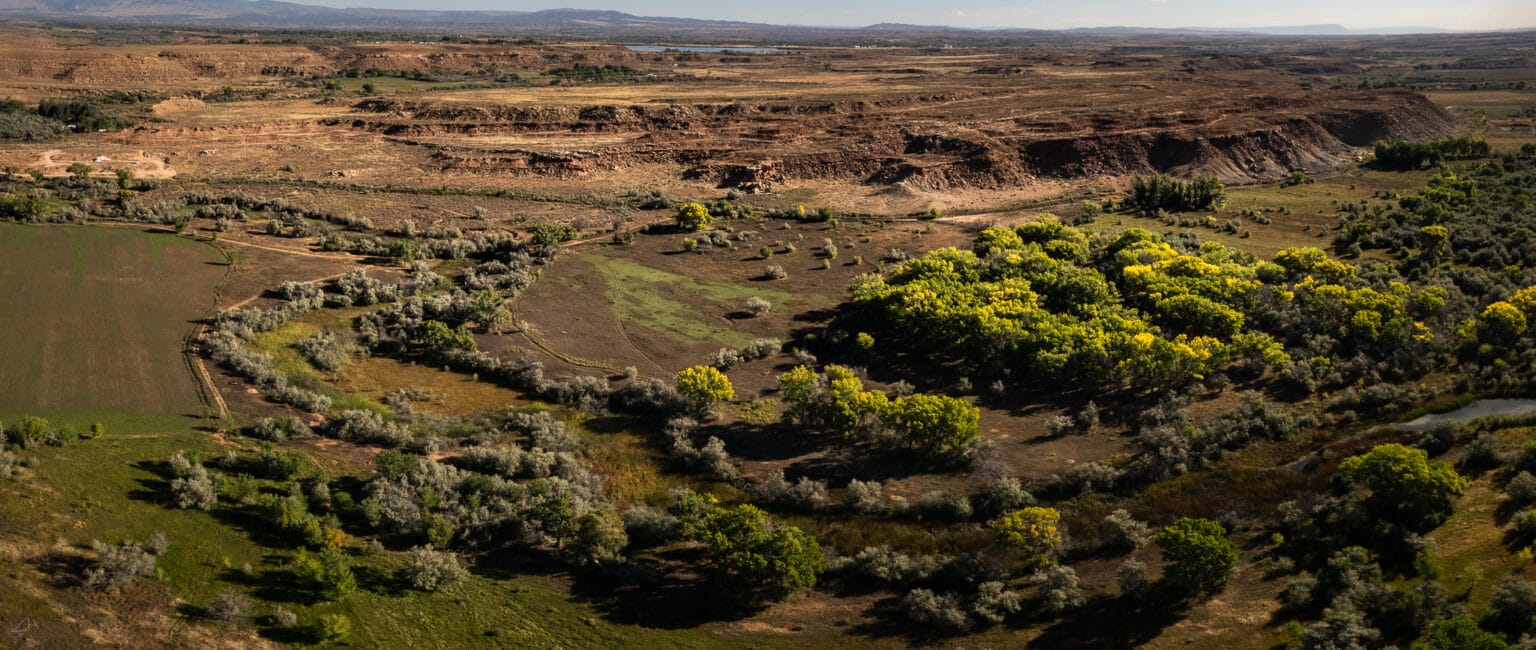
Skinwalker Ranch sits in the Uintah Basin in northeast Utah, a broad high-desert valley bounded by the Uinta Mountains to the north and the Book Cliffs to the south, drained by the Green River and its tributaries. Despite its media profile, it is not an isolated or unusual piece of American geography but a working agricultural region with a documented human presence stretching back thousands of years and a relationship with anomalous aerial phenomena that predates the Sherman family's purchase by several decades.
The earliest written account of unusual aerial phenomena in the basin appears in the journal of Franciscan missionary Silvestre Vélez de Escalante, who passed through the region in 1776 and described fiery lights appearing over his campfire. This is a single account from a single observer in a pre-scientific era, carrying all the limitations that implies. Even so, it points to a region already associated with unusual activity, suggesting that the reputation for strangeness reaches back at least a century before the modern record. UFO reports from the basin accelerated in the 1950s, reaching a volume that local police departments stopped filing incident reports by the 1970s. Retired science teacher Joseph Hicks documented more than 400 separate UFO sightings in the basin, finding consistent correlations with livestock incidents in the surrounding area.
In 1998, a police officer at Bottle Hollow, a 420-acre man-made reservoir on Ute land immediately adjacent to the ranch, watched a large light plunge into the water and then re-emerge, flying off into the night sky. Four years later, four young men standing on the reservoir's shoreline watched a blue-white ball enter the lake, dive to a few feet from shore, and re-emerge as a shimmering belt of light that performed a brief aerial movement before disappearing below Skinwalker Ridge. These incidents are documented in Hunt for the Skinwalker and fall outside the ranch boundary, establishing that the anomalous activity was not confined to a single property.
The basin also contains one of the most significant concentrations of oil and gas infrastructure in the American West, perforated by more than 8,000 gas wells and 2,000 oil wells, with documented levels of environmental contamination including benzene and other volatile carcinogenic compounds. Neurologist Michael Persinger's tectonic strain theory proposes that geophysical forces including seismic activity and geomagnetic fields can produce neurological effects in human observers including visual disturbance, altered perception, and intensified anxiety responses. This baseline does not explain cattle mutilations or the Sherman wolf account, but it provides a context within which some categories of witness testimony may need more careful assessment than advocates of the phenomena have been inclined to apply. Any serious investigation of the basin must account for it alongside the more extraordinary explanatory frameworks that tend to dominate coverage.
The Ute, the Navajo, and the Canine Figure in the Basin
The ranch sits adjacent to the Uintah and Ouray Indian Reservation, home to the Ute tribe, whose adversarial history with the Navajo spans several centuries. During the American Civil War, Ute bands allied with US Army Colonel Kit Carson in a military campaign against the Navajo, resulting in the forced march of the Navajo people to a reservation at Fort Sumner, New Mexico, the Long Walk. The Navajo survived four years of internment before being allowed to return to their territory in 1868.
The Ute have maintained for generations that the Navajo placed a curse on their land and their people in response to that betrayal, sending skinwalkers into the Uintah Basin as a consequence. Betsy Chapoose, the Cultural Rights and Protection Director for the Ute, has said she has personally no knowledge of such a curse, and its historical accuracy is contested even within the Ute community. What is not contested is that the Ute believe the land bordering Skinwalker Ranch to be on the path of the skinwalker, that they have traditionally avoided the property, and that their own oral tradition of canine creature encounters in the basin extends back, by their own account, at least fifteen generations.
The Ute accounts documented from the area carry specific physical descriptions rarely recorded in the wider literature. Ute witnesses have described entities near the ranch and on the road to Fort Duchesne in terms that sit entirely within the Dogman profile documented across the rest of this series: humanoid figures with canine heads, large black hairy bipedal figures moving at extreme speed, entities with coal-red eyes. These are specific physical descriptions from witnesses within a tradition that predates the arrival of either the Sherman family or the Navajo terminology being applied to the property, and their accounts exist independently of the Navajo skinwalker framework, describing something with the same physical consistency found in Wisconsin, Michigan and East Anglia.
The Ute oral tradition locates the entities in Dark Canyon, a nearby formation, rather than on the ranch itself. This detail distinguishes the Ute account from the non-indigenous tendency to fix the phenomenon at a specific property, a framing that serves media purposes but does not reflect how the tradition operates.
Case Summary · Key Facts
- The yee naaldlooshii is a Navajo witch, a person who has chosen to acquire power through transgression, not a biological creature or supernatural being in the sense those terms carry outside the tradition. A skinwalker is not a Dogman.
- The Navajo tradition explicitly discourages discussion with outsiders. Any serious investigation of the canine entity phenomenon must acknowledge and respect this rather than work around it.
- Clyde Kluckhohn's 1944 Navaho Witchcraft remains the most thorough external documentation of the tradition, distinguishing between the social function of the belief and its truth value without dismissing either.
- The Navajo Witch Purge of 1878, in which forty suspected witches were killed within the tribe, demonstrates the practical weight the tradition carries within Navajo life, not as metaphor but as the direct cause of lethal communal action.
- The Uintah Basin has a documented history of aerial anomalies predating the Sherman family purchase by decades, with over 400 UFO sightings catalogued by local researcher Joseph Hicks and specific incidents at Bottle Hollow reservoir on Ute land adjacent to the ranch.
- Ute witnesses have described canine humanoid entities near the ranch and on the road to Fort Duchesne with specific physical detail, predating and independent of the Navajo skinwalker framework. Their tradition places these entities in Dark Canyon rather than on the ranch itself.
- The Sherman family reported cattle mutilations, UFO sightings, poltergeist activity and encounters with large canine creatures between 1994 and 1996. They sold the property to Robert Bigelow for $200,000.
- The NIDS investigation admitted difficulty obtaining evidence consistent with scientific publication despite years of surveillance and instrumentation.
- A $22 million US government research programme, AAWSAP, was partly triggered by a DIA official's personal experience at the ranch. Most of its technical reports remain unpublished.
- The most significant canine encounter at the ranch, Terry Sherman's confrontation with a wolf-like animal three times the size of a normal wolf that multiple rifle shots at close range appeared not to affect, corresponds to bipedal canine accounts from Wisconsin, Michigan, East Anglia and Yorkshire, but was not bipedal. The distinction is important.
The Sherman Family, 1994 to 1996
Terry and Gwen Sherman purchased the property in 1994 with the intention of establishing a cattle operation. The ranch had been vacant for seven years before their purchase, its previous occupants, the Myers family, having lived there without reported incident for six decades. The Shermans discovered on moving in that the previous owners had installed deadbolts on every interior and exterior door including kitchen cabinets, and heavy chains and iron stakes at both ends of the building that appeared to have served as anchor points for large guard dogs. No explanation for these installations was available from the Myers family.
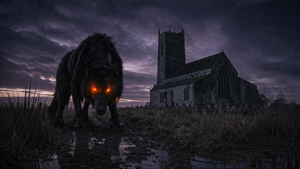
The Shermans reported the onset of unusual activity almost immediately: lights in the sky of varying configurations, cattle discovered dead or injured in ways inconsistent with known predators, poltergeist-like disturbances within the house, and encounters with large animals whose behaviour did not correspond to known species. The most significant animal encounter occurred when Terry Sherman confronted what he described as a wolf approximately three times the size of any wolf he had previously seen, approaching his cattle pen. He fired at the animal at close range with a rifle, but the shots produced no visible effect, and the animal retreated without leaving a blood trail or any physical evidence of having been struck. A second large animal seen on the property at a different time was described as resembling a hyena in body shape but considerably larger than any known species.
The Shermans reported approximately 100 incidents over eighteen months. Their story reached the public through an article by journalist Zack Van Eyck published in the Deseret News in June 1996, which attracted the attention of Robert Bigelow. The Shermans sold the property the same year for $200,000, reportedly having lost money on the transaction, and Terry Sherman remained on the property as a caretaker during the NIDS investigation. The fact that the primary source of many of the more extreme accounts is a man who retained a financial relationship with the property after selling it is noted by sceptics as a relevant factor in assessing the testimony. This is a fair point.
Bigelow, NIDS, and the Science of High Strangeness
Robert Bigelow was a Las Vegas real estate developer who made his fortune in budget hotel chains before founding the National Institute for Discovery Science in 1995, a privately funded organisation dedicated to the scientific investigation of anomalous phenomena. He assembled a team that included PhD scientists, former law enforcement personnel and military veterans, equipped the ranch with comprehensive surveillance and detection instrumentation, and set up observation posts maintained around the clock. Retired US Army Colonel John B. Alexander, one of the NIDS consultants, described the programme as an attempt to get hard data using a standard scientific approach.
The results were, by the team's own account, frustrating. The investigators reported witnessing phenomena consistent with what the Shermans had described: unusual lights, equipment malfunctions, animal incidents. The phenomena appeared, in Alexander's assessment, to anticipate the team's movements and confound their attempts at documentation at critical moments. One NIDS consultant described what he called a pre-cognitive sentient intelligence at work on the property. The programme ran for several years before NIDS ceased active operations in 2004, having produced, by the team's own admission, difficulty obtaining evidence consistent with scientific publication. Colm Kelleher, the biochemist who led the day-to-day investigation, and journalist George Knapp published the most complete non-classified account of the NIDS period in Hunt for the Skinwalker in 2005. The book describes close to 100 incidents documented by the NIDS team, none of which produced reproducible physical evidence of the phenomena claimed.
One phenomenon the book discusses with particular care is the hitchhiker effect: the apparent tendency for unusual experiences to follow researchers home from the property. Several NIDS team members reported poltergeist-like activity in their own residences after extended periods at the ranch, equipment failures of a non-standard kind, and personal sightings connected to their work at the property. Kelleher and Knapp are appropriately cautious in presenting this, reporting what was claimed rather than what was established, a distinction the book generally maintains with more discipline than its subject matter might be expected to encourage.
The Pentagon Takes Notice
The involvement of the US government in the Skinwalker Ranch story is well documented, though its precise scope and conclusions remain partly classified. In 2007, Senate Majority Leader Harry Reid of Nevada, working with Senators Daniel Inouye and Ted Stevens, secured $22 million in Department of Defense funding for a programme designated the Advanced Aerospace Weapon System Applications Program, AAWSAP. The programme was administered through a contract awarded to Bigelow Aerospace Advanced Space Studies and included Skinwalker Ranch as one of its focal points.
The trigger for Reid's involvement was a visit to the ranch by Defense Intelligence Agency official James Lacatski, who had read Kelleher and Knapp's book. Lacatski contacted Bigelow, obtained permission to visit the property, and had an experience there that he described as supernatural. He reported this to Bigelow, who passed it to Reid, and the chain of events that followed produced one of the larger anomalous research programmes in US government history. The programme generated dozens of technical reports, most of which have not been publicly released. The Pentagon's subsequent All-domain Anomaly Resolution Office characterised the programme's deliverables as lacking utility for defence intelligence, a position that sceptics cite as confirmation that the phenomena did not survive rigorous institutional scrutiny, and that proponents read as bureaucratic deflection from material too sensitive for routine disclosure.
In 2016, Bigelow sold the ranch to Adamantium Real Estate, later identified as belonging to Utah property developer Brandon Fugal, for a reported $4.5 million. Fugal has since operated the property in partnership with the History Channel's ongoing series. The combination is simultaneously the most sustained scientific investigation of any single alleged anomaly hotspot in television history and a piece of entertainment product whose commercial incentives are in permanent tension with the integrity of its findings. In 2020, Adamantium trademarked the name for entertainment services, with cups and mugs following in 2021.
The Canine Element: Where the Dogman File Intersects
The Sherman family's encounter with an oversized wolf impervious to rifle bullets is the most cited canine encounter from the ranch, but focusing on it alone obscures the broader pattern. The Hunt for the Skinwalker investigation archive records over 600 anomalous incidents on the property between 1994 and 2016, within which canine entity sightings are comparatively rare. What emerged when Kelleher and his team expanded their work beyond the ranch, interviewing neighbours and residents across the wider Uintah Basin from 2008 onward, was that the bipedal Dogman phenomenon was not centred on the ranch itself but surrounding it.
Dozens of witness accounts gathered between 2008 and 2011 described upright, wolf-like or dog-like creatures in proximity to the property. Investigators deliberately arrived unannounced at witnesses' homes to minimise the possibility of coordinated storytelling, and the resulting testimonies were, by the team's own assessment, remarkably consistent. Two witnesses, a father and son identified as Lamar and Craig, described a thin, coyote-like creature with coarse reddish hair standing upright. When it fled, it ran on two legs at a speed that outpaced a pursuing pit bull, moving not with the bounding gait of a canid but with the running stride of a person. Joseph Hicks recorded a separate account in which two women encountered a bipedal wolf-like figure standing silently in a graveyard near Roosevelt. As they drove away, it ran alongside their vehicle on two legs for several miles before veering off into the dark.
An additional observation from the NIDS team's first night on the property introduces a further category of encounter. Looking up into a tree, Kelleher described a large humanoid figure with yellow eyes watching the team, which disappeared the moment a rifle was raised toward it. This account comes from a single observer and is documented retrospectively in a published book, carrying the evidential limitations that implies. It does not stand alone as proof, but it aligns with the wider basin pattern.
Terry Sherman's initial encounter with the ranch wolf also requires context. Before the animal he would later fire upon, there was an earlier incident: a wolf the size of a small car approached the family calmly within days of their arrival, allowed Sherman to pat it on the head, and walked away. This first animal displayed no aggression, while the second, encountered at the cattle pen and shot at multiple times, did. Whether these represent separate animals or the same entity under different conditions cannot be established, but the testimony describes something that does not align with any known wolf behaviour in the zoological record.
What emerges from the full canine evidence at Skinwalker Ranch is not a single dramatic confrontation but a consistent peripheral presence. The bipedal Dogman phenomenon, documented across Wisconsin, Michigan, East Anglia and Yorkshire in the preceding case files of this series, appears in the Uintah Basin not as a ranch-specific anomaly but as part of a wider regional pattern in which the ranch sits. The resistance to physical harm described in Sherman's rifle account corresponds to reports from the Land Between the Lakes and the Beast of Bray Road. The bipedal running gait described by Lamar and Craig mirrors accounts from both American and British cases in this series. The silent, observational behaviour reported in Hicks's graveyard account echoes primary descriptions of Black Shuck across centuries of East Anglian testimony. None of these correspondences constitute proof of a shared phenomenon, but their consistency across independent witness records from disconnected geographies is difficult to dismiss.
A Skinwalker Is Not a Dogman: Separating the Traditions
The most common error in popular treatments of this subject is to treat the Navajo yee naaldlooshii and the non-indigenous Dogman as variant names for the same creature. They are not, and the conflation has produced decades of muddled analysis in the literature and, more seriously, has contributed to the erosion of a living tradition that the Navajo have repeatedly asked outsiders not to touch.
Beginning as a human being, the yee naaldlooshii acquires its power through a deliberate act of transgression: the killing of a family member. Its origin defines it: a person who chose corruption and paid for that choice by becoming something that can no longer live among people. That moral framework is specific to Navajo culture and cannot be extracted from it without the thing becoming something else entirely. Whether a reported creature is labelled a skinwalker or a Dogman often depends less on its description and more on geography, specifically the location of the sighting and the proximity to a Navajo population. That is an observation about how labels are applied, not an evidential claim of equivalence.
The Dogman file describes a large bipedal canine entity encountered in specific geographic conditions across multiple centuries and cultures, whose relationship to human volition is not addressed in any consistent way by the witness accounts. Every consistent description across the case files of this series, from Wisconsin to Michigan to East Anglia to the Uintah Basin, points to something with a fixed physical nature: it does not transform, it does not shed one form for another, it is what it is when it is seen. That fixed nature is the single most important distinction from the yee naaldlooshii, for whom transformation is not incidental but definitional.
The question of whether the Dogman phenomenon can be interpreted within skinwalker tradition is separate and more interesting. From within Navajo cosmology, an entity moving through the landscape at the intersection of the living and the dead, territorial, aware, and apparently impervious to physical harm, might well be understood as a practitioner moving in animal form. That interpretation is available within the tradition, but availability does not make it accurate. The Dogman witness accounts describe no transformation, no human behind the animal face, no shift between states. What they record, in every geography this series has examined, is something entirely and only what it appears to be.
The resonances between the two traditions are real. In human form, the yee naaldlooshii's eyes look like those of an animal; in animal form, they look recognisably human. That specific quality of awareness maps onto what Dogman witnesses describe with striking consistency: something behind those eyes that is not ordinary animal intelligence. Geographic correlations with sacred territory and ancient sites appear throughout the Dogman Files series and find a parallel in the Ute tradition's identification of Dark Canyon and the Uintah Basin as specifically significant terrain for these entities. Resistance to physical harm runs through both the indigenous and non-indigenous material with a consistency that neither biology nor folklore explains adequately.
Where the traditions diverge is equally real and equally important to record. Within the Navajo tradition, the entity's origin lies in human choice. What the Dogman file describes shows no such human origin, and these may be different explanatory frameworks for the same encounter, or genuinely different things that share surface features. The evidence does not resolve this, and any investigator who claims it does is overstating what the record shows.
Neither Alien Nor Animal: The Ultraterrestrial Hypothesis
One framework has consistently attracted researchers who find the biological animal hypothesis inadequate and the purely supernatural hypothesis too vague to be useful. American journalist and investigator John Keel coined the term ultraterrestrials in 1970 to describe entities he concluded were not visitors from another planet but permanent residents of this one, inhabiting what he described as a superspectrum of electromagnetic energy invisible to human senses but capable of manifesting within the perceivable world. These were not creatures but presences, and Keel attributed to them the full range of anomalous encounters in the human record: demons, monsters, angels, fairy folk, mystery airships, UFOs. Different forms, he argued, worn by the same intelligence for different audiences across different eras.
Jacques Vallée reached a parallel conclusion from a different direction. Working from statistical analysis of thousands of encounter reports and a deep reading of folklore across cultures, Vallée proposed that the phenomenon operates as a control system, using a consistent repertoire of effects regardless of the era or culture in which it appears. In his 2008 summary of the position he had held since Passport to Magonia in 1969, he wrote: "I believe the UFO phenomenon represents evidence for other dimensions beyond spacetime; the UFOs may not come from ordinary space, but from a multiverse which is all around us, and of which we have stubbornly refused to consider the disturbing reality in spite of the evidence available to us for centuries."
The relevance to this case file is direct. If Keel and Vallée are correct, the Navajo yee naaldlooshii, the Dogman of Wisconsin and Michigan, Black Shuck on the Suffolk coast, and whatever the NIDS team encountered at Skinwalker Ranch are not separate phenomena requiring separate explanations. They are the same intelligence, appearing in forms calibrated to the cultural vocabulary of whoever is encountering it. The canine form, appearing across every inhabited continent in every era of recorded history, would then be one of the most persistent expressions in that repertoire. Why the dog keeps appearing in this role has no settled answer. What the record accumulated across this series suggests is that it keeps showing up at the same kinds of places, in the same kinds of conditions, with the same resistance to physical harm and the same relationship to sacred ground.
"A non-human intelligence indigenous to this planet has been staging events throughout human history calibrated to manipulate and shape human belief." John Keel, UFOs: Operation Trojan Horse, 1970
For a full examination of the ultraterrestrial hypothesis and its application to the canine entity phenomenon, see Ultraterrestrials, Daimonic Reality and the Intelligence Behind the Phenomenon in the Stranger Times archive.
Hoax, Hallucination, or Something Else: Assessing the Ranch
The sceptical case for Skinwalker Ranch is straightforward in outline and less so in detail. Its previous owners, the Myers family, occupied the property for sixty years without reporting unusual activity. Terry Sherman, who remained on the property as a paid caretaker after selling it to Bigelow, is the primary source of many of the most extreme accounts, a financial relationship with the new owners that provides at least a potential motive for continued and escalating reporting. Conducted by scientists with genuine credentials and a genuine commitment to evidence-based methodology, the NIDS investigation produced nothing that survived rigorous review after years of sustained surveillance. The phenomena were, by John B. Alexander's own description, camera-shy and anticipatory, which can mean they are genuinely anomalous in a way that eludes instrumentation, or it can mean they are not real in the way the testimony describes them.
The environmental contamination of the basin, documented independently of any paranormal investigation, provides a plausible naturalistic baseline for some categories of reported experience. Benzene and other volatile carcinogenic compounds present in a geographic basin can produce neurological effects including visual disturbance, altered perception and intensified anxiety responses. This does not explain cattle mutilations or the Sherman wolf account, but it provides context within which some witness testimony may need more careful assessment than its proponents have applied. Skeptic Robert Sheaffer has described the phenomena at the ranch as almost certainly illusory, citing the Myers family's sixty years of unremarkable occupancy and the observation that many of the most extreme claims originate solely from Terry Sherman. James Randi awarded Bigelow a tongue-in-cheek Pigasus Award in 1996 for funding the most useless study of a supernatural claim. These are not positions to dismiss without consideration.
Running into its own difficulties at the level of institutional behaviour, the sceptical case faces a question it cannot easily answer. Governments do not spend $22 million on phenomena that are straightforwardly illusory. James Lacatski's experience at the ranch, which he described as supernatural, was reported to a Senate Majority Leader who directed federal funds into a research programme as a result. Whatever Lacatski experienced, it was apparently convincing enough to produce a government response of a kind that hoax accounts and environmental hallucinations do not typically generate. Whether AARO's characterisation of the programme's deliverables as lacking utility for defence intelligence reflects the honest assessment of researchers who found nothing useful, or the institutional difficulty of admitting that anomalous phenomena at a Utah ranch produced results the defence establishment does not know how to process, remains an open question.
The connection to the Navajo tradition is, from a strict sceptical standpoint, the easiest element to dismiss. At approximately 400 miles north of Navajo Nation, the ranch has no geographic relationship to Navajo territory. The yee naaldlooshii is a witch, a person, not a creature that inhabits a specific ranch in Utah, and the name was applied by non-indigenous observers drawing on a tradition they did not fully understand and have no ancestral relationship to, in a region whose indigenous tradition is Ute rather than Navajo. This is a fair point, and it does not explain why the Ute, whose traditional territory this is, describe their own canine humanoid encounters in the basin extending back fifteen generations, independent of any Navajo framework and predating the borrowing of the Navajo terminology by at least that same span.
Final Thoughts
The Navajo yee naaldlooshii tradition is not something outsiders can investigate on its own terms, and attempting to do so only diminishes material that has survived centuries of deliberate protection for good reason. Beyond that boundary, the documented external record raises questions that the available explanatory frameworks do not adequately answer.
What Skinwalker Ranch contributes to the Dogman file is specific and limited. Sherman's wolf account describes an animal with physical resistance to harm that mirrors accounts from Wisconsin, Michigan and the Land Between the Lakes, without describing anything bipedal. Bipedal canine figures do appear in the wider basin: the Lamar and Craig account and the graveyard witness documented by Joseph Hicks both align with the Dogman profile. Ute accounts of canine humanoids near the ranch and on the road to Fort Duchesne, predating the Sherman period and independent of any Navajo framework, add a layer of indigenous testimony rarely discussed in the literature.
What the ranch cannot provide is a clean connection between the yee naaldlooshii and the Dogman. They are different traditions describing things with different origins, and forcing them together does a disservice to both. A more honest position is to note that both traditions, along with those from Wisconsin, Michigan, the Kentucky-Tennessee border, and the East Anglian coast, describe encounters with large canine figures at places that each culture understands as sacred or spiritually charged, in conditions where the witnesses are consistently unable to explain what they have seen within their existing framework for the natural world.
The Ute describe something they have lived alongside for fifteen generations and treat with sustained caution. The NIDS team describe something their instruments could not capture. The Pentagon concluded it had no defence value. The History Channel says the work continues. The Navajo, whose tradition started all of this, say it is not a subject for outsiders at all.
Across five case files, from the mound-builder territories of Wisconsin to the fenlands of East Anglia to the high desert of northeast Utah, the accounts are too consistent to dismiss and too resistant to explanation to close. Whether the yee naaldlooshii, Black Shuck, the Michigan Dogman, the Beast of Bray Road and whatever was reported at the Land Between the Lakes are the same thing seen through different cultural vocabularies, related but separate phenomena, or entirely different events that produce similar descriptions in people confronting the unknown in similar conditions, the evidence does not decide. What it does is make all three possibilities harder to dismiss than they were before the file was opened.
Primary Sources
- Kluckhohn, Clyde. Navaho Witchcraft. Harvard University Press, 1944. The foundational anthropological study of the Navajo witchcraft complex, including the yee naaldlooshii tradition.
- Brady, Margaret K. Some Kind of Power: Navajo Children's Skinwalker Narratives. University of Utah Press, 1984. Examines the function of skinwalker narratives within Navajo childhood experience and community transmission.
- Marshall, Kimberly Jenkins. Upward, Not Sunwise: Resonant Rupture in Navajo Neo-Pentecostalism. University of Nebraska Press, 2016. Documents the persistence of the skinwalker tradition within contemporary Navajo communities undergoing religious change.
- Blue, Martha. The Witch Purge of 1878: Oral and Documentary History in the Early Navajo Reservation Years. Navajo Community College Press, 1988. Primary documentation of the 1878 internal Navajo response to skinwalker beliefs.
- Kelleher, Colm and Knapp, George. Hunt for the Skinwalker: Science Confronts the Unexplained at a Remote Ranch in Utah. Simon and Schuster, 2005. The primary non-classified account of the NIDS investigation.
- Kelleher, Colm, Knapp, George, and Lacatski, James T. Skinwalkers at the Pentagon. RTMA LLC, 2021. Documents the connection between the ranch investigation and the AAWSAP government programme.
- Keene, Adrienne. Native Appropriations. Various posts on the cultural and ethical dimensions of non-indigenous engagement with Navajo skinwalker lore. Available at nativeappropriations.com
- Jones, Sondra. Being and Becoming Ute: The Story of an American Indian People. Utah State University Press, 2019. Historical context for the Ute-Navajo relationship and the Uintah Basin territorial history.
- Van Eyck, Zack. "Frequent Flyers?" Deseret News, June 30, 1996. The article that brought the Sherman family's accounts to public attention and triggered Bigelow's purchase.
- Keel, John A. UFOs: Operation Trojan Horse. Putnam, 1970. Introduces the ultraterrestrial hypothesis.
- Vallée, Jacques. Passport to Magonia: On UFOs, Folklore and Parallel Worlds. Henry Regnery, 1969. Proposes the phenomenon as a control system operating consistently across human history regardless of cultural context.
- Stranger Times. "Ultraterrestrials, Daimonic Reality and the Intelligence Behind the Phenomenon." strangertimesnews.com
- North American Dogman Project: northamericandogmanproject.com
- Dogman Encounters Radio: dogmanencounters.com
The Dogman Files — Complete Series
- Not a Werewolf: The Dogman Rabbit Hole — the full overview investigation
- Case File 01: The Werewolf Folder — Wisconsin's Beast of Bray Road
- Case File 02: The Land Between the Lakes
- Case File 03: April Fool — How a Radio Joke Unlocked a Century of Silence
- Case File 04: Black Shuck and the British Canine Tradition
- Case File 05: The Skinwalker Connection — YOU ARE HERE
Frequently Asked Questions
What is a skinwalker in Navajo tradition?
A skinwalker, yee naaldlooshii in Navajo, translates literally as "by means of it, it goes on all fours," referring to the animal skin worn by the practitioner. It is a witch: a human being who has acquired the ability to transform into animals through deliberate transgression, most commonly the killing of a close family member. The term describes a category of harmful practitioner within Navajo witchcraft, not a creature or a supernatural being in the sense those terms carry outside the tradition. The distinction between a witch who shapeshifts and a creature that resembles both a person and an animal is central to the tradition and consistently lost in non-indigenous treatments.
Is a skinwalker the same as a Dogman?
No. The yee naaldlooshii begins as a human being whose power is the consequence of a deliberate act of transgression, defined by its origin as a person who chose corruption. The Dogman, as described by independent witnesses across North America, Europe and elsewhere, does not appear to have a human origin, does not transform, and is what it is when it is seen. Treating them as the same thing, which most popular media does routinely, does a disservice to both traditions and to the Navajo community that has repeatedly asked outsiders not to engage with their tradition in these terms. The Dogman phenomenon can be interpreted within skinwalker tradition, in the sense that an entity moving through the landscape with the qualities witnesses describe might be understood within Navajo cosmology as a practitioner in animal form. That interpretation is available within the tradition, but availability does not make it accurate.
Why won't the Navajo discuss skinwalkers with outsiders?
Within the tradition, discussing the yee naaldlooshii attracts it. The taboo is not merely cultural propriety but an active protective boundary: sharing the tradition's specifics with those who lack the cultural context to handle them safely creates vulnerability in the speaker and distortion in the listener. Cherokee Nation academic Adrienne Keene has stated that this is how cultures survive, meaning the boundaries around the tradition are part of what allows it to function for the community it belongs to.
What is Skinwalker Ranch and why is it connected to skinwalkers?
Skinwalker Ranch is a 512-acre property in northeast Utah's Uintah Basin, bordering the Ute tribal reservation. The name was applied by non-indigenous observers drawing on the Navajo tradition, despite the ranch being approximately 400 miles north of Navajo Nation. The connection is through the Ute tradition, which holds that the Navajo placed a curse on the Ute people and the Uintah Basin following the Long Walk betrayal. The Ute describe canine humanoid entities in the basin through their own tradition, independent of any Navajo framework, for at least fifteen generations. Whether this constitutes a genuine connection to the Navajo tradition or a separate phenomenon operating under borrowed terminology is contested.
Did the US government really investigate Skinwalker Ranch?
Yes. Senate Majority Leader Harry Reid secured $22 million in Department of Defense funding for the Advanced Aerospace Weapon System Applications Program in 2007, partly in response to a Defense Intelligence Agency official's personal experience at the ranch. The programme contracted Bigelow Aerospace Advanced Space Studies and included Skinwalker Ranch among its focal points. The Pentagon's All-domain Anomaly Resolution Office later characterised the programme's deliverables as lacking utility for defence intelligence. Most of the technical reports produced by the programme remain unpublished.
What was the National Institute for Discovery Science and what did it find?
The NIDS was a privately funded research organisation founded by Robert Bigelow in 1995 to investigate anomalous phenomena using scientific methodology. It purchased Skinwalker Ranch from the Sherman family in 1996 and conducted sustained investigation until ceasing active operations in 2004. The team included PhD scientists and former military personnel, equipped the property with comprehensive surveillance and detection instrumentation, and documented close to 100 reported incidents. By the team's own admission, they experienced difficulty obtaining evidence consistent with scientific publication despite years of effort.
What Did the Sherman Family Report?
The Shermans reported approximately 100 incidents between 1994 and 1996, including cattle mutilations and disappearances, UFO sightings of multiple configurations, poltergeist-like disturbances in the house, and encounters with large animals. The most significant animal encounter involved a wolf-like creature approximately three times the size of a normal wolf that Terry Sherman fired at multiple times at close range with a rifle, apparently without effect. The creature retreated without a blood trail. A second large animal was described as resembling a hyena in body shape but larger than any known species. Neither animal was described as bipedal.
Is there a connection between the Dogman and the skinwalker?
The resonances are documented: both traditions describe entities at the intersection of human and animal form, both correlate with sacred or ancient geography, both involve resistance to physical harm that exceeds what known animals demonstrate. The divergences are equally documented: the Navajo tradition places the entity's origin in human choice; the Dogman file describes something without a clear human origin. The most responsible position is to note the resonances without collapsing the traditions into each other, and to acknowledge that the question of whether they describe the same phenomenon through different frameworks, or different phenomena that share surface features, cannot currently be resolved.