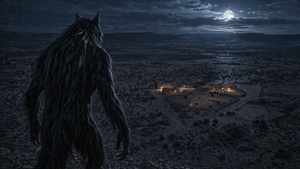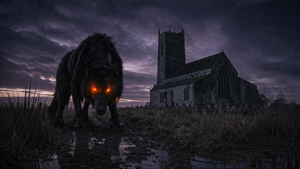
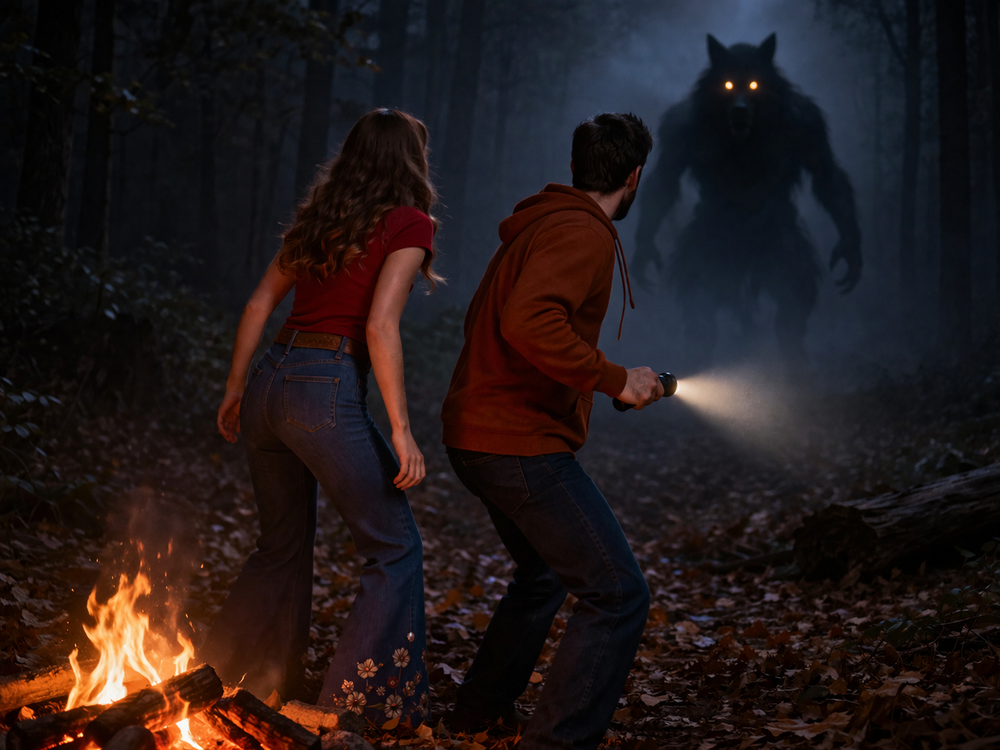
| Territory | Land Between the Lakes National Recreation Area, Kentucky and Tennessee |
| Earliest Recorded Tradition | Chickasaw sacred territory, documented pre-contact. French trapper accounts, 18th century. |
| Key Witnesses | Jeanette Thompson, Murray State University students (1973), unnamed astrophotographer (2011), Roger (1982, unverified) |
| Displaced Communities | Approx. 2,700 people from 900 families removed by TVA, 1963 to 1969. 220+ cemeteries remain within park boundaries. |
| Official Position | US Forest Service: no validated incidents on record. Moss Creek section gated and closed to overnight camping. |
| Status | Unresolved. Sightings ongoing. Indigenous heritage and community objections to sensationalisation on record. |
Contents
- The Changing Landscape
- The Chickasaw and the Guardian of the Territory
- The Shawnee Warnings and the French Trappers
- The First Removal: 1818 and the Treaty of Tuscaloosa
- The Second Removal: The TVA, the Flooded Towns, and the Dead Left Behind
- From the 1960s to Now: The Witness File
- The 1982 Massacre Claim: Contested, Unproven, but Not Entirely Closed
- Two Dispossessions, One Territory: Why the LBL Is Different
- The People Who Were Here Before the Legend
- Final Thoughts
- Primary Sources
- The Dogman Files Series
- FAQ
In Chickasaw tradition, the Creator did not simply place the people on the earth and leave them to find their way. He led them. The guide he sent was a Sacred Pole, driven into the ground each evening, which leaned in the direction the people were meant to travel come morning. For many years the pole leaned westward, drawing the Chickasaw nation through forest and river valley until, on a morning their oral history records with specific weight, the pole stood straight and still. They had arrived at the place they were meant to be.
The protector who accompanied them on that journey was called Ofi' Tohbi' Ishto'. In Chickasaw, it means Large White Dog.
This is not a monster story. It is a guardian story, and that distinction shapes everything that follows.
The Changing Landscape
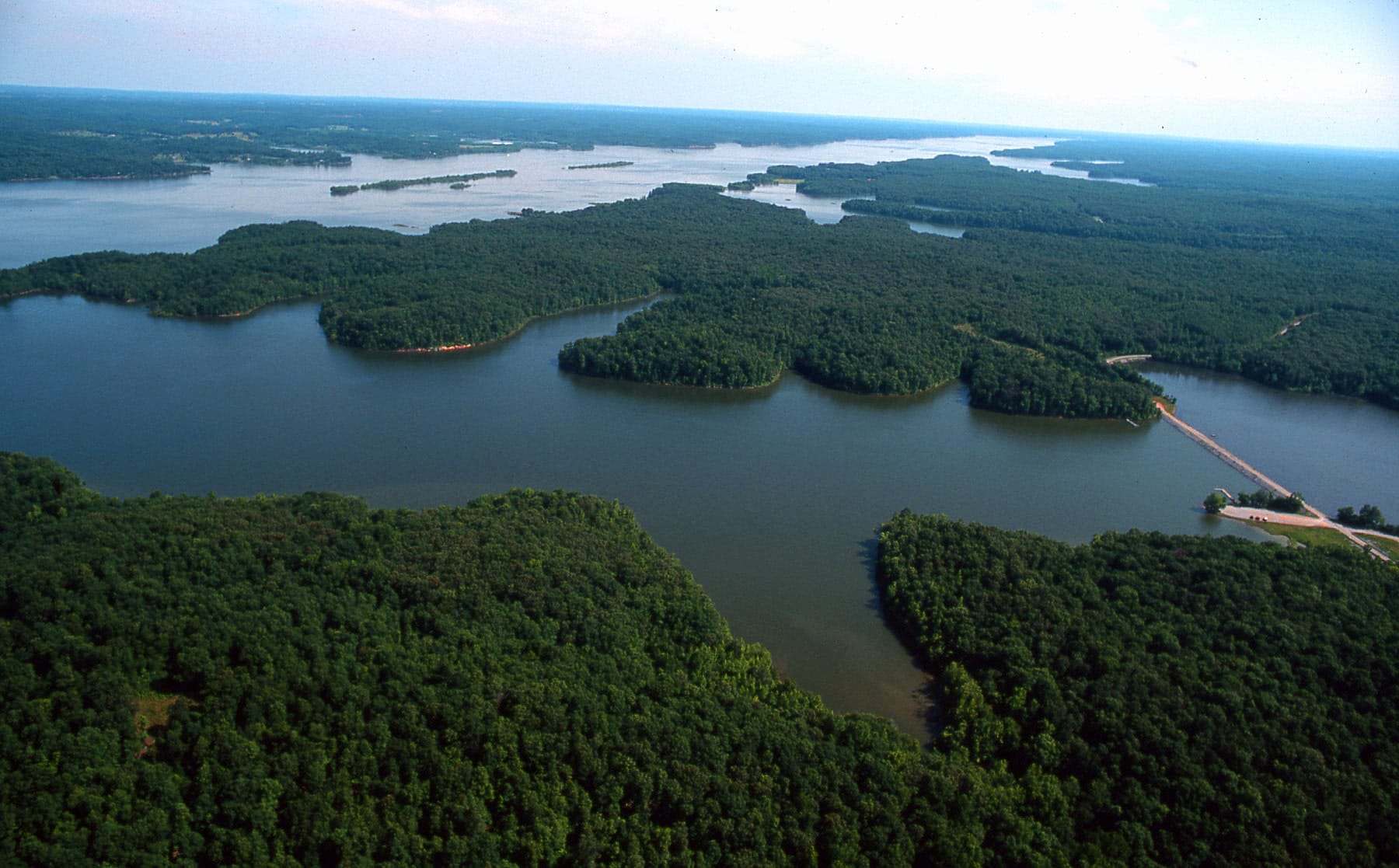
The 276-square-mile peninsula that now constitutes the LBL National Recreation Area was, within living memory, a settled agricultural landscape known as Between the Rivers, home to approximately 2,700 people living on farms their families had worked for up to seven generations. Before that it was a fur trading territory claimed and contested by several indigenous nations, and before that it was Chickasaw hunting and ceremonial ground for a span the archaeological record measures in millennia rather than centuries.
The two lakes that define the peninsula are entirely artificial. Kentucky Lake was created by the Tennessee Valley Authority between 1938 and 1944 when the Tennessee River was dammed at Gilbertsville. Lake Barkley came later, between 1964 and 1966 when the Cumberland River was dammed. The land standing between them was, by the time both projects were complete, old ground surrounded on three sides by water that had not previously existed, cut off from its traditional relationship with the wider landscape by a transformation that took less than thirty years. What had been a river valley farming community connected to its neighbours by roads and kinship became, almost overnight, a peninsula cleared of its inhabitants, to become a national park managed by the federal government and opened to nearly a million recreational visitors annually, all of them outsiders in a landscape steeped in cultural significance.
The creature tradition in this territory did not begin with the TVA, nor with the settler families of the nineteenth and twentieth centuries, nor even with the French trappers who first recorded it in writing during the eighteenth century. It began, insofar as any tradition can be said to begin, with the people whose sacred geography this was before any of the subsequent layers of occupation arrived.
The Chickasaw and the Guardian of the Territory
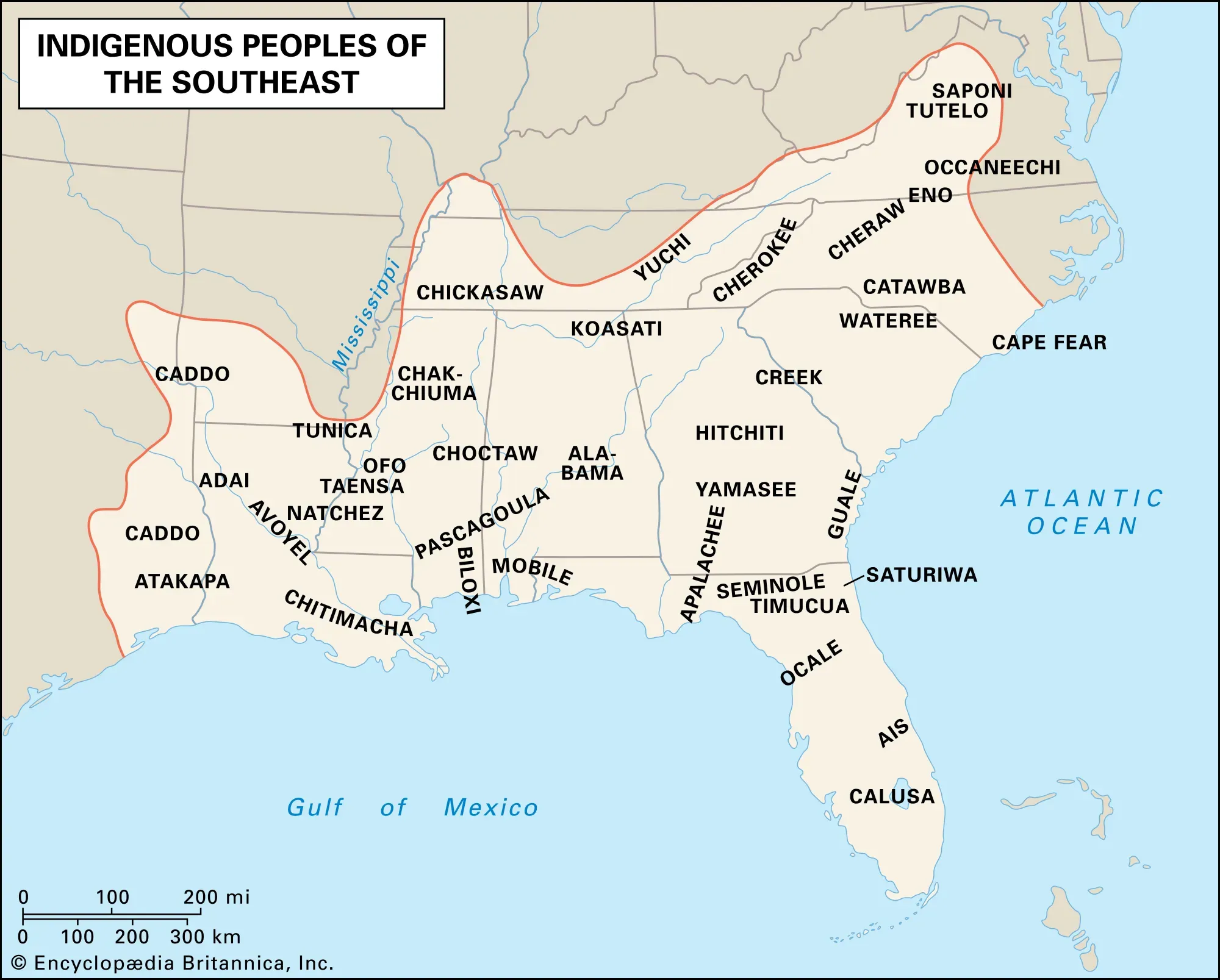
The Chickasaw Nation's historic homeland spans north Mississippi, northwest Alabama, west Tennessee, and southwest Kentucky, a vast southeastern territory their oral history and archaeology confirm has been occupied for thousands of years. The land between the Cumberland and Tennessee rivers sat at the northern reach of that homeland, a hunting and ceremonial territory whose character the Chickasaw spent generations learning to honour through ritual and sustained relationship with the land.
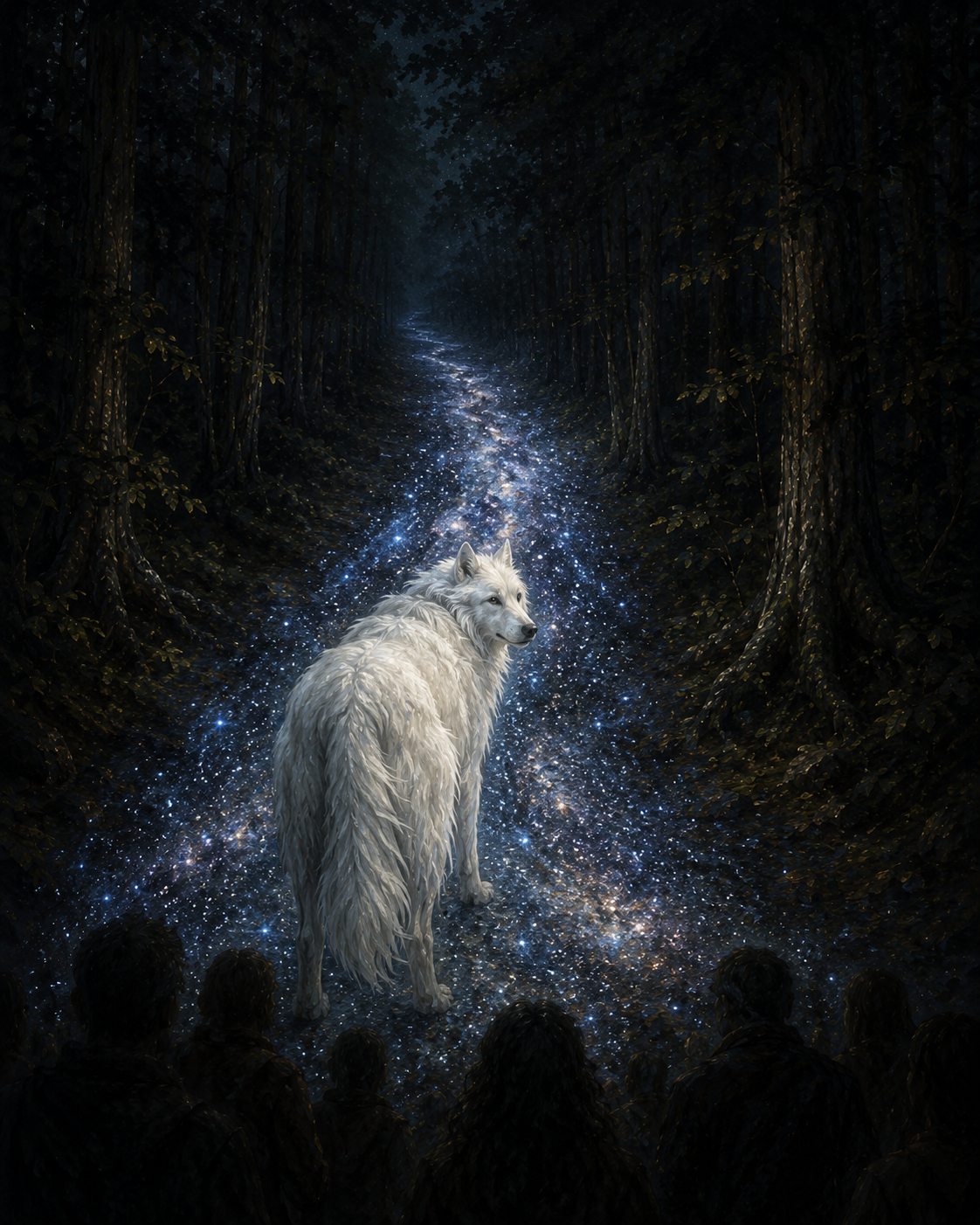
Ofi' Tohbi' Ishto' was the large canine guardian who accompanied the Chickasaw people during their migration to that homeland. According to the Chickasaw Cultural Center and the Nation's own oral tradition, the white dog ranged far ahead of the travelling procession, alerting the people to danger, healing those bitten by snakes by drawing out the venom, and guarding them at night while they slept. He was lost when the people crossed the great waters of Misha Sipokni', the Mississippi River. That loss is held in the tradition with specific weight: the white dog was separated from his people at the moment of crossing, at the threshold between the journey and the homeland itself.
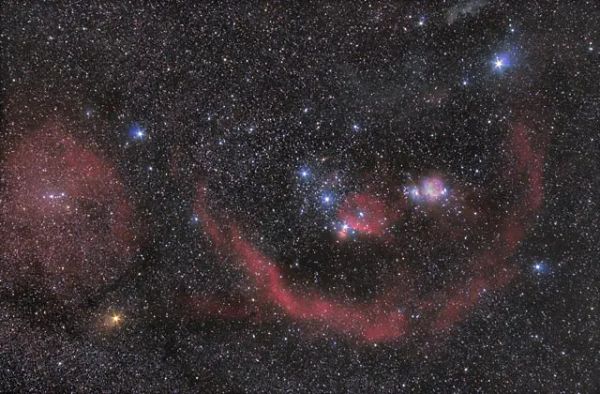
The Milky Way is called Ofi' Tohbi' Ihina' in Chickasaw: the White Dog's Road. It is understood as the path that deceased Chickasaw follow to the next world, the same road their guardian once walked ahead of them. In Chickasaw cosmology, Ofi' Tohbi' Ishto' is not simply a historical figure but an active spiritual presence: a protector who waits on that road, leading the people onward as he always did.
The distinction is important for the LBL file. The Chickasaw guardian figure is not a shapeshifter, not a human crossing into animal form, but an entity whose nature is fixed and whose role is territorial protection. The shapeshifting tradition belongs elsewhere in the Chickasaw spiritual framework, in the figure of the buskya, the shaman figure whose role included maintaining the spiritual health of the community and who was understood to be capable of moving between human and animal forms in the community's service. A buskya who abused that gift, using it for personal gain or harm, was considered one of the most serious dangers a Chickasaw community could face and was confronted accordingly. That is a wholly different tradition from the guardian canine, and conflating the two obscures both.
What the LBL creature accounts describe is not a human in animal form and not a creature in the act of transformation. Every consistent witness account, across three centuries of testimony, describes a fixed physical entity: bipedal, canine-headed, territorial, aware. Its behaviour across that record is consistent with a guardian whose people have been removed and whose sacred landscape has been repeatedly violated, rather than with a predator following prey or a shaman exercising power. Whether that reading is metaphorical or literal, it changes how the modern sightings sit within the broader record.
The Shawnee Warnings and the French Trappers
The Chickasaw were not the only indigenous nation with a relationship to this ground. The Shawnee tradition around the same territory adds a darker layer, distinct from the Chickasaw guardian material and complementary to it in important ways.
The most specific Shawnee tradition connected to the LBL describes a shaman who had been given the capacity to take wolf form in the service of his community, and who over time began using that power for his own ends, raiding and terrorising rather than protecting. His community confronted him and killed him in wolf form, a deliberate act of communal self-defence. The tradition does not end there. The shaman's spirit, killed in the wrong form and unable to pass properly into the next world, remained in the forest, bound to the territory by the manner of his death. The Shawnee warned others to treat the land between the rivers with particular care for this reason.
This Shawnee figure is specifically a shapeshifter, a human who crossed into animal form and paid the consequences of doing so wrongly. That makes him a different order of being from the Chickasaw guardian. One was never human. The other was human and could not complete the return. Both traditions place a large canine figure in the same territory, but they describe different things, and keeping that distinction clear is necessary if either tradition is to be engaged with honestly rather than flattened into a single monster narrative.
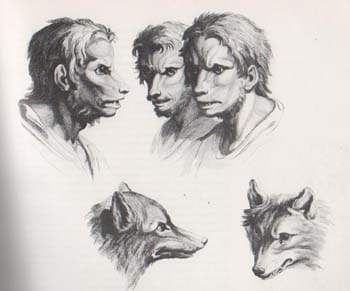
It was the Shawnee warning that French fur trappers encountered and recorded in the eighteenth century. The French called it the loup garou, their closest available term for something the Shawnee were describing in entirely different spiritual language: a canine entity bound to a specific territory, dangerous to those who did not know how to behave in its presence. The French carried the term south into Louisiana, where it became the Rougarou. The chain of cultural transmission connecting the LBL creature tradition to the Louisiana bayou legend runs through the fur trade routes of the Mississippi valley and is documented rather than speculative.
The First Removal: 1818 and the Treaty of Tuscaloosa
In 1818, the Chickasaw Nation signed the Treaty of Tuscaloosa under negotiation by Andrew Jackson, the same man who would go on to pass the Indian Removal Act of 1830 and oversee the forced relocation of the Five Civilised Tribes along what history records as the Trail of Tears. Under the treaty's terms, the Chickasaw ceded their hunting grounds between the Tennessee and Cumberland rivers to the United States government. The compensation offered was of the kind that characterised Jackson's dealings with indigenous nations throughout his career.
The effect went beyond the loss of productive hunting ground. The Chickasaw lost custodianship of a landscape they understood as sacred, whose spiritual character had been tended by their traditions for generations. The sites and ceremonially significant locations were ploughed for cultivation by settler families who had no framework for the spiritual geography of the land they were occupying. The obligations tied to that land did not transfer with the title. Whatever the Chickasaw understood about it did not come with them into the written record, and the land was left without the people whose responsibility it had been to maintain it.
The Second Removal: The TVA, the Flooded Towns, and the Dead Left Behind
The farming families who moved into the Between the Rivers territory after 1818 had, by the time the TVA arrived in the 1960s, developed their own multi-generational relationship to the land. Families had farmed the same soil for five, six, seven generations. They had built churches, schoolhouses, and community structures. They had buried their dead in family cemeteries scattered across the landscape, some formally maintained, others modest and rural, others marking the graves of enslaved people and itinerant labourers with no stone markers at all.
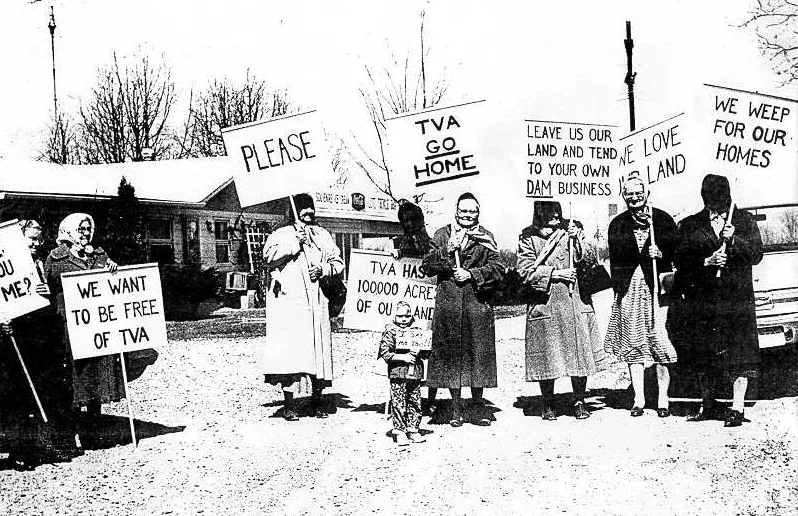
Between 1963 and 1969, approximately 2,700 people from around 900 families were removed under the TVA's eminent domain authority, to create the Land Between the Lakes recreation area. The TVA undertook to relocate all graves before the flooding, and its own records describe the process as completed. The families of the removed have consistently disputed this, and old church and cemetery records identify individuals whose graves cannot be found in the relocation cemeteries. The graves of enslaved people, of paupers, of infants buried in unmarked plots, presented a specific problem for any relocation effort: there was often no documentation of their existence and no physical marker to locate them by.
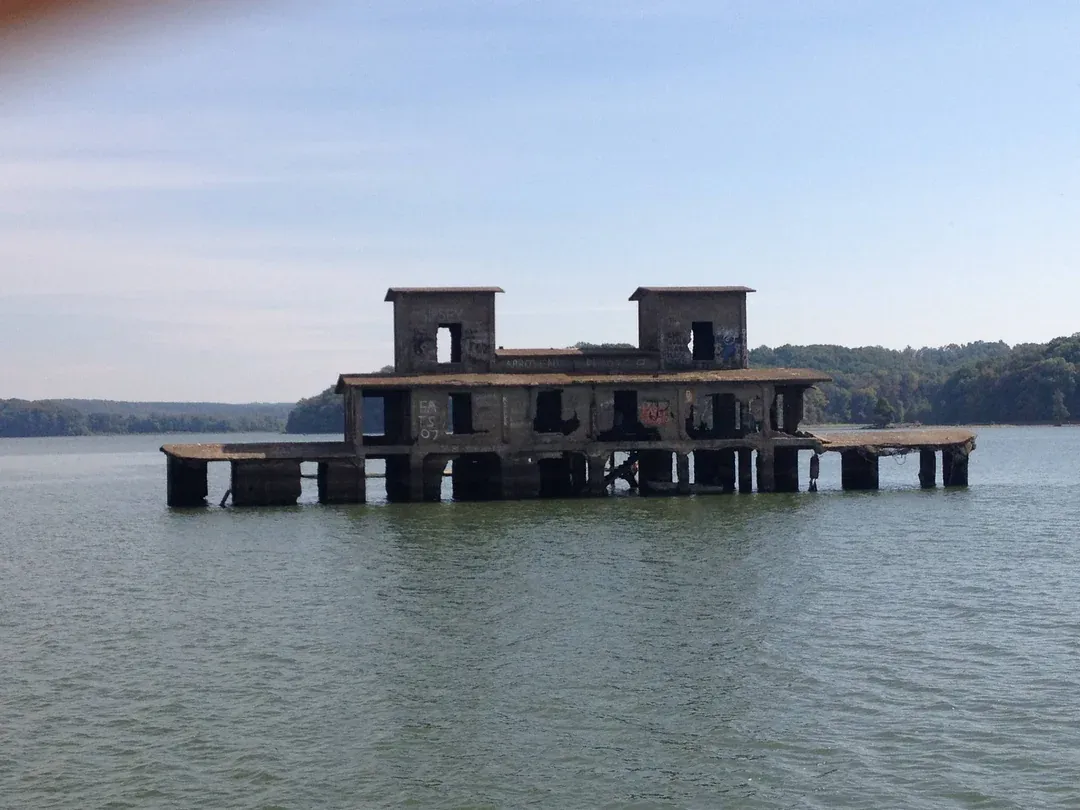
More than 220 cemeteries remain within the LBL park boundaries today, some maintained by the Forest Service, some tended informally by families of the removed, and some in states of neglect that reflect the difficulty of maintaining access to graves inside a federal recreation area. A diver exploring the shallows of Kentucky Lake in the right location can still find the foundations of houses, the ghost of a street grid, the submerged remnants of a community removed within living memory.
The second dispossession was not simply a matter of people losing their homes. It was a severance of the living from their dead, conducted by an institution that did not regard those dead as sufficiently significant to be recovered with the care the families would have provided. The land was left with unrecovered remains within a recreational park that receives approximately one and a half million visitors a year, most of whom have no knowledge of what, or who, they are walking over.
From the 1960s to Now: The Witness File
Against this background of layered dispossession, the creature accounts begin to read differently. They are not simply anomalous sightings of an unknown animal in a wildlife-rich wilderness area. They are the most recent layer of testimony in an encounter tradition continuous in this specific territory for at least three centuries, sharing with the older record a geographical consistency, a behavioural character, and a quality of witness that resists reduction to misidentification or fabrication.
The 1960s Camping Family
The earliest modern account in the LBL file predates the Murray State University incident by several years. A family camping in the park in the 1960s reported waking to the sound of heavy footsteps circling their campsite. A large figure covered in dark fur appeared at the edge of the treeline and lunged at their tent, driving them from the site entirely. No official records of the incident exist, and the account has passed through several retellings since it was first reported. Its value lies less in its detail, which is limited, than in its timing: it places an encounter in the park before the Roger incident, before the wider public awareness of Dogman phenomena, and before any shared narrative existed to shape what witnesses thought they were seeing.
Murray State University Students, 1973
A group of students from Murray State University camping in the LBL in 1973 reported a large bipedal creature at the edge of their campsite. One student returning from the treeline told his companions he had felt something watching him and heard a sound he could not place, like something sniffing, in the darkness close by. As the night drew in, the group began hearing something large moving through fallen leaves, circling the campsite with a speed inconsistent with anything they recognised. When they trained flashlights into the trees, they saw glowing red eyes moving through the dark. Howling began: loud, irregular, with a quality that the witnesses described as nothing like any animal they knew. The group retreated to their Volkswagen bus and drove out of the park, and a large shadow pursued the vehicle into the darkness before falling away. Their account contributed to a cluster of reports from the early 1970s that predates both the Roger incident and the wider public awareness of the Dogman phenomenon. The physical description matches accounts from witnesses who had no access to theirs.
Jeanette Thompson
The account that most researchers treat as the foundational modern LBL witness report belongs to a woman named Jeanette Thompson, who worked as a gas station attendant near the park. Her encounter, documented in writing and circulated among researchers, provides one of the most detailed physical descriptions in the LBL file, and the illustration produced by artist Bart Nunnelly from her direct description has become the most widely reproduced visual representation of the creature in the LBL literature. Her son has been consistent in ensuring she receives accurate credit, noting that she is frequently misidentified in secondary sources as "Jan Thompson." Jeanette described encountering a large, upright, wolf-headed figure near the park boundary in conditions clear enough to permit an extended observation. Her account carries the internal consistency and specific physical detail that researchers in this field have learned to treat as markers of credible testimony. She was later interviewed on camera in the 2007 documentary Hunt the Dogman.
The 2011 Fenton Campground Encounter
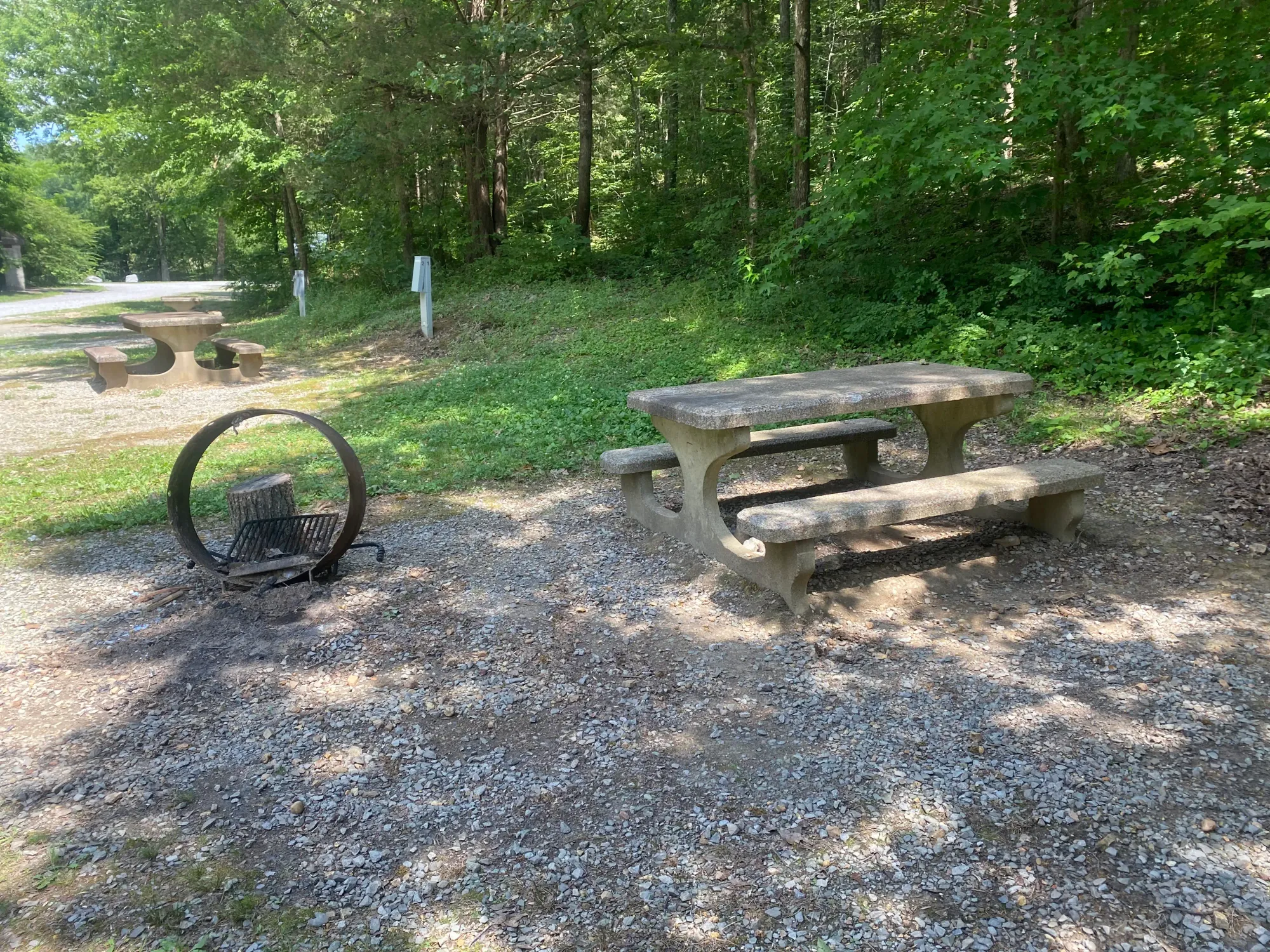
One of the more evidentially interesting modern accounts comes from a man who drove to the LBL from Cincinnati in 2011 specifically to use the park's dark skies for astrophotography. He had no knowledge of the Dogman tradition and no prior interest in cryptid phenomena, describing his attitude toward such things as dismissive. Setting up his telescope at Fenton campground at around eleven at night, he became aware of a sensation of being watched. He dismissed it. Then he heard breathing, close and approaching. He turned with a small bat he had brought for protection and found himself approximately thirty yards from a creature he described as much larger than a bear, with glowing red eyes. He stood his ground and prayed aloud. The creature moved away rapidly and into the trees. He spent the remainder of the night in his van with the red eyes visible on a ridge above the campground, watching him. At around four in the morning, the van began shaking violently. At dawn, he found scratches across the bodywork and large, unusual footprints in the ground around the vehicle. He has stated clearly that he had no cultural frame for what he experienced and did not connect it to any legend until he described it to others.
Cemetery Account
A woman documented by local filmmaker Lee Vervoort described encountering the creature in one of the park's cemeteries. She came upon it sitting on a large rock among the graves. She froze and made no sound. The creature eventually became aware of her and moved off into the treeline. She described the experience not in terms of threat but of presence: the sense of encountering something that belonged there in a way she did not. Given the concentration of unrecovered dead within the LBL cemetery network, and the consistency with which the creature is reported near burial ground across the broader Dogman literature, the cemetery setting of this account is not incidental.
Labor Day 2017
A sighting reported to local tourism and outdoor recreation sources describes a witness near the Hotel California trail hearing unusual howling and then observing a large creature chasing a deer into the woodland. The witness estimated its height at around seven feet, described it as stocky, and noted that the movement was bipedal and rapid. The account was reported in the same general area where multiple earlier witnesses have placed their encounters, and the deer pursuit mirrors the behaviour described in the Lake Barkley road account documented by the wider Dogman overview.
The Lake Barkley Road Account
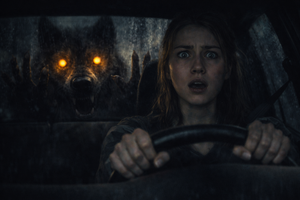
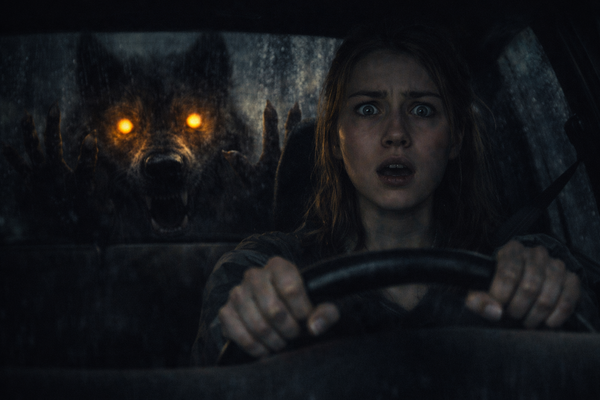
Among the more recent accounts compiled by the North American Dogman Project and through the testimony archive at Dogman Encounters Radio: a woman driving a road near Lake Barkley at night watched a deer break from the treeline and cross in front of her vehicle, followed immediately by a large brown-furred bipedal figure in pursuit. She estimated its height at seven to seven and a half feet, described its shoulders as three feet across, and noted that it appeared briefly surprised by the proximity of her headlights before disappearing into the forest after the deer. The encounter lasted only seconds. She had no prior interest in cryptid phenomena and found herself unable to drive for an extended period afterward.
Case Summary · Key Facts
- Chickasaw Nation occupied the land between the rivers for at least twelve thousand years before European contact. Their guardian figure, Ofi' Tohbi' Ishto', was a large canine protector, not a shapeshifter, whose role was territorial defence and leadership. He was lost when the people crossed the Mississippi. The Milky Way is called the White Dog's Road in Chickasaw: the path the deceased use to travel to the next world.
- The Shawnee tradition of the territory describes a shaman killed in wolf form whose spirit remains bound to the land. This figure is a shapeshifter, a human in the wrong form. He is a distinct entity from the Chickasaw guardian and represents a different order of spiritual problem.
- First dispossession: 1818 Treaty of Tuscaloosa under Andrew Jackson ceded Chickasaw territory, leaving sacred sites without their custodians.
- Second dispossession: TVA forcibly removed approximately 2,700 people from 900 families between 1963 and 1969, flooding towns and leaving an unknown number of graves beneath the lakes. More than 220 cemeteries remain within the park.
- Modern witness accounts span from the 1960s to 2017 and continue to be compiled. Physical descriptions are consistent across independent testimonies from witnesses with no connection to each other.
- The 2011 Fenton campground witness had no prior knowledge of the Dogman tradition. His account, including physical evidence at dawn, is among the most evidentially specific in the modern file.
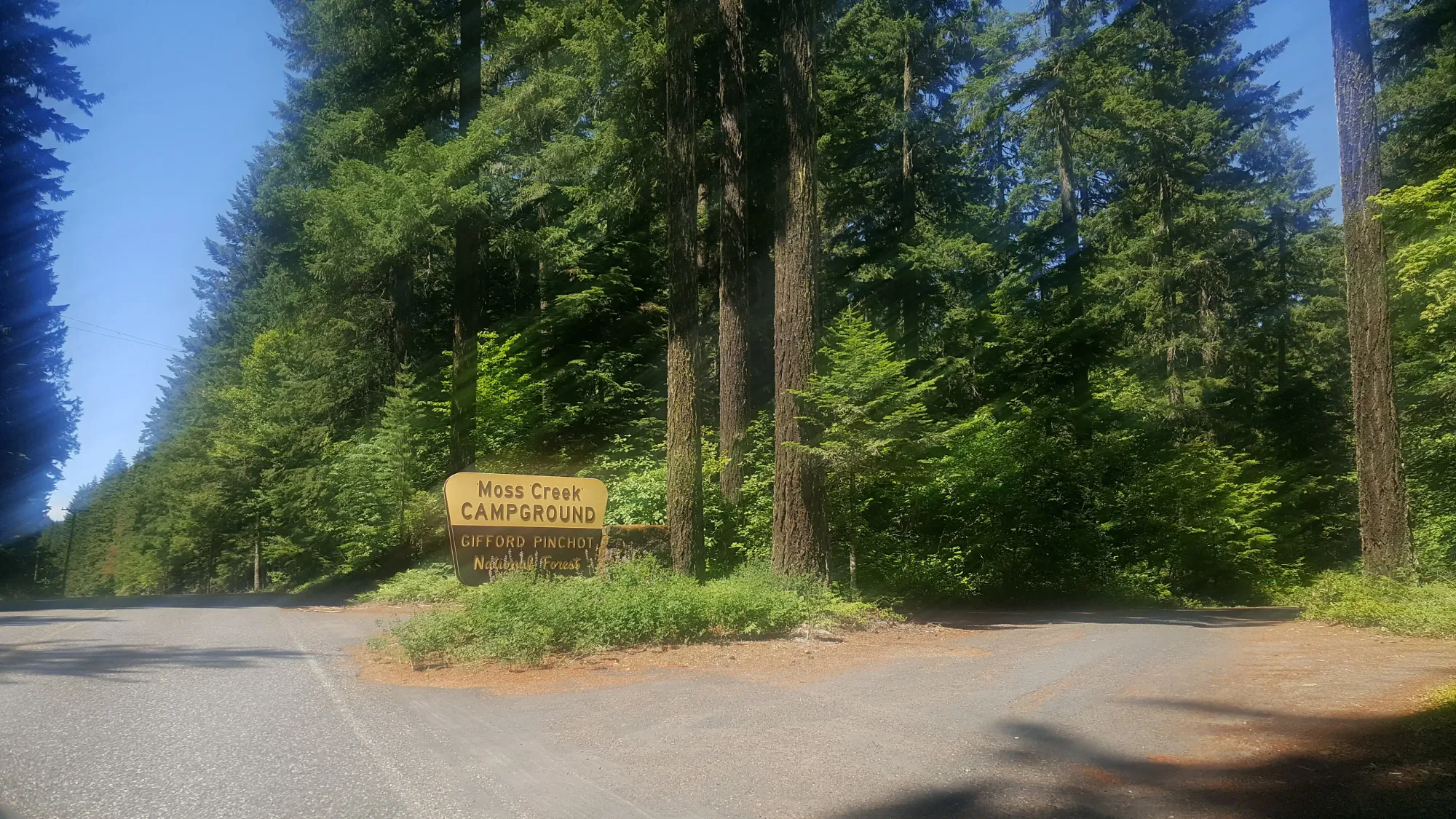
- The 1982 Roger incident cannot be independently verified. The US Forest Service holds no records of any validated incident of that kind. A section of the park known as Moss Creek was later gated and closed to overnight camping.
- The Hoptown Chronicle and former Between the Rivers residents have objected to the sensationalisation of the LBL, noting that the land carries the real weight of actual community displacement and loss.
The 1982 Massacre Claim: Contested, Unproven, but Not Entirely Closed
No account associated with the Land Between the Lakes has generated more attention or more controversy than the incident attributed to a man known only as Roger, who claimed to be the sole survivor of an attack on a family of four camping in a remote section of the park on the night of April 7th, 1982. The account describes an escalating encounter with a large upright canine creature that ended, according to Roger's testimony, in a sustained attack on the camper and the deaths of his companions. The details, which circulate widely online and were examined in Small Town Monsters' documentaries on the subject, are graphic enough that responsible researchers treat them with serious caution even when sympathetic to the broader LBL phenomenon.
The case against the 1982 incident as a factual account is substantial. The US Forest Service has stated publicly that it holds no records of any validated incident of this kind in the park. The Small Town Monsters investigation came away unconvinced, with investigators expressing clear scepticism about Roger's audio account during their documentary. A local resident who lived in Marshall County for eleven years reports never having heard the story from people in the community, which is significant: an event of this kind would have been the most dramatic thing to happen in the area in living memory. The Hoptown Chronicle found the massacre narrative offensive to former Between the Rivers residents whose real community history was being overshadowed by what they regarded as an invented sensational story.
What prevents simple dismissal is a single corroborating detail. A local contractor laying pipe in the area at the approximate time recalls passing a scene near the location described in Roger's account with more law enforcement vehicles than he had ever seen assembled in one place there, alongside what appeared to be crime scene tape. He has been consistent in this recollection across multiple accounts given to investigators over the years. No other documented event accounts for a large law enforcement presence in that remote area at that time. This does not verify Roger's account. It means the incident cannot be closed without remainder.
The LBL creature tradition does not depend on the massacre story being true. The wider witness record, running from the Chickasaw guardian tradition through the Shawnee warnings to the French trappers and into the modern period, constitutes a substantial and independent body of evidence. The Roger account sits beside it, unverified and unresolved.
Two Dispossessions, One Territory: Why the LBL Is Different
There is a framework for understanding the LBL that goes beyond both the biological species hypothesis and the simple folklore explanation, and the evidence points toward it more insistently here than in almost any other Dogman case.
The LBL is not simply a location where unusual canine sightings have been reported. It is a landscape removed from its spiritual custodians twice within recorded history: once when the Chickasaw were driven from their sacred territory under an unfair treaty, and again when the TVA flooded and demolished the communities of generationally established farming families. Indigenous traditions across North America hold that proper treatment of the dead and maintenance of sacred sites are not questions of sentiment alone. They are the active maintenance of a relationship between the living and the spirit world, one requiring continuous tending. When that relationship is broken, the traditions do not suggest the spirits dissolve. They remain, and they brood.
The Chickasaw guardian, Ofi' Tohbi' Ishto', was lost at the Mississippi crossing, separated from the people he had protected and the homeland he had led them to. That orphaned quality, a guardian without its community, a protector whose purpose was removed along with the people it was bound to, is one way of reading what the modern witnesses describe. Not a predator, not a shapeshifting human, but something territorial and aware, left without its purpose, watching a landscape it can no longer protect pass through the hands of people who do not know its name.
Researchers working at the intersection of the paranormal and the geographic have used the term vortex to describe locations where anomalous phenomena concentrate, where the relationship between the physical world and whatever lies adjacent to it seems less stable than elsewhere. The LBL fits the criteria. Across three centuries of accounts, the entity seen at the forest margins does not behave like an animal that happens to live there. It behaves like something that was already there, that has always been there, and that notices the people moving through its territory with an awareness that goes beyond the attentiveness of a hunting predator.
The People Who Were Here Before the Legend
The Land Between the Lakes does not exist in a cultural vacuum. The families removed by the TVA in the 1960s are still alive, their children and grandchildren still local, and their attachment to the land they were taken from has not diminished with time. David Nickell, who lived in the area before removal, has been one of the more outspoken critics both of the TVA's conduct and of what he regards as the trivialisation of the community's real history by the creature legend. Former Between the Rivers residents interviewed by WKMS found the massacre narrative specifically offensive, not because they doubted that strange things happen in the park, but because the story displaces the actual and serious history of what was done to the people who lived there.
The Chickasaw Nation has made its own position clear through its cultural resources and official history. The land between the rivers was sacred territory. The removal was unjust. The spiritual relationship to the land did not end with the 1818 treaty, and the guardian figure at the centre of the Chickasaw tradition is not a monster story to be mined for entertainment but a living element of a culture that was removed from its homeland by force.
Any serious engagement with the LBL creature tradition has to hold that context. The sightings are real, in the sense that the witnesses are real and their accounts are consistent and independent. The history behind them is also real, and the two cannot be properly separated.
Final Thoughts
Despite the lack of confirmed physical evidence and the unverified status of its most dramatic account, the Land Between the Lakes remains one of the most layered sites in the Dogman literature. That weight comes not from the sightings alone but from the history surrounding them: the accumulation of dispossession, removal, and disturbance that changes how the creature tradition reads. It does not make the phenomenon inevitable. It makes it more difficult to treat as an isolated anomaly.
The 1982 incident cannot be verified and should not be treated as established fact. The wider witness record, from the Chickasaw guardian tradition through three centuries of testimony to the 2017 Labor Day sighting, resists easy dismissal. The careful position is to recognise the continuity without overstating it: this landscape has been associated with presence, boundary, and encounter for far longer than it has been mapped, managed, or renamed.
The Chickasaw understood Ofi' Tohbi' Ishto' as a guardian whose road leads the dead forward. He was lost at the crossing. The land he was meant to protect was taken twice over. The witnesses arriving now, with no knowledge of any of this, describe something territorial and aware at the forest margins. Whether those things are connected is a question the evidence opens without resolving.
The Chickasaw called the Milky Way the White Dog's Road. Whatever walks the tree line of the Land Between the Lakes, it is on a road that has not been closed.
Primary Sources
- Chickasaw Nation. Chickasaw History and Culture: Homeland. Official cultural resources. Available at: chickasaw.net
- Chickasaw Cultural Center. Ofi' Tohbi' Exhibit. Sulphur, Oklahoma. Available at: chickasawculturalcenter.com
- National Park Service. "Great White Dog: Ofi' Tohbi'." Natchez Trace Parkway interpretive material. Available at: nps.gov
- Tennessee Valley Authority. Land Between the Lakes: Between the Rivers Community History. TVA archival documentation, 1963 to 1969.
- US Forest Service. Land Between the Lakes National Recreation Area Management Plan. US Department of Agriculture.
- Godfrey, Linda S. Real Wolfmen: True Encounters in Modern America. Tarcher/Penguin, 2012.
- Small Town Monsters. Dogman Territory: Werewolves in the Land Between the Lakes. Documentary, 2024. Available on Amazon Prime Video.
- Nunnelly, Bart. Hunt the Dogman. Documentary, 2007. Features interview with Jeanette Thompson. IMDb: tt2606804.
- The Hoptown Chronicle. Reporting on Land Between the Lakes creature tradition and community response. Available at: hoptownchronicle.org
- WKMS. "The Beast of LBL: Local Folklore a Source of Pain Among Between the Rivers Natives." October 28, 2020. Available at: wkms.org
- North American Dogman Project witness database: northamericandogmanproject.com
- Dogman Encounters Radio archive: dogmanencounters.com
- Treaty of Tuscaloosa (1818). National Archives: archives.gov
The Dogman Files — Case File Series
- Not a Werewolf: The Dogman Rabbit Hole — the full overview investigation
- Case File 01: The Werewolf Folder — Wisconsin's Beast of Bray Road
- Case File 02: The Land Between the Lakes — YOU ARE HERE
- Case File 03: April Fool — How a Radio Joke Unlocked a Century of Silence
- Case File 04: Black Shuck and the British Canine Tradition
- Case File 05: The Skinwalker Connection
Frequently Asked Questions
What is the Land Between the Lakes?
The Land Between the Lakes is a 276-square-mile National Recreation Area on a forested peninsula straddling the Kentucky and Tennessee border, flanked by Kentucky Lake to the west and Lake Barkley to the east. Both lakes are man-made, created by TVA dams in the mid-twentieth century. Before the TVA project, the area was known as Between the Rivers, a settled farming community, and before that it was part of the Chickasaw Nation's historic homeland for at least twelve thousand years.
Who were the Chickasaw and what is their connection to the LBL creature?
The Chickasaw Nation's historic homeland spans north Mississippi, northwest Alabama, west Tennessee and southwest Kentucky. Their spiritual tradition includes a large canine guardian figure called Ofi' Tohbi' Ishto', meaning Large White Dog, who protected the people during their migration to the homeland and was lost when they crossed the Mississippi River. The Milky Way is called the White Dog's Road in Chickasaw, the path the deceased follow to the next world. The creature tradition in the LBL is, in the Chickasaw reading, not an aberration but a feature of the land's spiritual character. The guardian is not a shapeshifter. He is a fixed entity whose people were removed and whose landscape has been violated twice within recorded history.
What is the difference between the Chickasaw guardian and the Shawnee shapeshifter?
They are distinct entities describing different spiritual problems. The Chickasaw Ofi' Tohbi' Ishto' was never human. He is a canine guardian whose nature is fixed, whose role is territorial protection, and who was lost at the Mississippi crossing. The Shawnee tradition describes a shaman who was given the capacity to take wolf form and abused it. Killed in animal form, his spirit could not pass properly to the next world and remained in the territory. One is an orphaned protector. The other is a transgressor bound by his own violation. The modern Dogman witness accounts describe something that does not transform, that is not in the process of becoming anything else, and whose fixed physical character is consistent across three centuries of independent testimony. That consistency aligns more closely with the guardian tradition than the shapeshifter tradition.
What happened to the families displaced by the TVA?
Approximately 2,700 people from around 900 families were forcibly removed from the Between the Rivers community between 1963 and 1969 under the TVA's eminent domain authority. Their homes and community structures were demolished or flooded. The TVA undertook to relocate all graves before the flooding, but families of the displaced have consistently disputed the completeness of this process. An unknown number of dead, particularly enslaved people and others buried in unmarked graves, are believed to remain beneath the lakes.
What is the loup garou connection to the LBL?
French fur trappers working in the Between the Rivers territory in the eighteenth century received warnings from Shawnee trading partners about a large wolf-like entity inhabiting the woodland. The French recorded this using the term loup garou, their closest available vocabulary for a concept the Shawnee expressed in entirely different spiritual terms. The same term was carried south along the Mississippi fur trade routes into Louisiana, where it became the Rougarou legend, establishing a documented chain of cultural transmission connecting the LBL creature tradition to the broader canine entity folklore of the American South.
Did the 1982 incident really happen?
The account attributed to a man known as Roger, claiming to be the sole survivor of a creature attack on a camping family on April 7th, 1982, cannot be independently verified. The US Forest Service holds no records of any validated incident of that kind. Small Town Monsters' documentary investigation expressed clear scepticism. Former local residents have stated they never heard the story from people in the community. A single corroborating detail, a local contractor's recollection of an unusual law enforcement presence at a remote park location at the approximate time, has not been explained but does not verify the massacre account. The wider LBL creature tradition does not depend on the 1982 incident being true.
Why is Moss Creek gated and closed to overnight camping?
The official reason given by the Forest Service is a random stabbing incident. Many local residents and researchers have found this explanation insufficient given the remoteness of the area and the manner of the closure. The section remains gated and inaccessible to overnight visitors.
Is the LBL creature the same as the Dogman?
The physical descriptions of the LBL creature across three centuries of testimony are consistent with the broader Dogman phenomenon documented across North America: bipedal, canine-headed, large, and apparently territorial. The LBL is distinguished within the Dogman literature by the depth of its pre-modern traditions, the specific indigenous spiritual context of its guardian figure, and the history of dispossession and spiritual disruption that makes the territory uniquely significant as a site of ongoing encounter.
Related files: Not a Werewolf: The Dogman Rabbit Hole | Case File 01: The Beast of Bray Road | Case File 03: The Michigan Dogman | Case File 04: Black Shuck and the British Canine Tradition | Case File 05: The Skinwalker Connection