The Loveland Frogman began as a strange 1950s roadside report, became tangled with police sightings, an escaped iguana explanation and local folklore, then returned in the smartphone age as one of Ohio’s most oddly durable cryptids.
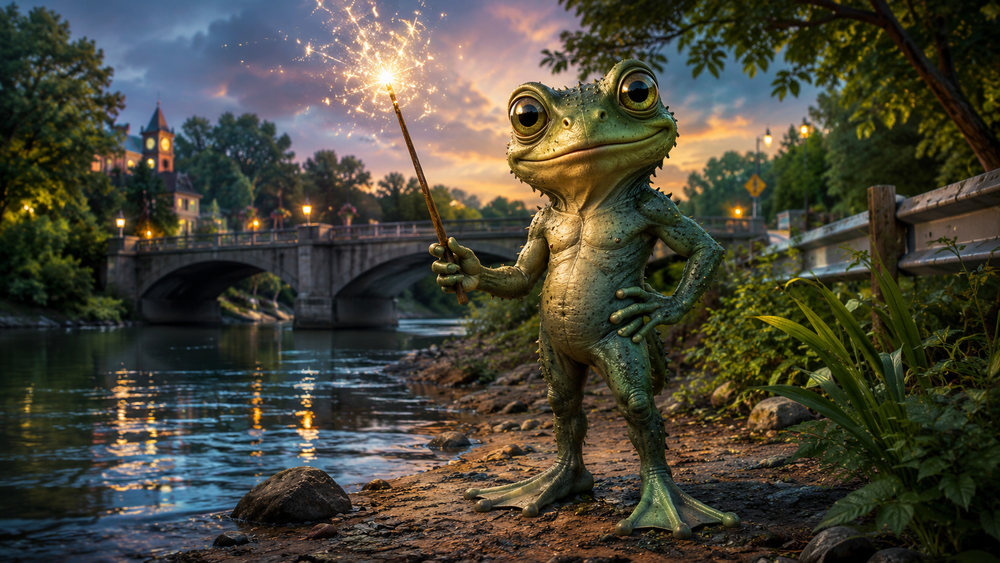
Four small figures were said to be standing near an Ohio bridge in 1955, each roughly three feet tall, with grey or green skin, webbed extremities and faces which later retellings would make frog-like. One of them, in the strangest version of the story, lifted a rod or wand above its head and produced sparks.
That is where the Loveland Frogman begins, or at least where the story first becomes firm enough to follow. The creature now sits comfortably in American cryptid culture: a squat amphibian humanoid from Loveland, Ohio, tied to the Little Miami River and the dark corners of Riverside Drive. It has become a mascot, a festival draw and, in 2026, the subject of Ohio House Bill 821, which seeks to make the Loveland Frog the state’s official cryptid.
The friendly local version is easy to like. Older versions are less tidy. In its first form, the Frogman was not only a mystery animal by the water. It was a small humanoid with a sparking object, reported during the same period that produced a run of “little men” and flying saucer cases across the United States.
That puts the Loveland creature in an awkward category. It is too animal-like to ignore in a cryptid series, but too bound up with 1950s UFO lore to treat as a simple lost-species claim. The later police sightings in 1972 brought the story back down to earth, although even there the explanation is not as clean as people often pretend.
Throw a story about an errant iguana into the mix and the story becomes something stranger than a simple monster claim.
A river town with a very odd mascot
Loveland sits northeast of Cincinnati, where the Little Miami River runs through a landscape of bridges, wooded banks, cycle paths, floodplain and old industrial edges. It is exactly the kind of place where a local monster can settle in and get comfortable. There is water for concealment, tree cover for half-seen movement and enough road access for late-night drivers to become witnesses.
The modern Frogman is usually described as a small humanoid, three to four feet tall, with leathery or scaly skin, a wide mouth, large eyes and webbed hands or feet. Some versions make it green, while others make it grey. It stands upright when the story needs a monster, then slips back towards animal form when the explanation arrives.
Like so many local cryptid stories, that shifting outline is part of the problem. A frog the size of a child would be difficult enough. Damaged lizard-like features would be easier to imagine. A small humanoid with a sparking wand belongs in another category altogether. Loveland’s Frogman has inherited all three.
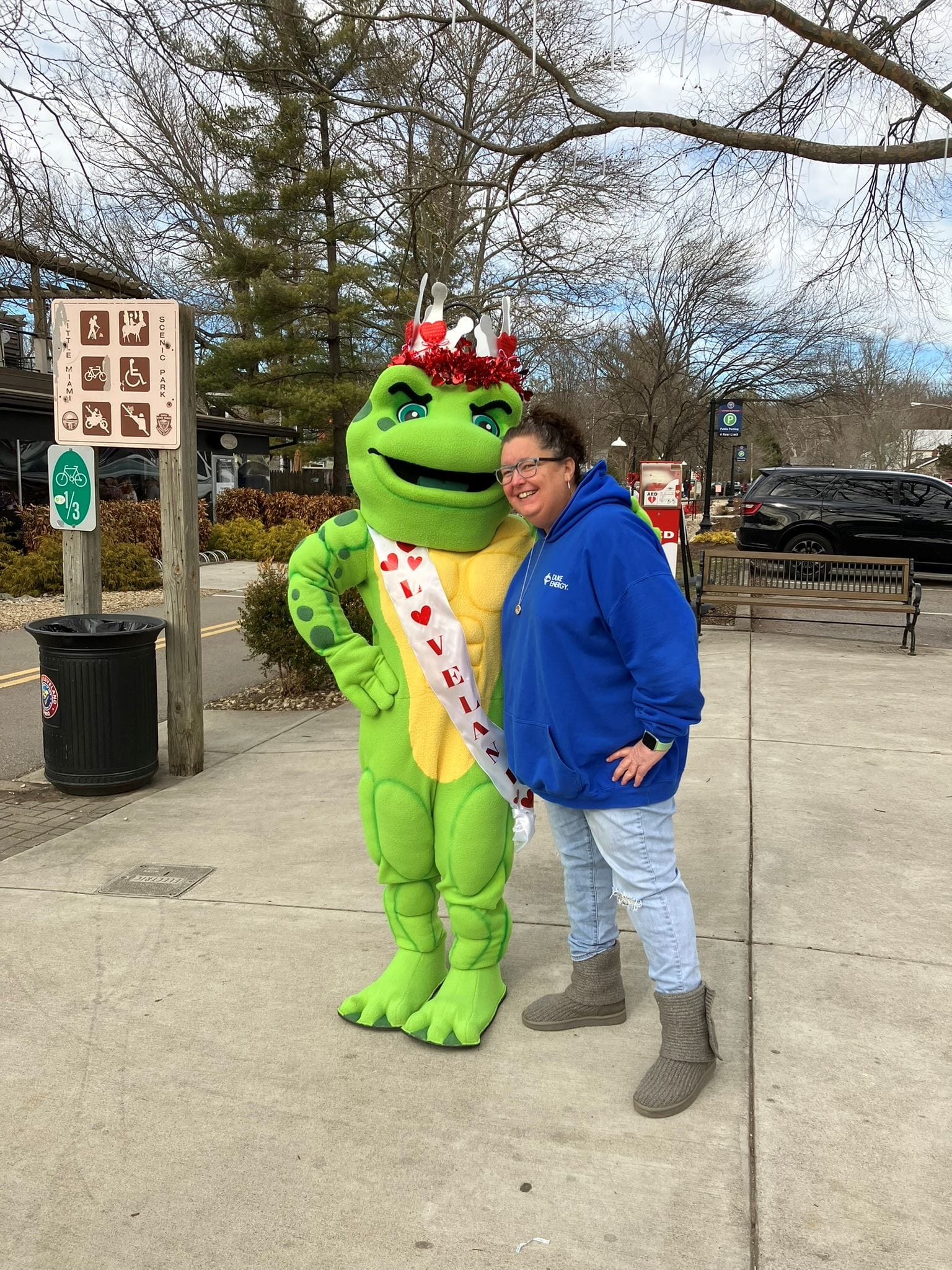
The city has embraced the charming oddness of its amphibious anomaly and has turned the creature into something of a local mascot, with Frogman events, artwork, merchandise and a comic sense of ownership. This public affection should not be confused with evidence, but it does explain why the story has lasted.
A town can carry a doubtful monster for decades when the monster is small enough to be harmless and strange enough to be remembered.
Point Pleasant has Mothman, Rhinelander has the Hodag, and Loveland has a river frog with bad posture and a suspicious history.
The 1955 report
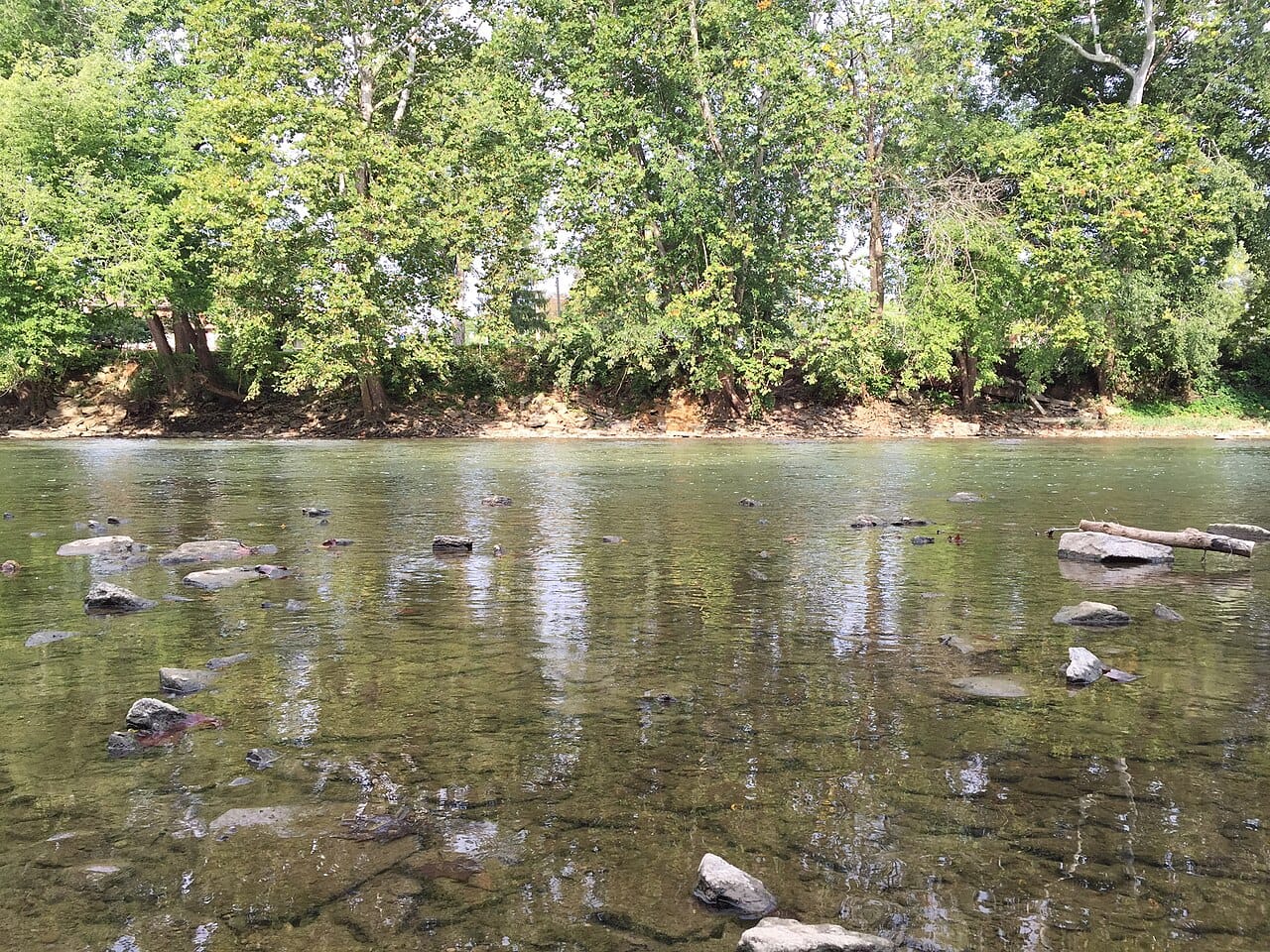
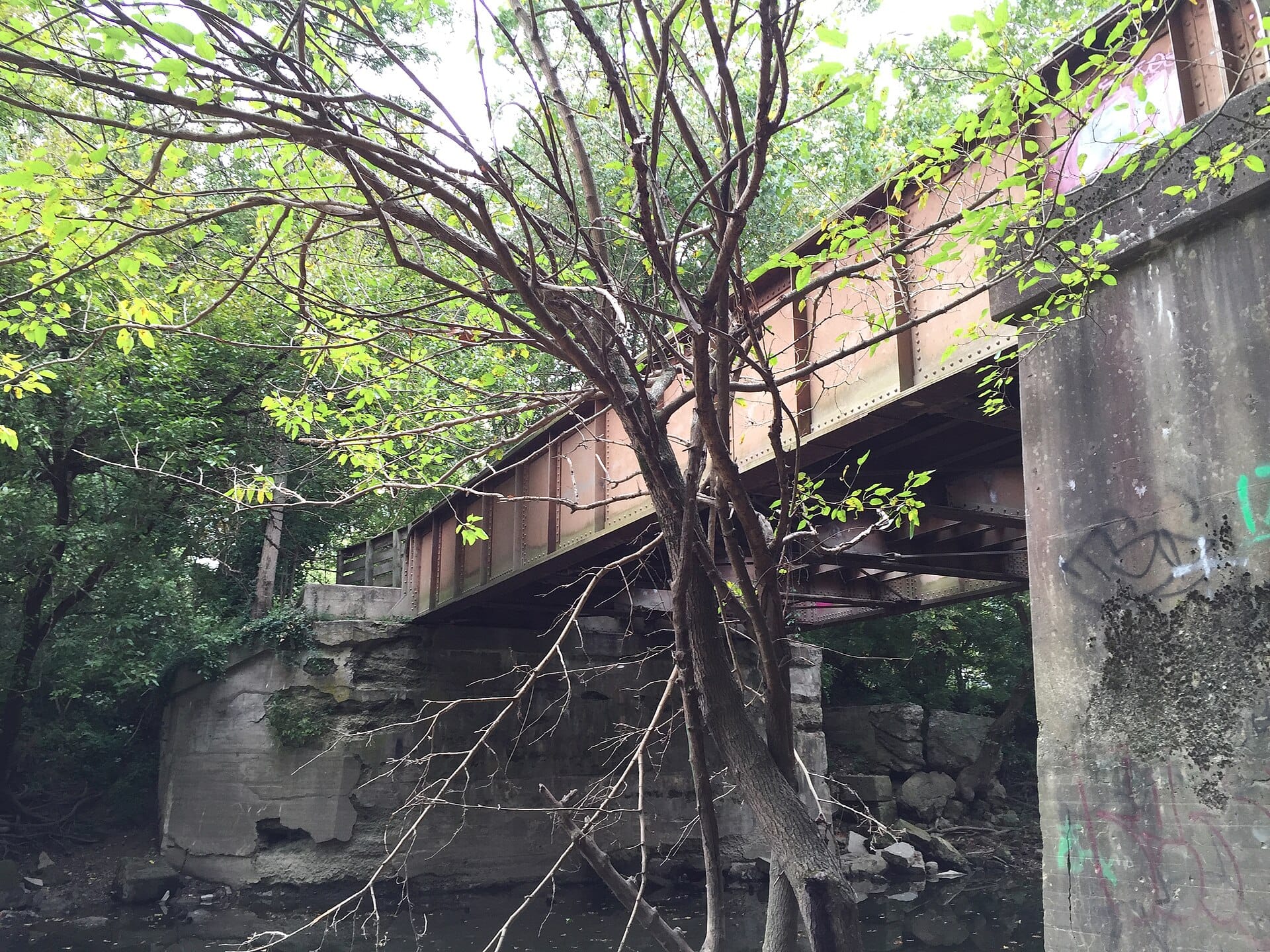
The first Loveland story is usually dated to May 1955, when a man driving near Loveland, Ohio, reportedly saw several small figures by the roadside in the early hours. Later versions place them near a bridge or close to the Little Miami River. They were said to be around three feet tall, with greyish or greenish skin, webbed hands and feet and faces which later accounts made more frog-like.
The detail that makes the report difficult is not the skin, their size or the river setting. It is the object one of the figures was said to be holding. In the best-known version, the figure raised a rod or wand over its head and produced sparks.
That detail changes the kind of story we are dealing with. A strange animal seen near a bridge can become a local cryptid. By contrast, a small humanoid with a sparking object points back to the UFO and “little green men” reports of the 1950s.
The date is significant, because the United States during the mid-1950s was already full of flying saucer reports, contact stories and small humanoid encounters, including the Kelly-Hopkinsville case in Kentucky, where a family said they were harassed for hours by small goblin-like figures on their farm and property. That case became part of the post-war UFO canon almost at once. While Loveland’s report is quieter, thinner and easier to miss, it comes from the same cultural context.
None of this proves that the Loveland witness borrowed the story from UFO culture. But it does suggest the first report should be read in that setting rather than treated as a plain animal sighting. The sparking rod is not a later joke added by sceptics. It is one of the details that made the early story strange enough to be remembered.
The source trail is also thin, with the 1955 account reaching later readers through UFO researchers, monster books and local retellings. Names, positions and details shift. The witness is sometimes left unnamed and sometimes given as Robert Hunnicut, while the figures shift between a bridge, the roadside and the river, with even the number of beings left unsettled.
This does not make the report worthless. It means the claim we can safely make is smaller than the legend that grew from it.
A strange story entered circulation in the 1950s. It described small beings near Loveland, one of which appeared to hold a sparking object. Over time, those beings were reshaped into the Loveland Frogman.
The cleaner monster came later. The earliest version was a small-humanoid report with amphibian details, which became tied more firmly to the river as the story was retold.
The 1972 police sightings
In March 1972, the story became harder to ignore when two Loveland police officers were linked to sightings near the Little Miami River. Their names, Ray Shockey and Mark Matthews, are the reason the Frogman still gets treated as more than a one-off oddity from the flying saucer years.
Shockey was reportedly driving in the early hours near Riverside Drive, close to the river and the Totes boot factory, when he saw something on or beside the road. The night was cold and the road was slick. In the headlights he saw a creature described in later accounts as three to four feet in length or height, with leathery skin and a frog-like or lizard-like appearance.
The best-known version has the creature rising or standing enough to look towards the officer, then climbing over a guardrail and moving down the embankment towards the river. That sequence gives the 1972 sighting its power. The thing is first seen as an animal in headlights, then seems to become partly upright, then leaves the road for the water.
It is not a long encounter. Most roadside monster reports are not. The witness has only seconds to process distance, movement, shape and threat. Headlights flatten colour, wet roads reflect light, and a crouched animal can look much larger than it is when the observer has no clear scale.
Those caveats are needed because the 1972 report is often retold as though a trained officer calmly watched a frog man cross the road. The evidence does not justify that confidence. It supports something more limited: an officer saw a strange animal or figure near the river, under poor conditions, and the description later joined the older Loveland story.
The Matthews episode came soon after. In the popular version, Matthews saw a similar creature in the same area, shot at it and watched it flee, but later interviews have him rejecting the monster version. He said the animal was a large iguana, missing its tail, and that he recovered the body, adding that the older story had grown because the explanation had not travelled as far as the strange version.
That is the main problem for anyone treating the 1972 sightings as strong cryptid evidence. One of the police witnesses later said the creature was not unknown. He gave it a name, a body and a mundane death on an Ohio roadside.
The question is whether that answer covers the whole case.
The iguana explanation
At first glance, a tailless iguana in Ohio sounds like sceptical straw-clutching. It explains the shape, but not the weather. March in Ohio is not suitable for a tropical lizard wandering around at night, especially near an icy road.
Look closer, however, and a more ordinary explanation starts to emerge.
Large green iguanas can reach impressive size, especially when the tail is included. They are strong swimmers and often stay close to water. Pet owners have been known to abandon them when they become too large or difficult to keep. In cold weather, iguanas slow down, stiffen and may move in a laboured way. A reptile in that condition could look wrong because its body is failing to work properly.
With the tail gone, the outline would change again, since a large lizard without its long tapering rear section might look shorter, bulkier and more awkward than expected. In darkness, with headlights and surprise dulling the senses, a witness’s first impression could move quickly from “large reptile” to “small crouched figure”.
The local setting helps that explanation. Totes was a local waterproof-goods manufacturer, which made rubber overshoes, rainwear and later diving and water-sport gear near the Little Miami River. If an escaped pet had found warmth near the factory, pipes, discharge water or sheltered industrial ground could have given it some reprieve from the cold. This does not prove the animal survived there for long, but it does make the idea less silly than it sounds at first telling.
For the 1972 sightings, the iguana explanation is the strongest lead. It accounts for the size, the lizard-like skin, the waterward movement and the later statement from Matthews, giving the story the one thing many cryptid claims lack: a named witness who later backed away from the monster version.
Before we jump smugly to any “case solved” conclusions, the explanation does not cover everything. Shockey’s reported description does not fit every part of the iguana claim. The 1955 report remains outside the explanation because it was already tied to small humanoid figures and a sparking object. If Matthews was right, then the 1972 case may only show how an escaped reptile breathed new life into an older legend.
This may be the best answer. It is also a very Loveland answer: a half-frozen lizard, a river road, two police reports and a town ready to remember the strange part.
The Pokémon Go return
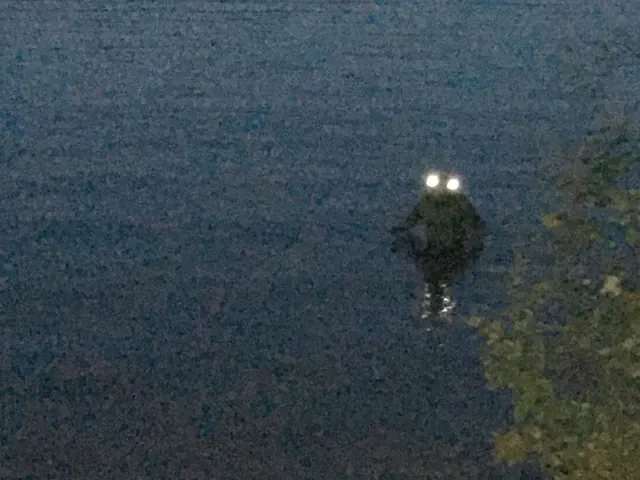
The Frogman returned in 2016 by way of Pokémon Go, which is almost too neat for a modern monster story. Sam Jacobs and his girlfriend were playing the mobile game near Loveland Madeira Road and Lake Isabella when they reported seeing a large frog-like figure near the water.
Jacobs said the creature stood up and walked on its hind legs. He sent dark photographs and video to a local news station. The images show eyeshine and a vague form. They do not show enough to carry the claim.
The moment carried it instead. Pokémon Go had sent people into parks, paths and half-lit public spaces to hunt imaginary creatures on their phones. In Loveland, a man looking for one kind of monster reported another. The old Frogman story was suddenly back in local news, updated for a screen-lit age.
Matthews responded to the coverage by repeating that the 1972 creature was an iguana. This intervention is useful because it shows the divide between evidence and folklore in real time. One side had a dark image, a strange memory and a town legend. The other had a former officer insisting that a long-dead lizard was to blame.
As evidence for a biological claim, the 2016 report adds very little. The images are too dark to carry the weight placed on them, and hoaxing can never be ruled out. What the episode does show is how easily a local creature can return when people start looking at familiar places differently. The riverbank had not changed. Pokémon Go simply gave people a new reason to stand there, and Loveland’s old river monster was still waiting to be noticed again.
Why water keeps producing monsters
The Loveland Frogman is not alone in coming from water. Rivers, lakes and swamps produce monsters because they hide things well, distort distance and carry danger into everyday places. A road beside a river gives a witness only a brief view, with a creature able to appear, cross the light and vanish into water before anyone has time to settle what they saw.
That is one reason water cryptids have lasted so long. Loch Ness gives depth and scale to a dark shape. Lake Champlain gives Champ a long borderland of sightings and tourist memory. The Congo Basin gives Mokele-mbembe an enormous stage, although Western treatments have often pushed that story towards the “living dinosaur” frame rather than treating it carefully as local water-being tradition and later cryptozoological invention.
Smaller water creatures work differently. Japan’s kappa is folklore, not a cryptozoological animal in the usual sense, but it shows how rivers become moral and physical danger with a face. Children drown, banks collapse and deep pools take livestock. Stories put hands, eyes and intention into the place where accidents happen.
Loveland belongs near that end of the water-monster range. It is not a giant lake creature seen at impossible distance, but a small river creature, close enough to be almost comic and strange enough to remain unsettling. The Frogman has the shape of a local warning, even if the modern town now treats it with affection.
This mix is part of its appeal. A river monster can be frightening when it is unknown, then charming once people decide it belongs to them. The same bank that produces a police report can later host a festival, and the creature that once looked wrong in headlights can end up on a sticker.
Loveland’s Frogman is weak as zoology, but strong as local folklore. It has place and setting, named witnesses, a sceptical explanation, a return in the digital age and enough ridiculous detail to keep people from turning it into a generic monster. It is hard to be scared of a frog holding a sparkly wand.
Final Thoughts
Loveland’s Frogman does not sit neatly in any category, strange or prosaic. There is no strong case for an unknown giant amphibian living beside the Little Miami River because the evidence does not exist, the 1955 report is too unstable and the best-known 1972 sighting has a serious but ordinary explanation attached to it.
A large escaped iguana, possibly missing its tail, can explain much of the police-era story. It fits the reptile-like body, the awkward movement, the water-bound retreat and Matthews’s later account. Poor conditions would have done the rest. Cold, darkness, headlights and an older local tale are more than enough to turn a real animal into something stranger.
The 1955 report is harder to place. Its sparking rod does not fit an animal explanation, but it also pushes the story towards the small-humanoid and UFO claims of its own decade. This does not make it more valid, just stranger in a different way.
What remains is a creature built from several disparate parts: a 1950s small-humanoid report, a 1972 roadside animal, a possible iguana, a 2016 phone sighting and a town that decided to keep the monster rather than bury it. Most cryptid stories would struggle under that weight. Loveland’s Frogman seems to thrive on it.
Perhaps that is why the creature has lasted. It is not grand or majestic, and it is barely even convincing. Yet it belongs to a real bend in the road, a real river and a real local memory. The Frogman survives because it can be doubted without being discarded.
In the end, Loveland may not have given Ohio a monster. It gave it something more durable: a strange little story with webbed feet, bad evidence and perfect timing.
Sources consulted
- MonsterTalk, “223: The Loveland Frog”. Useful for the source trail back to CRIFO, CUFOS and the 1955 small-humanoid context.
- TetZoo, “Lore of the Loveland Frog”. Critical review of the Loveland Frog tradition and later retellings.
- WCPO, “Officer who shot ‘Loveland Frogman’ in 1972 says story is a hoax”. Mark Matthews’s account of the iguana explanation and the 2016 resurfacing of the story.
- WCPO, “Is the legend of the Loveland Frogman real?”. Local reporting on the 2016 Pokémon Go sighting claim.
- City of Loveland, “City Mascot”. Official local framing of the Loveland Frogman as mascot and folklore figure.
- City of Loveland, “Return of the Frogman”. Official city page for Loveland’s leap-year Frogman event.
- Ohio Legislature, House Bill 821. Proposed designation of the Loveland Frog as Ohio’s official state cryptid.
- UF/IFAS Extension, “Supporting Invasive Species Management During Cold Weather Events”. Notes on green iguanas, cold stunning and water escape behaviour.
- West Chester Township, “Totes Isotoner marks silver anniversary in West Chester Township”. Background on Totes Isotoner’s Loveland history and product lines.
- Smithsonian Magazine, “A Dinosaur Expedition Doomed From the Start”. Context on Mokele-mbembe and the “living dinosaur” framing.