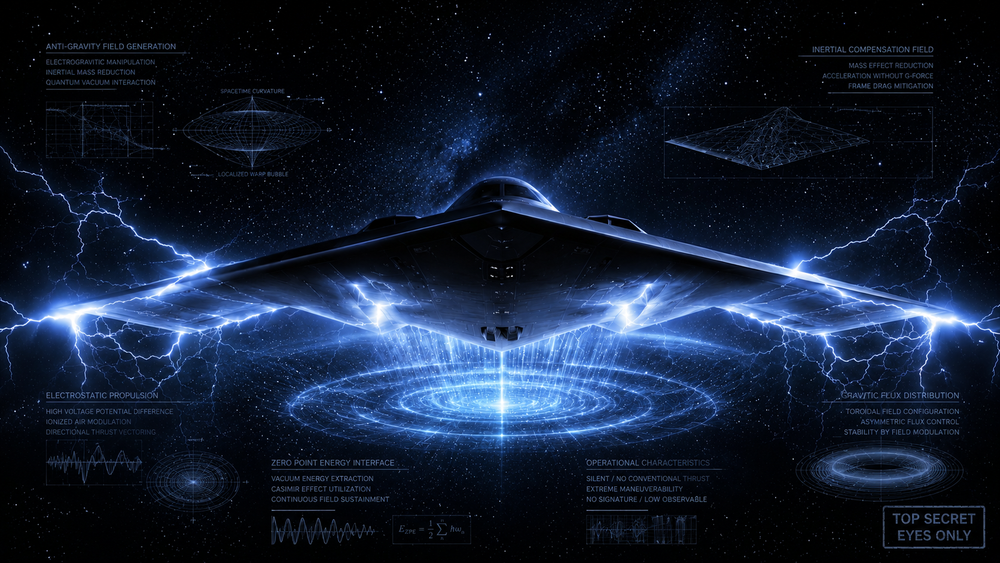
- The Evidence: Between 1954 and 1964, Boeing, Bell, Convair, Lockheed, and the Glenn Martin Company ran active research programmes into gravity control and electrogravitics. Two declassified 1956 industry reports, Electrogravitics Systems and The Gravitics Situation, confirm this activity. The Research Institute for Advanced Studies (RIAS), founded by Martin in 1955, employed physicist Lewis Witten specifically to investigate gravitational theory, and the work prompted parallel Air Force research at Wright-Patterson AFB.
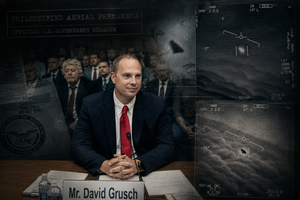
- The Claims: Former intelligence officer David Grusch, in his 2023 congressional testimony and subsequent interviews, alleges that advanced propulsion programmes have been concealed from elected oversight for decades, and that the same framework of atomic secrecy established by the Manhattan Project was applied to UAP-related materials. Aviation journalist Nick Cook, in The Hunt for Zero Point, contends that the gravity research of the 1950s did not fail: it went black.
- What we know: No declassified document confirms that an operational gravity-control propulsion system was achieved. The B-2's documented use of electrostatic charge on its leading edges is ambiguous: consistent with electrokinetic drag reduction, consistent with the Biefeld-Brown effect, or both. George Trimble, the Martin executive who publicly committed to gravity control in 1956, refused all contact with researchers until his death and was described by an intermediary as frightened.
Physics Forgotten Golden Age
In November 1956, the New York Herald Tribune ran a three-part series by aviation journalist Ansel Talbert under the headline "New Air Dream: Planes Flying Outside Gravity." The series quoted Martin Company vice-president George S. Trimble predicting that gravity control could be achieved "in about the amount of time it took to build the first atom bomb," and named Bell Aircraft, Boeing, Convair, Douglas, Glenn Martin, Grumman, Lockheed, and Sperry Gyroscope as companies with active research programmes into what the industry was then calling electrogravitics, gravitics, or simply gravity control. The series ran in a mainstream newspaper, not a fringe circular. Trimble was a senior executive at one of America's most important aerospace contractors, speaking on the record, in public, about cancelling gravity as an engineering problem.
Four years later, the field had effectively ceased to exist in any open forum. The journals stopped publishing. The conferences stopped being held. The industry spokesmen stopped talking. Whether the research concluded in failure, was absorbed into classified programmes, or was quietly strangled for reasons that had nothing to do with its merits is the question that has haunted the margins of aerospace history ever since, and that has acquired renewed urgency since David Grusch's 2023 congressional testimony placed the subject back in public debate.
Grusch, a 14-year intelligence officer and former representative to the Pentagon's Unidentified Anomalous Phenomena Task Force, told the House Oversight Committee in July 2023 that the United States government maintains legacy programmes for the retrieval and attempted reverse-engineering of non-human technology, and that those programmes have been concealed from elected oversight through the application of compartmentalisation frameworks derived from the Manhattan Project. In a subsequent long-form interview, he identified the antigravity research of the 1950s specifically as a significant and underexamined thread, naming the same figures: Townsend Brown, Trimble, Lewis Witten, and the institutional links that connected advanced propulsion research to atomic secrecy.
This article attempts to piece together surviving documentation about the 1950s gravity control era, examines what happened to the research, and applies that record to Grusch's broader claims about the inheritance of Manhattan Project secrecy. It draws on declassified industry reports, archived journalism, congressional records, and the work of researchers including Nick Cook, Paul LaViolette, and the War Zone's exhaustive reconstruction of nearly seven decades of government gravity research.
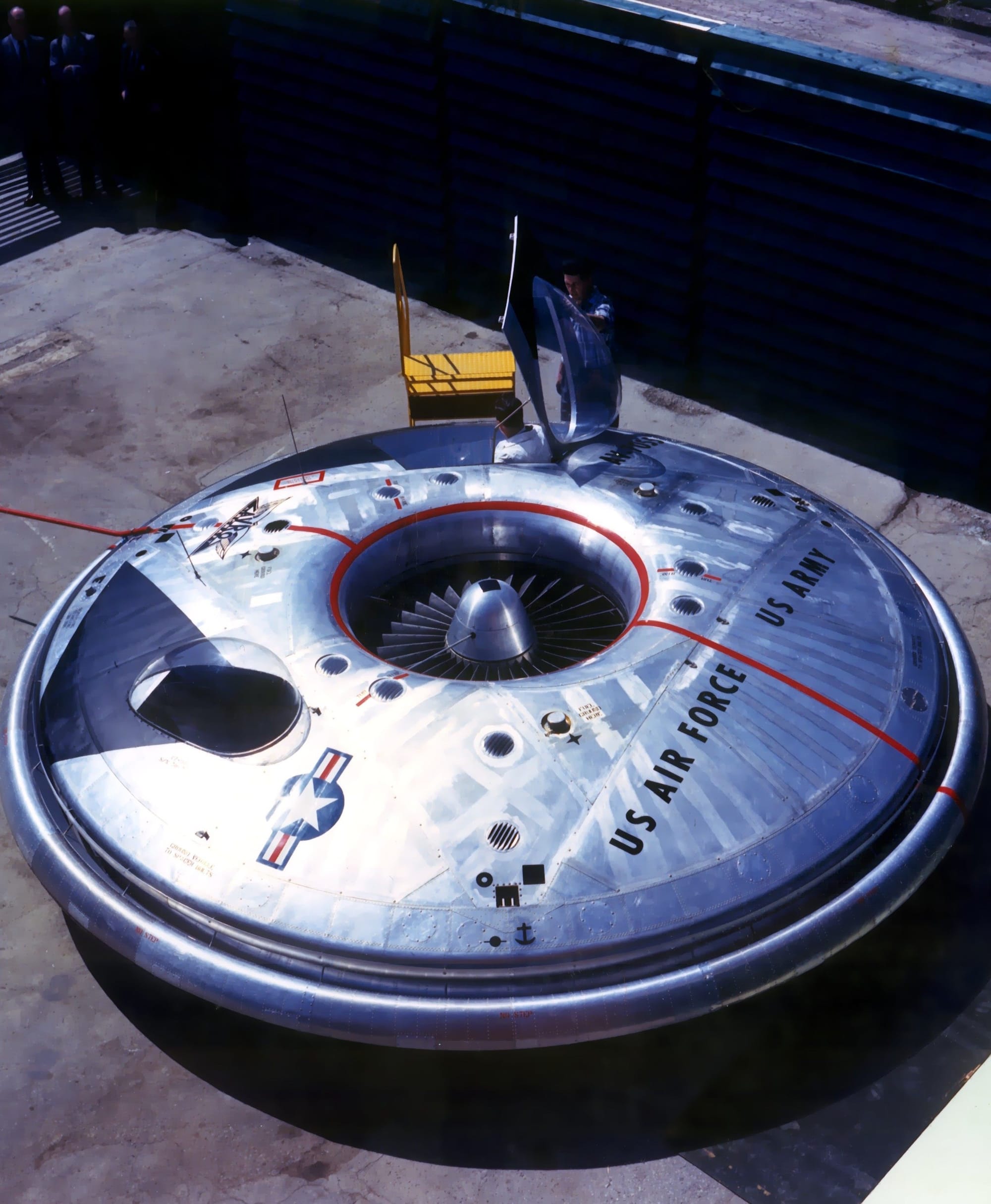
Townsend Brown and the Biefeld-Brown Effect
Thomas Townsend Brown began testing asymmetric high-voltage capacitors at Denison University in 1921, while still an undergraduate. Working with physicist Paul Alfred Biefeld, he observed that a charged capacitor seemed to produce a small thrust in the direction of the positive electrode when isolated from external forces, an effect that would later bear both their names. Brown patented variants of the device in 1928 and 1930, published a popular account in Science and Invention in 1929 under the title "How I Control Gravity," and spent the following three decades attempting, with intermittent official support, to scale the effect into a viable propulsion system.
The physics of the Biefeld-Brown effect remain genuinely contested. The mainstream position, confirmed by American Physical Society reviews and by multiple independent experiments, holds that the observed thrust is produced by electrohydrodynamics: ionised air molecules accelerated by the electric field transfer momentum to the surrounding neutral air, creating what is sometimes called ion wind. On this account, the effect is real, measurable, and has nothing to do with gravity. Brown himself disagreed. He maintained throughout his career that the thrust persisted in vacuum, where there is no air to ionise, and that it represented a genuine coupling between electrostatic charge and gravitational force. A 1952 Naval Research Laboratory investigation was declassified, though copies are no longer available from the NRL directly, and the results it reached remain disputed in the secondary literature.
Brown spent the 1950s pitching what he called Project Winterhaven: a proposal for a manned disc-shaped craft, lifted and propelled entirely by electrogravitic force, capable of speeds he estimated at several hundred miles per hour and potentially much higher. The proposal went to the Air Force, to the Navy, and to private investors. The FBI opened a file on him in 1953, initially over concerns about fraudulent fundraising during the "flying saucer" craze, though a January 1953 declassified FBI memo noted there was no evidence of fraud at that time. A second FBI report in May 1954 documented ongoing investor complaints. These files are accessible through the Black Vault FOIA archive and through archived researcher compilations.
Brown's biography contains several details that resist easy explanation. In 1942 he was abruptly terminated by the Navy with no stated reason, despite strong performance evaluations, and two weeks later appeared as an employee of the Glenn Martin Company in Burbank, California. One year after that, Kelly Johnson founded Skunk Works, Martin's secretive advanced-projects division, at the same site. Brown briefly served as the founding director of NICAP, the National Investigations Committee on Aerial Phenomena, in 1956, before being forced out after only a few months over concerns that he was diverting the organisation's funds into his own electrogravity research. His daughter Linda recalls that he was regularly collected from home in a black Cadillac driven by a man she eventually identified as Robert Sarbacher, a Defence Department consultant whose name appears in multiple documents related to early postwar UAP retrieval programmes. Sarbacher himself confirmed in a 1983 interview with Canadian researcher William Steinman that he had knowledge of crash retrieval activities in the late 1940s and early 1950s, though he described his own role as peripheral.
Brown conducted successful electrogravitics demonstrations in France in 1955 and 1956, satisfying himself that the effect worked in a near-vacuum environment. Interavia magazine covered the French experiments in 1956, and the coverage was sufficiently credible that it contributed directly to the industry review reports that followed. Whether the French vacuum tests genuinely ruled out ion wind or merely reduced it is a point on which the record remains inconclusive. Nick Cook, who spent three years investigating the subject as aviation editor for Jane's Defence Weekly, concluded that they were credible enough to alarm the British and American defence establishments.
Nine Aerospace Contractors and Two Classified Reports
The two documents that place the 1950s gravity programme on the firmest historical footing are Electrogravitics Systems and The Gravitics Situation, both originally published in 1956 by the Gravity Research Group of London's Special Weapons Study Unit and both declassified decades later. Together, they amount to an industry survey of where electrogravitics research stood and which companies were pursuing it.
The Gravitics Situation lists Bell, Boeing, Convair, Douglas, Glenn Martin, Grumman, Lockheed, Sperry Gyroscope, and several others as having active research efforts. It describes the expected trajectory of the technology with the kind of measured enthusiasm one finds in serious technical writing, not in the breathless popular journalism of the same era. Both reports are reproduced in Paul LaViolette's anthology Electrogravitics Systems, which also contains LaViolette's own subsequent research into the B-2 connection. The War Zone's investigation corroborates the industry-wide scope of the 1950s effort from multiple independent archival sources.
George Trimble's role at Martin was specific and public. As Vice President for Aviation and Advanced Propulsion Systems, he had operational authority over research directions, and he used it to found the Research Institute for Advanced Studies (RIAS) in Baltimore in 1955, under the presidency of Martin chairman George Bunker. The first physicist hired by RIAS was Lewis Witten, described in the historical record as an internationally recognised authority on gravitational physics. Witten worked in nonlinear algebra and topological physics at Martin, and simultaneously held a contract with Wright-Patterson Air Force Base to conduct gravity research there. His recruitment by RIAS directly inspired the Air Force to establish its own parallel gravitational research effort at Wright-Patterson, which Witten described in a recorded roundtable interview preserved in the archives of the UNC Physics Department.
In a 1956 article in Jane's Defence Weekly, Trimble went on the record about the programme's ambitions. He added that the conquest of gravity could be achieved in roughly the same timeframe as the Manhattan Project. These are not the words of a fringe enthusiast. They were published in the world's most authoritative defence journal and attributed to a named senior executive of a major defence contractor. Trimble also attended Ansel Talbert's round of interviews for the Herald Tribune series, alongside Sikorsky representatives and industrialist Clarence Birdseye, which speaks to how far outside the fringe the subject sat in 1956.
"We're already working on nuclear fuels and equipment to cancel out gravity."
George S. Trimble, Vice President for Aviation and Advanced Propulsion Systems, Glenn L. Martin Company, Jane's Defence Weekly, 1956
Agnew Bahnson, the North Carolina industrialist who financed much of the surrounding institutional infrastructure, ran his own experimental laboratory in Winston-Salem from 1957 to 1958 with Brown and physicist James Frank King, where he attempted to replicate and scale Brown's electrogravitic thrust measurements under controlled conditions. The Bahnson-Brown-King collaboration produced measurable results: electrically induced thrust was real and controllable, and the experiments foreshadowed later work in ion-drive propulsion. Bahnson also funded the Institute of Field Physics at the University of North Carolina and was the primary private backer of the 1957 Chapel Hill Conference on gravitation.
Chapel Hill: Where Serious Physics Met Bahnson's Money
The January 1957 Chapel Hill Conference on the Role of Gravitation in Physics is now recognised as one of the pivotal events in twentieth-century theoretical physics. It was at Chapel Hill that Richard Feynman delivered his "sticky bead" argument for the physical reality of gravitational waves, a debate that would not be settled observationally until LIGO detected them in 2015. The conference was organised by Bryce DeWitt and Cécile DeWitt-Morette, and its steering committee included Peter Bergmann, Freeman Dyson, and John Archibald Wheeler. The attendee list reads as a roll call of the most consequential gravitational physicists of the twentieth century.
The conference's financial backing, however, came from Agnew Bahnson, the same man funding Brown's electrogravitics experiments. This is a fact of the historical record, documented in correspondence at the UNC physics department archives, and it places the 1957 Chapel Hill Conference in a more complicated position than its standard historiography acknowledges. The conference proceedings were serious physics: they had nothing to do with electrostatic thrust or flying saucers. What Bahnson hoped to extract from the gathering of those particular minds, and whether his investment in mainstream gravitational theory and his investment in Brown's applied electrogravitics were parts of a single project or simply parallel enthusiasms, is not resolved by the existing documents.
Lewis Witten was present at Chapel Hill and had also conducted contract work at Wright-Patterson. In the interview recorded for the American Institute of Physics oral history project, he mentions that a vice president of the Martin Company had drawn his attention to a report about a type of bismuth that appeared to exhibit repulsion rather than gravitational attraction. Gary Nolan, Stanford microbiologist and sometime adviser to intelligence agencies on UAP materials, claims to have examined layered magnesium-bismuth samples recovered from alleged crash retrievals with isotopic ratios that do not occur naturally on Earth. The chain from Lewis Witten's bismuth anecdote to Nolan's samples is speculative, but it is one of the few threads in this field with multiple independent points of reference. Lewis Witten's son, Edward, would go on to become the central figure in string theory's development, a connection that Grusch and the interviewer address directly in the Yes Theory conversation, and which deserves its own examination.
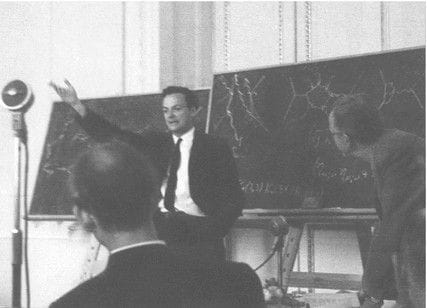
String Theory The False Flag of Physics?
In the Yes Theory interview published in late 2023, Grusch and host Ammar Kandil spend several minutes on a hypothesis that is, by the standards of the surrounding conversation, surprisingly specific. The argument, which Grusch attributes partly to his own private speculation and partly to Eric Weinstein, runs as follows: string theory, the dominant framework for unifying quantum mechanics and gravity for the past four decades, is mathematically extraordinary and empirically sterile. It has produced no testable predictions about the physical world in the nearly fifty years since Edward Witten made it the central project of theoretical physics. If you wanted to ensure that the most gifted gravitational physicists in the world never produced a publicly available breakthrough in propulsion, routing them into a beautiful, self-consistent, and permanently unfalsifiable mathematical framework would be one effective approach. The interviewer puts it plainly:
"I have privately said to you that string theory was a very odd development. Because it both allowed physics to proceed as if it was doing something new, while breaking no new ground in the physical world in which we live. I don't really know. If you were trying to stagnate the field, string theory is pretty brilliant."
Ammar Kandil, David Grusch Breaks Silence: Inside Secret UFO Programs, Yes Theory / YouTube, 2023
The biographical thread that makes this more than a casual provocation is the one running directly through Lewis Witten. Ed Witten was born in Baltimore in 1951, the son of a man who was, at the time, working on gravitational physics at the Glenn Martin Company's Research Institute for Advanced Studies, holding a simultaneous Wright-Patterson contract for gravity research, and attending the Chapel Hill Conference alongside Feynman, Dyson, and Wheeler, all of it funded by the same industrialist who was bankrolling Townsend Brown's electrogravitics experiments forty miles away. Ed Witten completed his doctorate at Princeton in 1976 and had his decisive encounter with string theory the following year. By the mid-1980s he had declared it the defining physics project of the coming century, and for the next four decades the most mathematically gifted people in theoretical physics followed him into it.
The results are a matter of record. As physicist Peter Woit documented at length in Not Even Wrong (2006), string theory has made precisely one empirical prediction about the physical world: the value of the cosmological constant, which it got wrong by approximately 55 orders of magnitude. Woit bet string enthusiast Michio Kaku $2,000 that no Nobel Prize would be awarded for string theory work by 2020. He won. Ed Witten, widely regarded as the most technically formidable physicist of his generation, has won the Fields Medal, the highest prize in mathematics, but not a Nobel in physics, because string theory does not make contact with testable physics.
"String theory not only makes no predictions about physical phenomena at experimentally accessible energies, it makes no precise predictions whatsoever. This is perhaps the most incorrect experimental prediction ever made by any physical theory that anyone has taken seriously."
Peter Woit, American Scientist, "Is String Theory Even Wrong?", 2002
None of this establishes that string theory was a deliberate misdirection. The more straightforward explanation is that it represents a genuine and difficult problem in fundamental physics, that the best minds in the field have been working on it in good faith, and that it has simply proved harder than anticipated to connect the mathematics to measurable reality. Ed Witten has acknowledged as much in interviews, noting that the theory might require decades more work before yielding precise physical descriptions. The mainstream physics community's position, as represented in publications from Scientific American to the Stony Brook Centre for Geometry and Physics, is that string theory is a legitimate and fruitful area of mathematical physics, whatever its current limitations as a predictive physical theory.
What the hypothesis does demonstrate is that a generation of physicists who publicly committed to gravity control in the 1950s, who worked at Wright-Patterson, who attended Chapel Hill, and who connected applied electrogravitics to mainstream gravitational theory, produced a son who became the defining figure of a branch of physics that has occupied the best available minds for fifty years without producing a single testable prediction about gravity at any accessible energy scale. Whether that is coincidence, irony, or something more deliberate is not a question the available evidence resolves. It is, however, a question that would not exist if Lewis Witten had been an accountant.
The Research That Simply Stopped
The gravity control research that filled aerospace journals in 1956 had effectively vanished from the open literature by the mid-1960s. RIAS itself continued to exist until 1973, when it was absorbed into Martin Marietta, but its published work shifted decisively toward systems control theory and applied mathematics, with no trace of the gravitational physics work in its post-1960s output. The various independent research groups funded by Bahnson dissolved following his death in 1964. Brown continued to file patents into the 1960s, worked briefly for Electrokinetics Inc., and then faded into semi-retirement in California, his Project Winterhaven never having attracted the institutional commitment he believed it deserved.
Two competing explanations have been offered for this disappearance. The first is that the research simply failed: that electrogravitics offered no path beyond ion wind effects already achievable by less exotic means, that the major aerospace contractors quietly concluded they had reached a dead end, and that the field dissolved because it produced nothing of military value. This is the explanation most consistent with scientific parsimony. It is also consistent with the fact that no aircraft attributed to electrogravitic propulsion has ever been confirmed to exist.
The second explanation, advanced by Nick Cook in The Hunt for Zero Point (2001) and corroborated in outline by Grusch's later testimony, is that the research did not fail but was instead withdrawn into the black budget world that expanded dramatically through the late 1950s and 1960s. Cook, working from the same Ansel Talbert articles and the same RIAS history that is now publicly documented, attempted to contact George Trimble through a mutual contact at Lockheed Martin. Trimble had spoken freely to journalists in 1956. By the time Cook tried to reach him, he would not say a word.
"I don't know who this old man is or what he once was, but he told me in no uncertain terms to get off his case. He doesn't want to speak to me and he doesn't want to speak to you. Not now, not ever. I don't mind telling you that he sounded scared."
Lockheed Martin intermediary, quoted in Nick Cook, The Hunt for Zero Point, 2001
The infrastructure that might have supported a classified continuation was in place. Wright-Patterson already housed foreign technology exploitation units, had been the site of the nuclear engineering test facility, and was the location of Project Blue Book. Witten's own account confirms that Martin's RIAS work prompted the Air Force to establish its own gravity research unit there. Whether that unit produced anything, and what became of it, is not answered by any document currently in the public domain.
The B-2 and the Charged Leading Edge
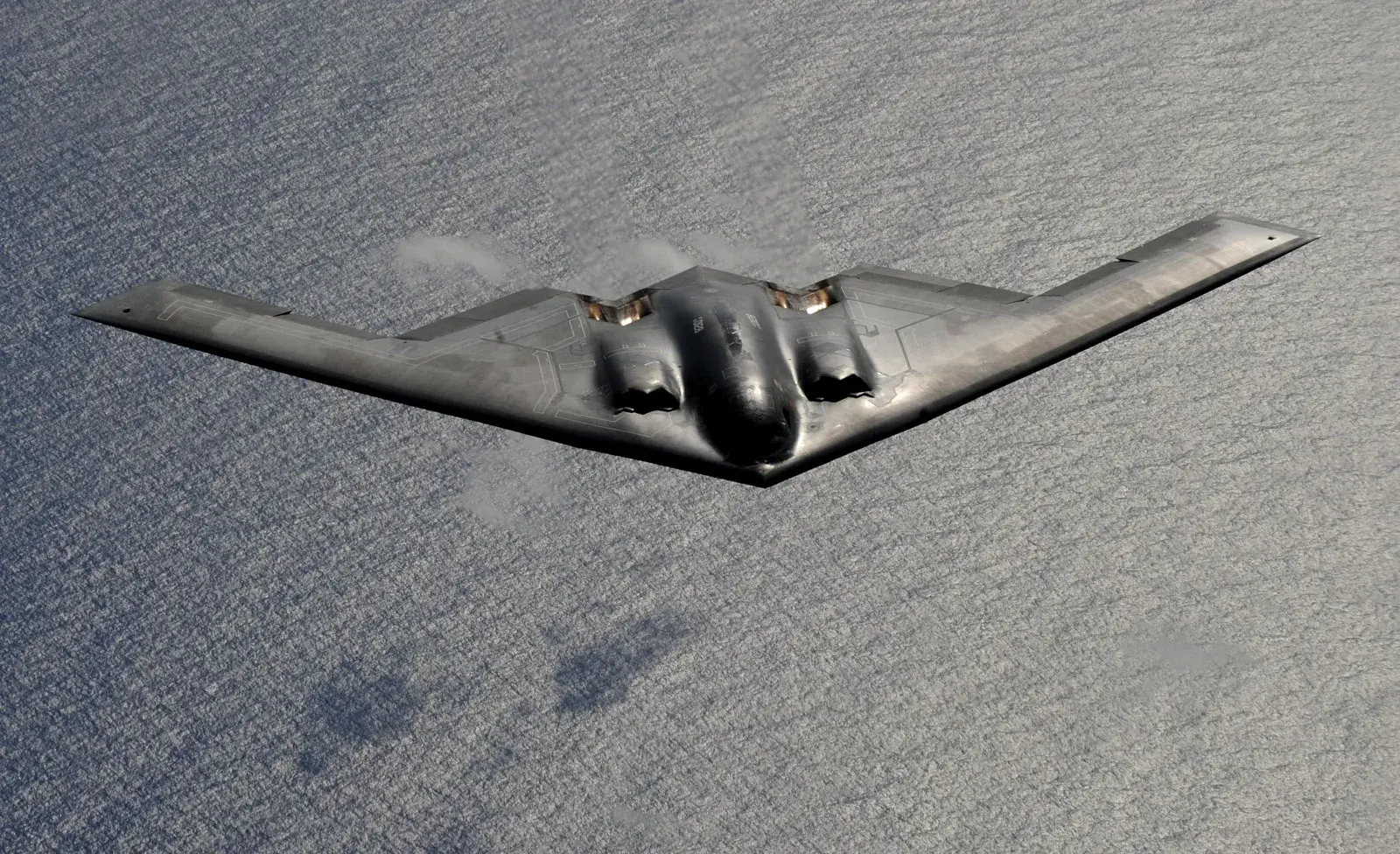
The strongest piece of circumstantial evidence for a classified continuation of Brown's work came in the March 9, 1992 issue of Aviation Week and Space Technology, when the magazine disclosed that the B-2 Advanced Technology Bomber electrostatically charges its exhaust stream and the leading edges of its flying-wing body. The disclosure was attributed to a group of renegade West Coast scientists and engineers who had broken ranks. The magazine framed it primarily in terms of stealth: the electrostatic charge was described as part of the aircraft's radar and infrared suppression system. LaViolette argued instead that it described an electrokinetic propulsion system directly derived from Brown's work, operating on the Biefeld-Brown effect, and that the B-2's unusual rain sensitivity (it cannot operate in wet conditions) is a direct consequence of the dielectric wing charge shorting out.
The sceptical reading of the B-2 disclosure is straightforward: electrostatic charge on a wing's leading edge is a known technique for reducing aerodynamic drag and managing the boundary layer, with well-established fluid dynamics explanations that require no appeal to modified gravity. Northrop, the B-2's prime contractor, conducted wind tunnel tests as early as 1968 in which charged leading edges were used to soften sonic boom effects, following Brown's own suggestion that this would be a beneficial side-effect of his electrogravitic technique. The chain from Brown to Northrop is documented. Whether what Northrop implemented was electrogravitics or electrokinetics or simply high-voltage drag management is, by the nature of the classification, impossible to confirm from public sources alone.
The investor connection adds another layer. Floyd Odlum, the majority investor in Northrop, was also an investor in Brown's company Guidance Technologies in the 1960s. The Glenn Martin Company, which became Martin Marietta and eventually merged with Lockheed, was the corporate home of both Trimble's RIAS and the Skunk Works division that Brown joined in 1942. These are real financial and institutional links, not conspiracy-board speculation. They do not prove that the B-2 flies on modified gravity. They do demonstrate that the same industrial network that publicly committed to gravity research in the 1950s built the aircraft in question thirty years later.
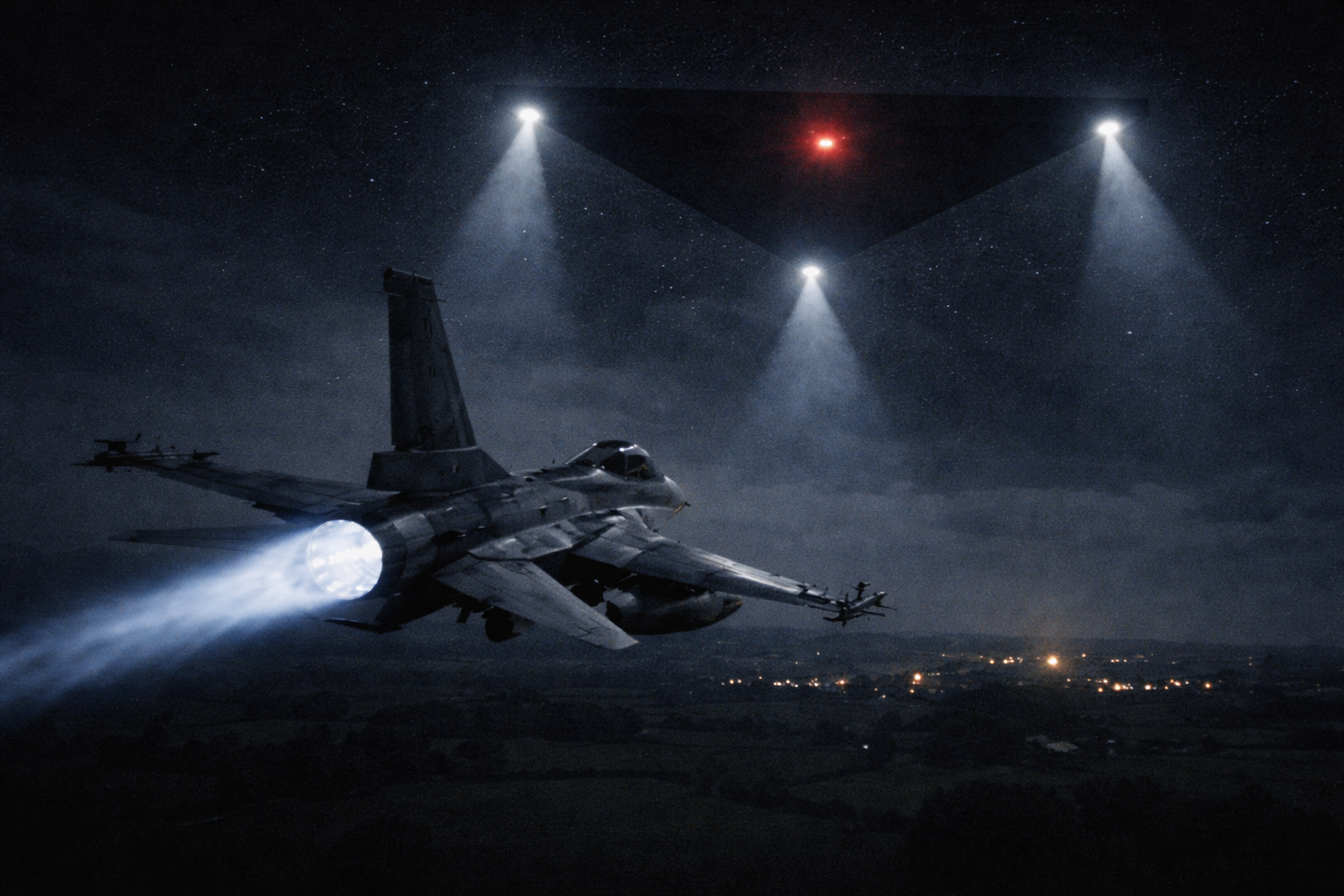
There is a postscript the serious literature tends to avoid. The TR-3B. The name circulates in the more excitable corners of UAP research as a designation for a rumoured black triangular craft supposedly operating on a mercury plasma ring that reduces the vehicle's apparent mass before conventional propulsion takes over. No document confirms it exists. What is documented is the Belgian flying triangle wave of 1989 to 1990, in which F-16s were scrambled after radar returns and hundreds of civilian witnesses reported large silent triangular craft operating at low altitude over populated areas. De Brouwer later confirmed the radar tracks were genuine and the phenomenon remained officially unidentified. Whether those triangles were the B-2 on unauthorised European test flights, something derived from the same electrogravitics lineage this article traces, or something else entirely, nobody has said on the record. The TR-3B label may be disinformation, a misidentification of genuine black aerospace, or both. It earns its place here because it sits at precisely the junction where documented classified history ends and high strangeness begins.
Grusch, Condon, and the Manhattan Project Blueprint
David Grusch's relevance to this history lies not in any specific claim about electrogravitics but in his broader account of how advanced programmes were concealed, and specifically in his identification of the Manhattan Project secrecy framework as the vehicle for that concealment. In his Yes Theory interview with Ammar Kandil, recorded in the months following his July 2023 congressional testimony, he made the connection explicit.
"The guys that were involved in Manhattan were overlaying the same ecosystem of secrecy, and some of the same ways to protect stuff that they were protecting on nuclear secrets."
David Grusch, David Grusch Breaks Silence: Inside Secret UFO Programs, Yes Theory / YouTube, 2023
This matters for the antigravity question because it provides a credible mechanism, rather than a conspiratorial assertion, for how research publicly conducted by major contractors in the mid-1950s could have been absorbed into programmes that left no public trace. The Atomic Energy Act of 1954, as Grusch noted, defines special nuclear material in terms broad enough to encompass any material releasing atomic energy, which would include retrieved materials exhibiting radiological properties. The compartmentalisation architecture built to protect nuclear secrets after 1945 was, by the mid-1950s, a mature and proven system. Trimble's RIAS, Lewis Witten's Wright-Patterson contract work, and Brown's rolling series of classified demonstrations at the Naval Research Laboratory all occurred precisely as that architecture was being extended to cover an expanding range of advanced programmes.
Grusch also identified Edward Condon as a figure who connects the Manhattan Project directly to the systematic discrediting of UAP research. Condon's biography, as documented at the Atomic Heritage Foundation, places him at the core of American nuclear secrecy: he helped Oppenheimer recruit the Los Alamos team in 1943, wrote the Los Alamos Primer (the classified orientation document for all project staff), and was a key consultant on the 1946 McMahon Atomic Energy Act, which established the legislative framework for nuclear classification. In 1966 the Air Force appointed him to chair the University of Colorado's UFO investigation, which produced the 1968 Condon Report, a document that effectively ended public-sector UAP research for the following two decades. A leaked 1968 internal memorandum, obtained through the Freedom of Information Act and reported by HowStuffWorks Science and others, confirmed that Condon had coordinated with Air Force Colonel Robert Hippler, who had expressed clear written intent that all previous UAP research be shown to have been a waste of money. One-third of the cases the committee examined remained unexplained in its own report.
Whether Condon was an insider who understood what he was suppressing, a useful instrument of Air Force policy, or simply a distinguished physicist who had genuinely concluded that UAP research was scientifically unproductive, the historical record does not permit a confident answer. What it does establish is that the man who dealt the definitive public blow to UAP research in the second half of the twentieth century was also one of the architects of the classification system Grusch identifies as the primary mechanism of concealment.
The Sceptical Case
A careful reading of the available evidence does not support the conclusion that a working antigravity propulsion system was achieved and classified. It supports the more limited claim that serious research was conducted, that it was connected to important industrial and institutional figures, and that the cessation of that research in the open literature remains inadequately explained. These are different claims, and conflating them is the most common analytical error in this field.
The Biefeld-Brown effect, as the mainstream physics consensus stands, is an ion wind effect. Experiments conducted at NASA in 2003 and subsequently replicated found that the thrust Brown observed disappears in high-vacuum conditions, which directly contradicts his own reports from France in 1956 and would make his proposed spacecraft non-functional in the near-vacuum of high altitude. LaViolette disputes this finding on methodological grounds. The argument is unresolved, but the burden of evidence currently favours the ion wind interpretation.
Lewis Witten's own account of his work at RIAS, as reconstructed by researchers working from the American Institute of Physics oral history archive, suggests that RIAS did not achieve any gravity control physics beyond what was then known, and that Witten remained sceptical of Trimble's commercial ambitions from the outset. The War Zone's investigation similarly concludes that the declassified documentary record, while confirming the breadth of the 1950s effort, does not confirm any operational breakthrough. The research may have ended because it reached a dead end, not because it was too sensitive to discuss.
George Trimble's silence is suggestive but not conclusive. Senior executives with long careers in classified aerospace programmes have many reasons to refuse contact with journalists, none of which need involve knowledge of recovered non-human technology. Nick Cook's account of the frightened intermediary is detailed and specific, but it is a single reported conversation and cannot be independently verified.
The B-2's electrostatic leading-edge charging is real and documented, but the electrostatic management of boundary layers and radar signatures does not require invoking modified gravity. The aircraft's engineers have given conventional aerodynamic and stealth explanations for the system, and those explanations are consistent with the known physics. The rain sensitivity, while consistent with LaViolette's interpretation, is also consistent with the simpler claim that high-voltage systems and moisture do not mix well.
What the sceptical case cannot fully account for is the abruptness of the disappearance. Research that in 1956 was being conducted by nine named aerospace contractors, funded by the Air Force, described in two declassified industry reports, and discussed openly in major defence publications, does not usually vanish from the literature without trace in under a decade because of nothing more than gradual scientific disappointment. Research programmes that fail tend to produce published accounts of their failure, papers explaining what did not work and why. The antigravity literature of the early 1960s contains nothing of the kind. It simply stops.
Final Thoughts
The documented history of America's 1950s gravity control programmes is more substantial than most people realise, and considerably less conclusive than the more enthusiastic accounts suggest. The work was real. The institutional players were significant. The abrupt disappearance from public record is anomalous by the normal standards of scientific failure. And the network of individuals connecting Townsend Brown to the Manhattan Project secrecy apparatus, to the defence contractors who built the B-2, and to the institutional infrastructure that discredited UAP research for a generation, is a matter of documented fact rather than extrapolation.
What is not established is whether any of this produced an operational propulsion technology. The gap between "serious classified research was conducted" and "a working antigravity vehicle exists" is wide, and the available evidence does not bridge it. Grusch's testimony establishes a credible mechanism by which such research might have been concealed. It does not confirm that the research succeeded.
George Trimble is dead. Townsend Brown died in 1985 and left behind a legacy that remains, even now, genuinely ambiguous: a man whose devices may have detected something real, or may have consistently misidentified ion wind for something it was not, and whose biography is tangled with enough classified programmes and intelligence-adjacent figures to make either reading difficult to dismiss. Lewis Witten, born in 1921, is by any account among the last living connections to the research era this article describes. The bismuth, the charged leading edges, and the frightened old man who would not speak to the journalist are all still in the file. So is the silence where the published science should be.
The 1957 Chapel Hill Conference proceedings, funded by the same man who was paying Townsend Brown to build flying saucers in North Carolina, are freely available online in their entirety from the Max Planck Institute for the History of Science. They are serious physics. They contain no mention of electrogravitics, disc-shaped aircraft, or classified propulsion. Whether the same men who attended Chapel Hill carried anything from that meeting into programmes that have never been disclosed is a question the public record cannot answer. What the public record does say is that those men were in the same room, funded by the same money, at the same moment that American aerospace was publicly committed to cancelling gravity as an engineering constraint. After 1964, it all stopped. No one has adequately explained why.