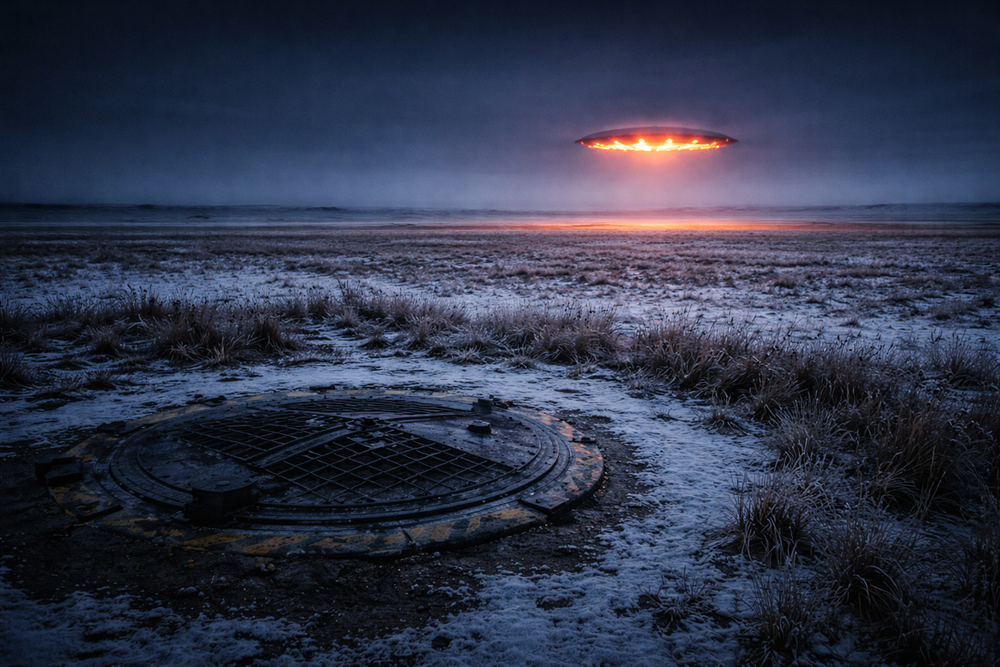
Contents
At 8:45 on the morning of March 16, 1967, the crew of Echo Flight Launch Control Center at Malmstrom Air Force Base watched the status indicators for all ten of their Minuteman I missiles switch simultaneously to No-Go. No command had been issued, no fault identified, and no maintenance order was in effect. Within seconds, ten nuclear-armed ICBMs, each of which was capable of destroying a city, were offline, and no one in the chain of command could explain why.
The Air Force investigated. Boeing sent engineers to Montana. Neither produced an explanation that accounted for the simultaneous failure of ten hardened, isolated systems, and the official record has never acknowledged what security personnel at the Echo Flight facilities reported at precisely the same time: a glowing, silent object manoeuvring over the site.
Almost sixty years on, no cause has been established, and the case remains open.
The Setting: 341st Strategic Missile Wing
Malmstrom Air Force Base sits on the high plains east of Great Falls, Montana, and in March 1967 it was home to the 341st Strategic Missile Wing, one of the most operationally critical nuclear installations in the United States. Its Minuteman I ICBMs were distributed across thousands of square miles of Montana farmland in hardened underground silos, each one capable of launch within minutes of an order and carrying a warhead with the capacity to destroy a city the size of New York.
Underground Launch Control Centers were staffed around the clock by two-officer crews, who ranked among the most rigorously vetted personnel in the US military. Their function was straightforward and absolute: maintain the readiness of their assigned missiles and await orders.
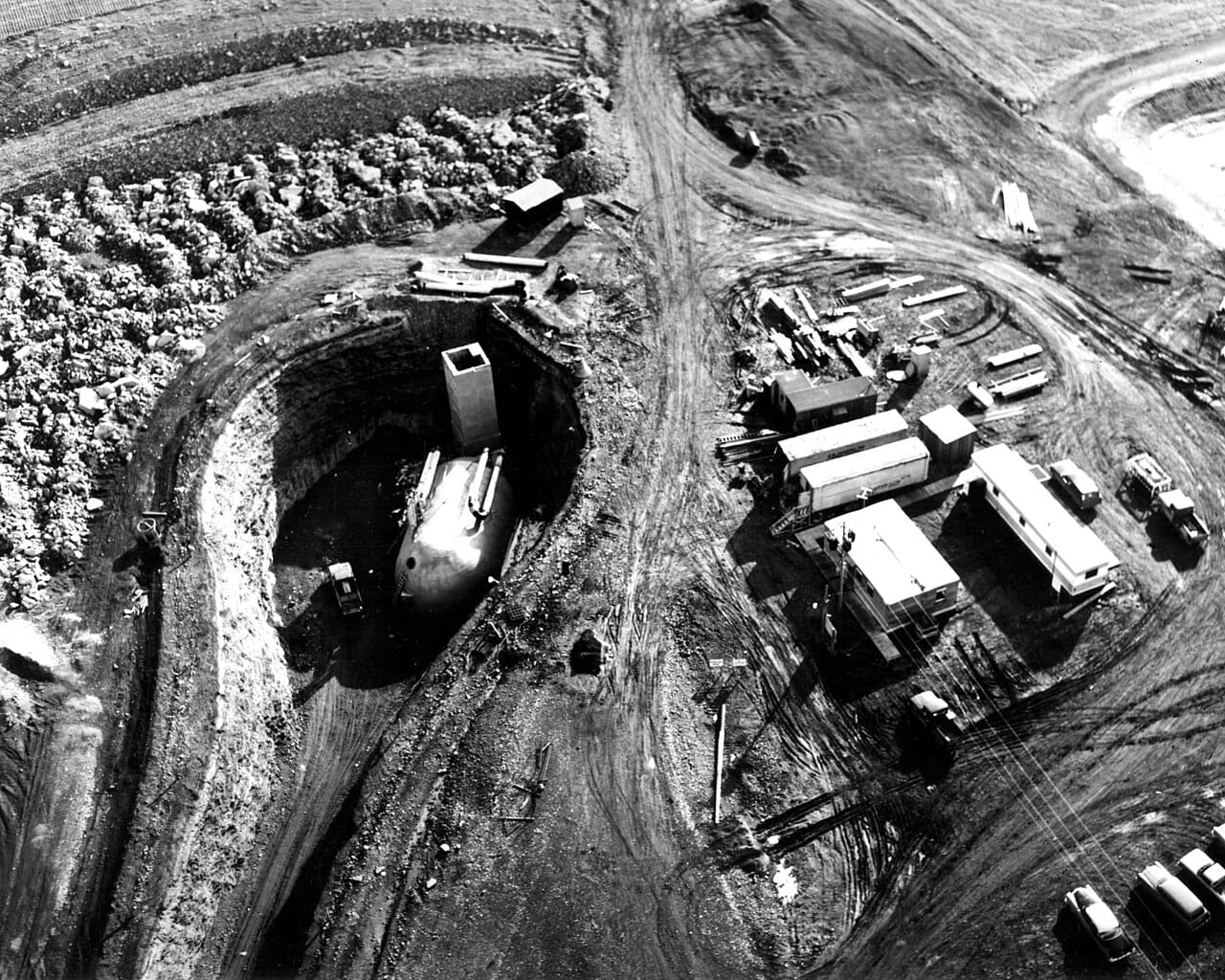
A Launch Control Facility under construction at Malmstrom AFB, Montana. The underground capsules housing Echo and Oscar Flight crews were built to withstand nuclear attack, hardened, isolated, and considered impervious to outside interference. Nothing in their design accounted for what happened on the morning of March 16, 1967. Image: U.S. Air Force / Public Domain.
The Incident: Ten Missiles, No Explanation
Shortly before dawn on March 16, the crew at Echo Flight began registering alarm signals. One by one, and then all at once, the ten Minuteman I missiles under their command transitioned to No-Go status, inoperable and incapable of launch. There had been no maintenance order, no command from above, and no known technical fault that could account for the simultaneous failure of ten hardened, isolated systems.
According to witness accounts, and in some cases immediately preceding the shutdowns, security personnel at the Echo Flight facilities reported a glowing, reddish-orange object moving in complete silence above the site, which hovered without apparent propulsion before departing at speed.
First Lieutenant Walt Figel, the Echo Flight deputy commander, has confirmed on record that a security guard contacted him during the incident to report an object hovering directly over one of the launch facilities, a report which Figel initially dismissed until all ten of his missiles were offline.
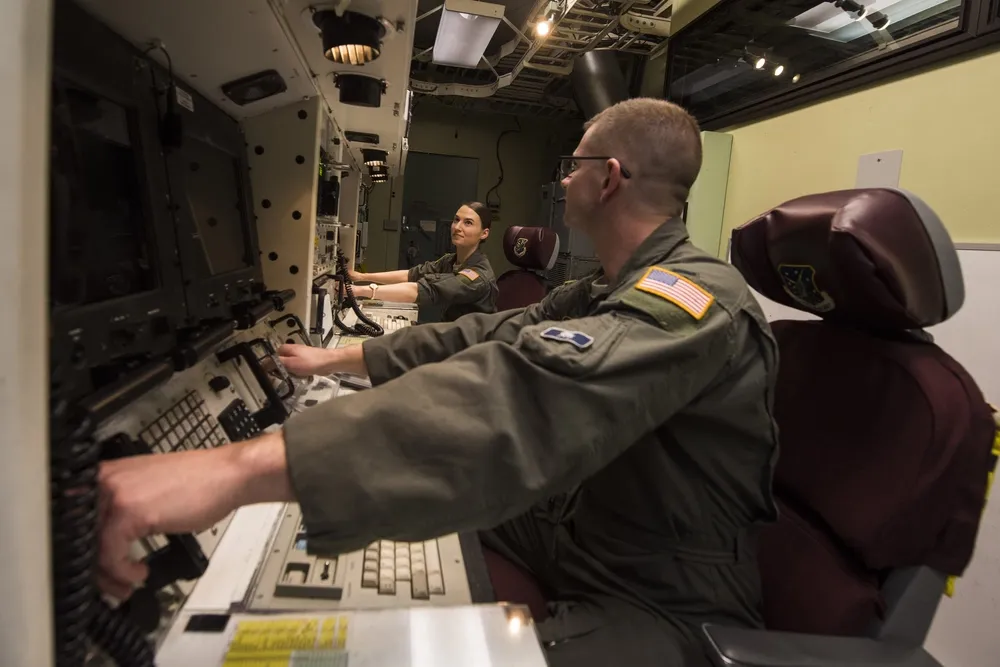
The interior of a Minuteman Launch Control Center capsule, suspended on shock absorbers sixty feet underground and crewed around the clock by two officers. On the morning of March 16, 1967, the crew at Echo Flight watched the status indicators for all ten of their missiles switch simultaneously to No-Go. No command had been given. No fault had been identified. Image: U.S. Air Force / Public Domain.
The Witnesses
The Malmstrom incident rests on the testimony of named, decorated, career military officers who have spoken publicly, in some cases for decades, at considerable personal and professional cost.
Captain Robert Salas, a former ICBM launch officer, has been the most persistent of these voices. Salas maintains that a near-identical event occurred at Oscar Flight, another Malmstrom missile squadron, around the same date, during which he personally received a call from a topside security guard reporting a luminous object over the front gate, and within moments his flight's missiles began going offline, a sequence he has documented through FOIA requests, a co-authored book, and public testimony spanning over thirty years, none of which has produced the Oscar Flight records he has requested from the Air Force.
At the 2010 National Press Club press conference in Washington DC, organised by investigative researcher Robert Hastings, seven former US Air Force officers gave coordinated, on-the-record testimony that UAP had been observed at nuclear weapons sites on multiple occasions, and that the government had not been transparent about these events.
“I want the Air Force to come forward and say, yes, this happened, and yes, we don’t know what it was. That’s the truth. That’s what the American public deserves to know.”
— Captain Robert Salas, USAF (Ret.), ICBM Launch Officer
Spoken testimony delivered at the National Press Club, Washington DC, 27 September 2010. Archived by the Coalition for Freedom of Information. Also cited in: Salas & Klotz, Faded Giant (BookSurge, 2005), Ch. 4.
What the Investigation Found
The Air Force launched an immediate investigation, and Boeing dispatched engineers to Montana. Their combined conclusion, as reported by researchers with access to partially declassified documents, amounted to a non-answer: the cause could not be determined through standard diagnostic methods. The Air Force's own inquiry attributed the shutdowns to an unverified electrical pulse in the missile guidance logic circuitry, while identifying no source for that pulse. Ten hardened, isolated systems do not fail simultaneously without a cause, and none was ever officially established.
Project Blue Book, the Air Force's official UAP investigation programme which ran until 1969, referenced sightings in the Malmstrom area but failed to connect them to the operational anomalies. Its methodology was oriented toward explaining away rather than investigating, and the Malmstrom case received treatment that researchers have consistently described as inadequate.
- Ten Minuteman I ICBMs simultaneously disabled at Echo Flight, March 16, 1967
- Unidentified luminous object reported over the site by multiple security personnel, concurrent with the shutdowns
- Boeing and Air Force investigations found no conventional technical explanation
- A near-identical event is alleged at Oscar Flight; records remain missing or classified
- Multiple named, on-record officer witnesses; testimony submitted under oath at the National Press Club, 2010
- No official cause has ever been publicly established
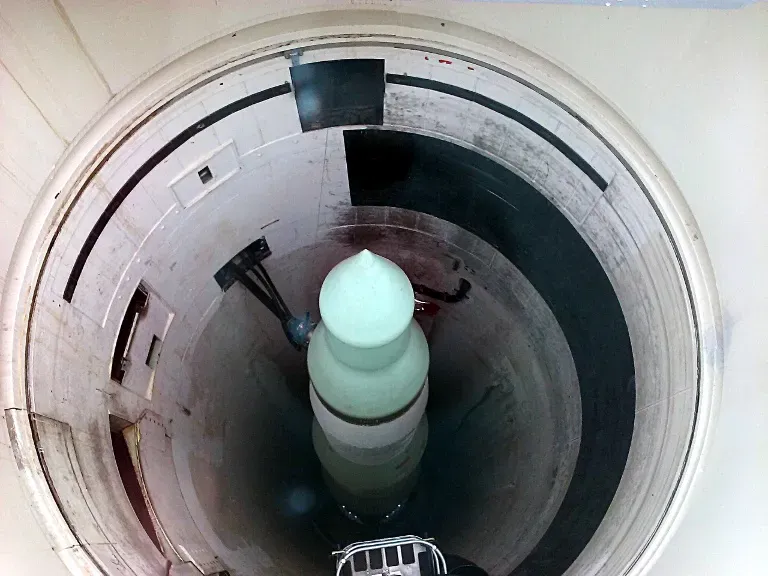
A Minuteman III ICBM in its hardened silo, 1989. In March 1967, ten missiles of the earlier Minuteman I variant, each carrying a nuclear warhead capable of destroying a city, went simultaneously offline at Echo Flight, Malmstrom AFB. Boeing engineers and Air Force investigators could not determine a cause. Image: U.S. Air Force / Public Domain.
What Remains Unanswered
The Air Force has never accounted for the simultaneous failure of ten independent systems. Oscar Flight records Salas requested remain unproduced, and the connection between the reported object and the missile shutdowns has gone officially unexamined.
Within eighteen months of Malmstrom, a B-52 crew at Minot Air Force Base tracked an unknown object on radar over another nuclear installation while ground alarms triggered at a missile site below. Fifteen years later, the same pattern appeared on the Soviet side, when R-12 missiles at a base in the Ukrainian SSR activated their pre-launch sequence without any order from Moscow, while an unidentified object hovered overhead. Whether the Echo Flight shutdown was an isolated event or one instance in a consistent pattern of proximity-correlated interference with nuclear systems across both sides of the Cold War is a question the public record cannot answer, because the relevant records have not been released.
“The question is not simply whether something unusual was observed in the sky. The question is whether that something demonstrably interfered with armed, strategic nuclear weapons, and whether that possibility has ever been honestly confronted by the institutions responsible for those weapons.”
— Robert Hastings, Investigative Journalist & UAP Researcher
UFOs and Nukes: Extraordinary Encounters at Nuclear Weapons Sites (AuthorHouse, 2008), Introduction, p. xiv.
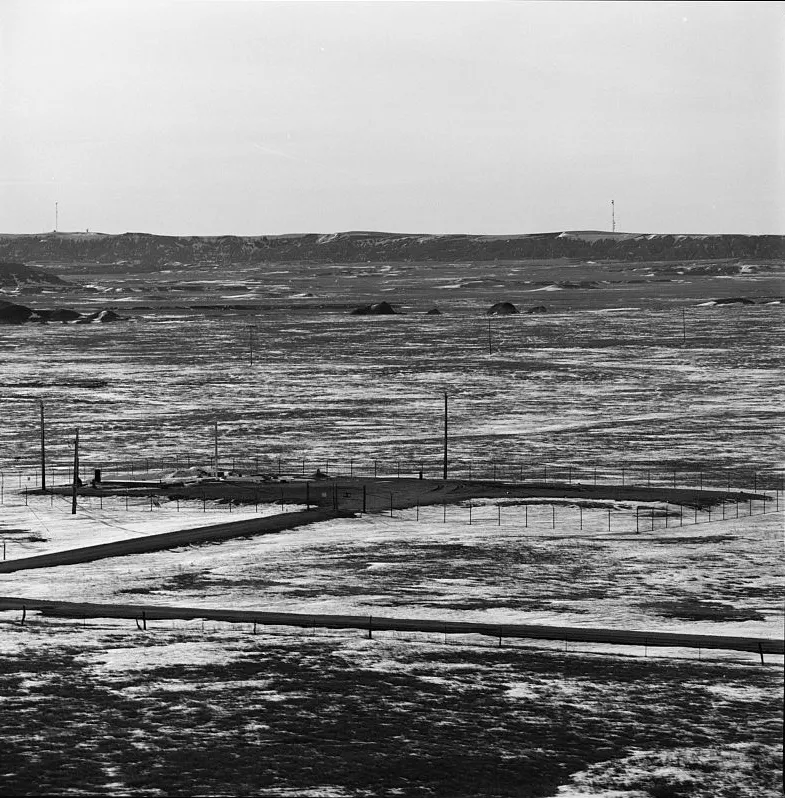
Aerial view of a Minuteman missile alert facility on the Great Plains, a small hardened compound concealing an underground Launch Control Center and ten ICBM silos dispersed across miles of surrounding farmland. The 341st Strategic Missile Wing at Malmstrom operated 150 such missiles across central Montana. Image: U.S. Air Force / Public Domain.
Final Thoughts
Set aside, for a moment, the question of what the object was. Consider instead what it did. If something non-human demonstrated the ability to neutralise ten nuclear-armed ICBMs simultaneously, without physical intrusion, without triggering any known defence response, and without leaving a traceable cause, then the strategic implications extend well beyond a single incident in Montana in 1967. They extend to every assumption about deterrence, about sovereignty over weapons of mass destruction, and about who, ultimately, controls the most dangerous technology human civilisation has ever built.
That question has never been asked at any official level, at least not publicly. Which may itself be the answer.
Cold War UFO Case Files Series
The Malmstrom missile shutdown is the first case in the Stranger Times Cold War UFO Case Files series, and the same pattern reappears at Minot in 1968, at Rendlesham in 1980, and most directly at a Soviet nuclear base in Ukraine in 1982, where proximity to an unidentified object triggered an unauthorised missile launch sequence. Each article examines a distinct encounter in the same depth: primary sources, witness testimony, official response, and the sceptical arguments that have been tested against the evidence.
- Case 01 · Malmstrom AFB Missile Shutdown, USA — 1967 (This Article)
- Case 02 · Minot AFB Encounter, USA — 1968
- Case 03 · Tehran Phantom Intercept, Iran — 1976
- Case 04 · Rendlesham Forest Incident, UK — 1980
- Case 05 · Soviet Missile Base Incident, USSR — 1982
- Case 06 · Belgian UFO Wave — 1989–1990
Sources
- Salas, Robert & Klotz, James. Faded Giant: The 1967 Missile/UFO Incidents. BookSurge Publishing, 2005.
- Hastings, Robert. UFOs and Nukes: Extraordinary Encounters at Nuclear Weapons Sites. AuthorHouse, 2008.
- U.S. Air Force. Project Blue Book Archive. Declassified records, National Archives, Washington DC.
- Strategic Air Command. Security Incident Reports, 1966–1975. Partially declassified via FOIA.
- National Press Club. UFOs and Nukes Press Conference. Washington DC, 27 September 2010.
- Office of the Director of National Intelligence. Preliminary Assessment: Unidentified Aerial Phenomena. June 2021.
- Kean, Leslie. UFOs: Generals, Pilots, and Government Officials Go On the Record. Harmony Books, 2010.
— End of Case File · Malmstrom AFB 1967 —
Research drawn from publicly available, declassified, and FOIA-obtained documentation
and on-the-record military testimony.
Part of the Stranger Times Cold War UFO Case File series.