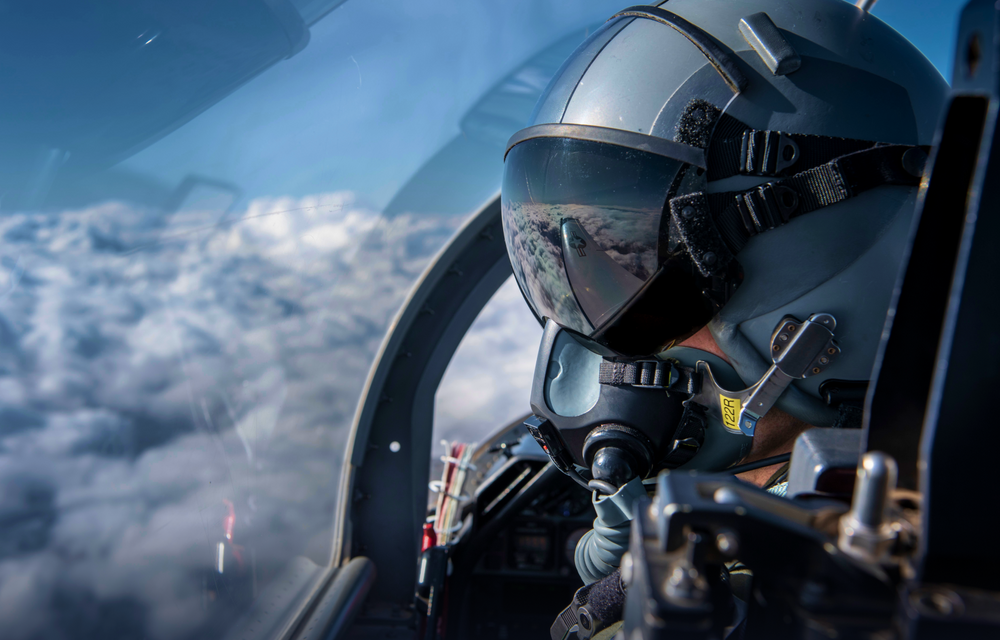
In April, a United States F-15 fighter jet was downed over Iranian territory during ongoing conflicts, with both crew members ultimately rescued. During his subsequent intelligence debrief, the pilot described observing a formation of airborne objects hovering and moving together as if connected, forming a shape likened to a jellyfish. The jet carried a pilot and a weapons systems officer; the pilot was rescued within hours, while the second crew member evaded capture for over a day before being extracted by special forces. This detailed eyewitness account has caused division within the US intelligence community regarding its interpretation. The incident remains officially unexplained, and neither the pilot’s testimony nor intelligence reports have conclusively identified the observed phenomenon.
Key witness descriptions detail a swarm of objects interconnected and moving synchronously, with smaller components positioned beneath larger ones resembling legs. One source described the airspace as filled with what appeared to be a minefield of such craft, while another remarked that the sighting seemed "not of this world." However, the pilot had sustained a concussion from the crash and had previously been shot down during the same conflict in a friendly fire incident, prompting some officials to question the accuracy of his observations under stress. Intelligence experts are considering whether the pilot witnessed an advanced weapon system utilising “one-to-many meshed networking” — technology that enables control of multiple drones moving as a single unit. Although Iran was not known to possess such capability, it is believed Russia and China have developed similar systems and supported Iran’s drone programme. Drone warfare analysts highlight that such swarms, capable of coordinated movement and reserve forces, represent significant strategic threats and require extensive countermeasures. Despite this, there has been no definitive confirmation that the objects involved were drones, leaving the true nature of the formation uncertain.
This case echoes historic patterns linking military operations and sightings of anomalous aerial phenomena. During the Korean War, reports surfaced of glowing objects exhibiting behaviour defying known military technology, with witnesses subsequently silenced by fear of official reprisals. Similarly, in the Vietnam War, patrol crews reported circular glowing crafts and unexplainable explosions near the demilitarised zone. These encounters often share features: trained military personnel observe objects with unconventional movement or abilities, with reports met by scepticism and minimal investigation. The broader context involves ongoing debates around UFO disclosure; recent FBI documents and footage, partially declassified, have revived interest in so-called interdimensional phenomena, as some witnesses prefer that term over extraterrestrial. This adds complexity to differentiating advanced foreign military technology from unidentifiable aerial phenomena. At present, official responses to the April incident remain limited, underscoring the challenges faced by intelligence communities in analysing unexplained encounters within contested airspace.
Source: UFO News