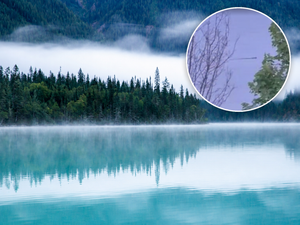

A growing body of scientific research suggests that humanity's long-standing attraction to oceans, rivers and lakes may be rooted in the way water affects the brain itself.
The idea, known as the "Blue Mind" theory, examines evidence that exposure to water can produce measurable psychological and physiological benefits. The concept was originally developed by marine biologist Wallace J. Nichols, who argues that proximity to water promotes a mildly meditative neurological state associated with calmness, creativity and reduced stress.
According to Nichols, humans may be biologically predisposed to respond positively to water because of its importance throughout our evolutionary history. Whether standing beside the ocean, listening to rainfall or watching waves break against a shoreline, the brain appears to shift away from heightened vigilance and toward a more relaxed mode of attention.
Recent neuroscience research provides some support for that view. Studies have shown that natural environments can reduce activity associated with stress and rumination while improving mood, attention and emotional regulation. Water environments in particular appear to produce strong responses, partly because they engage multiple senses simultaneously without overwhelming the brain with information.
Researchers believe this may explain why people frequently describe experiences near water using terms such as peaceful, restorative or transcendent. Unlike the constant sensory demands of urban environments, flowing water provides what psychologists sometimes call "soft fascination" enough stimulation to hold attention without creating mental fatigue.
The phenomenon is not merely subjective. Research has linked time spent in natural blue spaces to lower levels of cortisol, the body's primary stress hormone, improved cardiovascular health and reduced symptoms of anxiety and depression. Studies conducted across Europe and North America have repeatedly found associations between access to coastal or freshwater environments and improved wellbeing.
The concept also overlaps with broader scientific interest in nature's effects on human health. Researchers studying forest environments have identified similar benefits through the Japanese practice of shinrin-yoku, or forest bathing, which has been associated with reduced stress markers and improvements in mood. Water may represent another pathway through which natural environments influence brain function.
Some scientists believe the benefits may extend beyond simple relaxation. Preliminary studies suggest that time spent near water may improve creativity, problem-solving and reflective thinking. The rhythmic and unpredictable nature of waves, currents and rainfall appears to engage the brain differently from highly structured artificial environments, potentially allowing mental processes associated with imagination and insight to emerge more easily.
The neurosurgeon's challenge to the materialist model of consciousness, examined in The Immortal Mind? Neurosurgeon Challenges Materialist View of Consciousness, draws on near-death experience data of the same kind that this new research engages the two pieces are examining the same body of evidence from different disciplinary angles and arriving at conclusions that reinforce rather than contradict each other.
The idea has also attracted interest from researchers studying consciousness, meditation and altered states of awareness. While Blue Mind theory remains firmly grounded in neuroscience rather than spirituality, many of the reported effects overlap with experiences commonly associated with mindfulness practices. Participants frequently describe feelings of timelessness, enhanced presence and reduced internal mental chatter after prolonged exposure to aquatic environments.
Researchers caution that many questions remain unanswered. The exact neurological mechanisms responsible for these effects are still being investigated, and some studies rely heavily on self-reported measures of wellbeing. Nevertheless, the overall direction of the evidence has become increasingly difficult to ignore.
For millions of people, the attraction of coastlines, rivers and lakes has always felt instinctive. Modern neuroscience may now be beginning to explain why.
Source: Popular Mechanics