
A prominent American neurosurgeon has reignited debate over consciousness, death and the possibility of a human soul surviving bodily death after arguing that modern neuroscience cannot fully explain the mind.
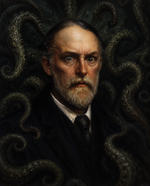
The claims come from Dr. Michael Egnor, a veteran neurosurgeon and professor at Stony Brook University, whose recent work and media appearances have drawn widespread attention across both scientific and paranormal communities. In interviews surrounding his 2025 book The Immortal Mind, Egnor argues that decades of brain surgery convinced him that consciousness cannot be reduced entirely to neural activity.
According to Egnor, certain neurological phenomena appear difficult to reconcile with strict materialist explanations of consciousness. Among the cases he highlights are split-brain patients, individuals with severe brain abnormalities who nevertheless retain awareness and personality, and reports of near-death experiences occurring during periods of minimal measurable brain activity.
Egnor argues that while the brain clearly mediates sensory input, movement and emotion, it may function more as an interface than as the ultimate source of consciousness itself. In public interviews, he has repeatedly suggested that abstract reasoning, free will and self-awareness cannot yet be fully localised within the brain in the way speech or motor functions can.
The claims have drawn sharp criticism from mainstream neuroscientists, many of whom argue that Egnor is selectively interpreting data in order to support theological conclusions. Neuroscientists interviewed by Popular Mechanics accused him of misrepresenting established split-brain research and overstating anomalies involving rare neurological disorders.
Professor Bill Newsome of Stanford University stated that materialism remains the operational foundation of modern neuroscience because science can only investigate measurable physical processes. Yale neurologist Steven Novella reportedly described Egnor’s approach as pseudoscientific, arguing that unexplained neurological phenomena should not automatically be treated as evidence for supernatural explanations.
Despite this criticism, the broader debate surrounding consciousness and survival after death has expanded considerably in recent years. Scientific interest in near-death experiences has increased following studies documenting unexpected bursts of organised brain activity shortly after clinical death. Researchers monitoring dying patients have recorded short periods of high-frequency gamma activity associated with conscious awareness even after the cessation of heartbeat and measurable circulation.
Some researchers believe these surges may simply represent the brain shutting down under extreme stress. Others, including anaesthesiologist Dr. Stuart Hameroff, have speculated that they may point toward poorly understood aspects of consciousness that current neuroscience cannot yet explain.
The question the neurosurgeon is raising whether consciousness survives or transcends the physical brain is the organising question of Phenomena of the Self: Five Investigations Into Consciousness, Identity and the Double, a Stranger Times case file that examines five documented phenomena (crisis apparitions, bilocation, out-of-body experiences, doppelgangers, and the Vardoger) that all imply the same answer.
Near-death experiences themselves remain one of the most controversial areas of consciousness research. Thousands of patients across multiple countries have reported remarkably consistent experiences following cardiac arrest or severe trauma: sensations of leaving the body, moving through darkness toward light, encounters with deceased relatives, panoramic life reviews and overwhelming feelings of peace. Some accounts also include apparently verifiable observations made while patients were clinically unconscious.
Researchers such as psychiatrist Dr. Bruce Greyson and neurosurgeon Dr. Eben Alexander have argued that these experiences challenge conventional assumptions that consciousness is produced entirely by brain activity.
Sceptics counter that near-death experiences can be explained through oxygen deprivation, temporal lobe activity, neurochemical release and the disintegration of sensory processing during trauma. Neurological models have linked common NDE features, including tunnel vision, out-of-body sensations and encounters with light, to known brain states associated with extreme physiological stress.
Yet despite decades of research, no single explanation has achieved universal acceptance. The result is that consciousness remains one of the few scientific questions where neurology, philosophy, religion and anomalous experience continue to collide without resolution.
Source: Popular Mechanics