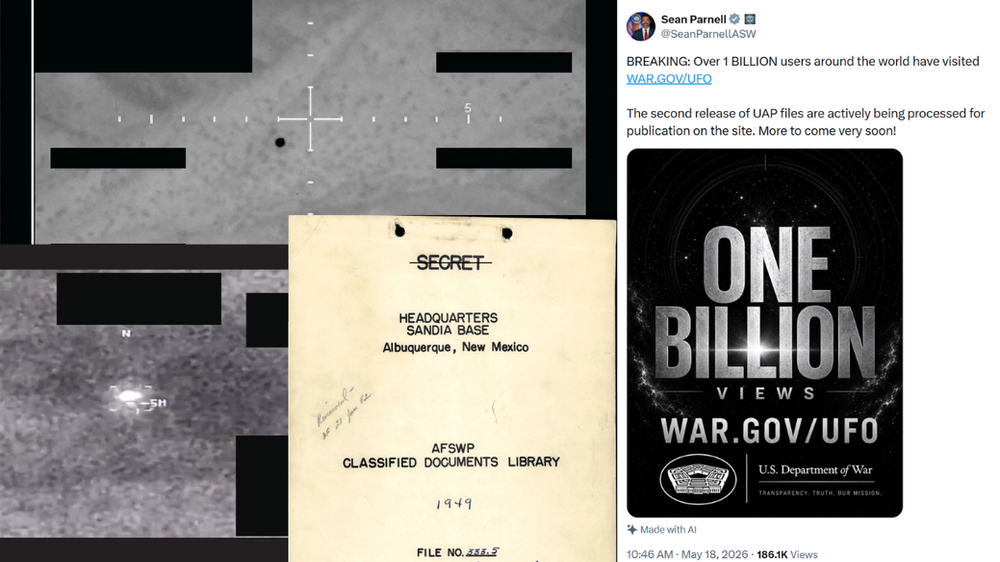
This week, the US Department of War’s official Unidentified Aerial Phenomena (UAP) webpage reached an unprecedented milestone, surpassing one billion views. The site, which hosts government documents and official reports relating to UAP sightings and investigations, has garnered global public engagement on a scale rarely seen for a military-affiliated portal. Journalist Ross Coulthart confirmed the figure during a recent broadcast, highlighting the widespread interest in government-acknowledged information about possible non-human intelligences and unexplained aerial objects.
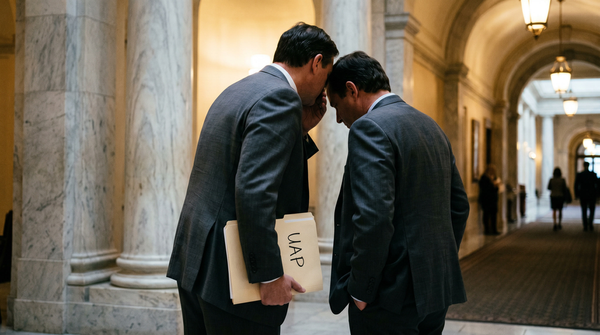
The milestone follows the release of new UAP files through war.gov, part of an ongoing transparency initiative. However, this wave of disclosure has also brought internal controversy, with Congressman Tim Burchett warning that some of the latest materials appear deliberately misleading, containing easily debunked sightings aimed at diluting public interest. Burchett emphasised that resistance to disclosure is not from former President Trump, who he credited with supporting transparency.
Key details from the new UAP files have sparked debate among experts and officials. Journalist and former Defence Department official Marik von Rennenkampff pointed to two particularly striking cases included in the release. One showed infrared imagery of spherical objects manoeuvring behind clouds, suggesting advanced manoeuvrability and apparent cloaking capabilities.
Another involved senior intelligence officers aboard a low-flying helicopter over a western US testing range witnessing bright reddish-orange orbs in a precise T-shaped formation. These reports were supported by infrared sensor data, lending credibility to the encounters. Meanwhile, Lue Elizondo, former director of the Pentagon’s Advanced Aerospace Threat Identification Program (AATIP), disclosed on a podcast conversations about a longstanding hybridisation programme between humans and non-human intelligences dating back to the 1950s. Such claims, echoed by other former officials such as Congressman Matt Gaetz, point to complexities beyond conventional UAP research. Despite the release’s impact, concerns about deliberate disinformation and contradictory narratives underscore ongoing internal disagreements about how and when the truth should emerge.
The ongoing UAP disclosures fit within a broader context of growing public and official engagement with aerial phenomena previously dismissed by military authorities. Since the inception of AATIP and similar programs, the US government has increasingly acknowledged the need to treat UAP seriously as potential threats or technological puzzles. The release of classified materials represents a cautious step towards transparency in an area shaped by decades of secrecy.
The dates 2027 and 2034 have entered Pentagon discussions as potential milestones for fuller disclosure, with statements from intelligence veterans suggesting these years may hold significance for revealing non-human intelligence evidence to the public. Colonel Karl Nell’s presentations envision a phased approach, culminating around 2030 with long-term developments extending beyond. Regional interest is also notable, as many recent UAP sightings have occurred over military testing ranges in the western United States, a known hotspot for experimental aviation and electronic sensor activity. Overall, the billion-view milestone on war.gov marks a turning point in public access to government UAP data, even as internal debates continue over disclosure strategy and the phenomenon’s true nature.
Source: UFO News