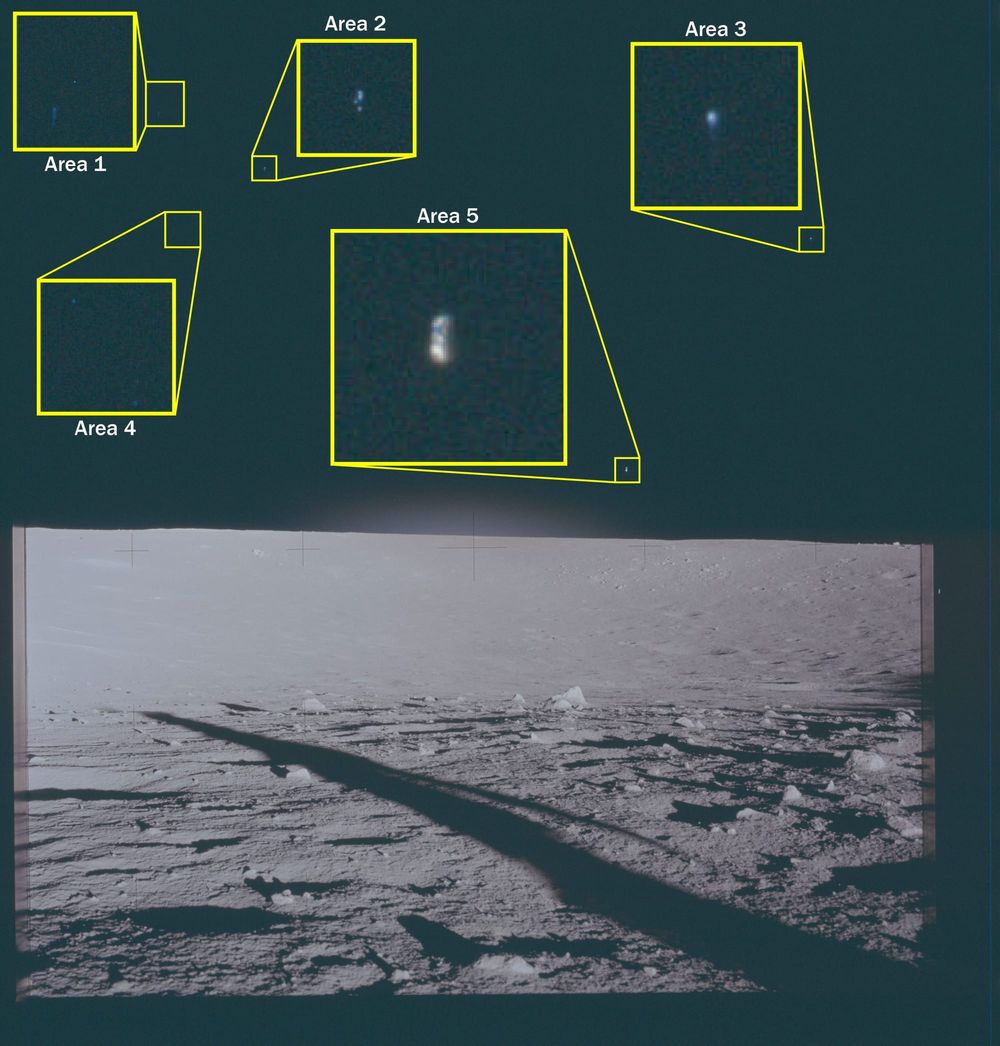
A recent release of declassified photographs from the Department of War and NASA archives provides compelling visual documentation of unidentified objects both in terrestrial military environments and on the lunar surface. The Department of War images, dating from the mid-20th century, consist primarily of monochrome photographs featuring crosshair reticles centered on dark, circular, or irregular objects against grainy or mottled backgrounds. Meanwhile, archival Apollo mission photographs from 1969 and 1972 depict the lunar surface with multiple highlighted areas containing unexplained phenomena, including clusters of small dots arranged in geometric patterns. These images were captured during NASA’s Apollo 12 and 17 missions, viewed from the lunar landing sites. The release includes a total of fourteen images encompassing both military reconnaissance and extraterrestrial contexts.
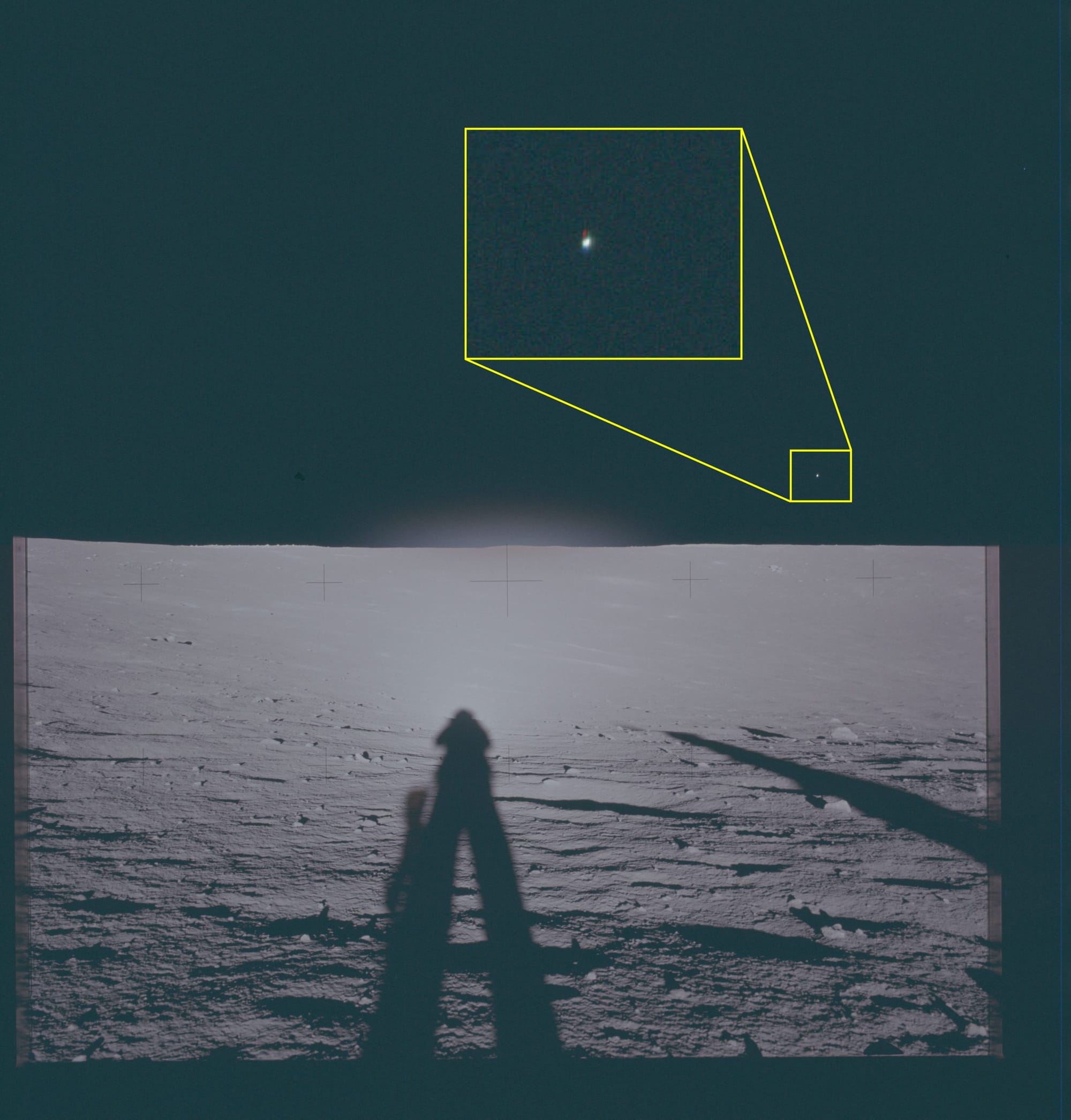
The Department of War images often show small dark shapes located near the centre or off to the side of the crosshair, rendered against varying grainy or speckled textures. Some photographs, such as those labelled A007, show lighter objects with bright specular highlights, suggesting reflective surfaces or illumination. Despite the clarity of the reticules, the objects remain unidentified due to the lack of additional contextual data such as accompanying mission reports or technical analysis.
In contrast, the Apollo lunar images highlight several specified “areas of interest” above the horizon line, exhibiting small dots or circular formations that were not documented or explained by NASA at the time. One lunar photograph from Apollo 17 uniquely shows three dots arranged in a triangle in the sky segment, hinting at possible unidentified aerial phenomena or instrumentation artefacts. While these images have generated interest, their significance is tempered by the absence of corroborative eyewitness reports or sensor data, leaving room for interpretation as either anomalies from the photographic process or genuine unexplained sightings.
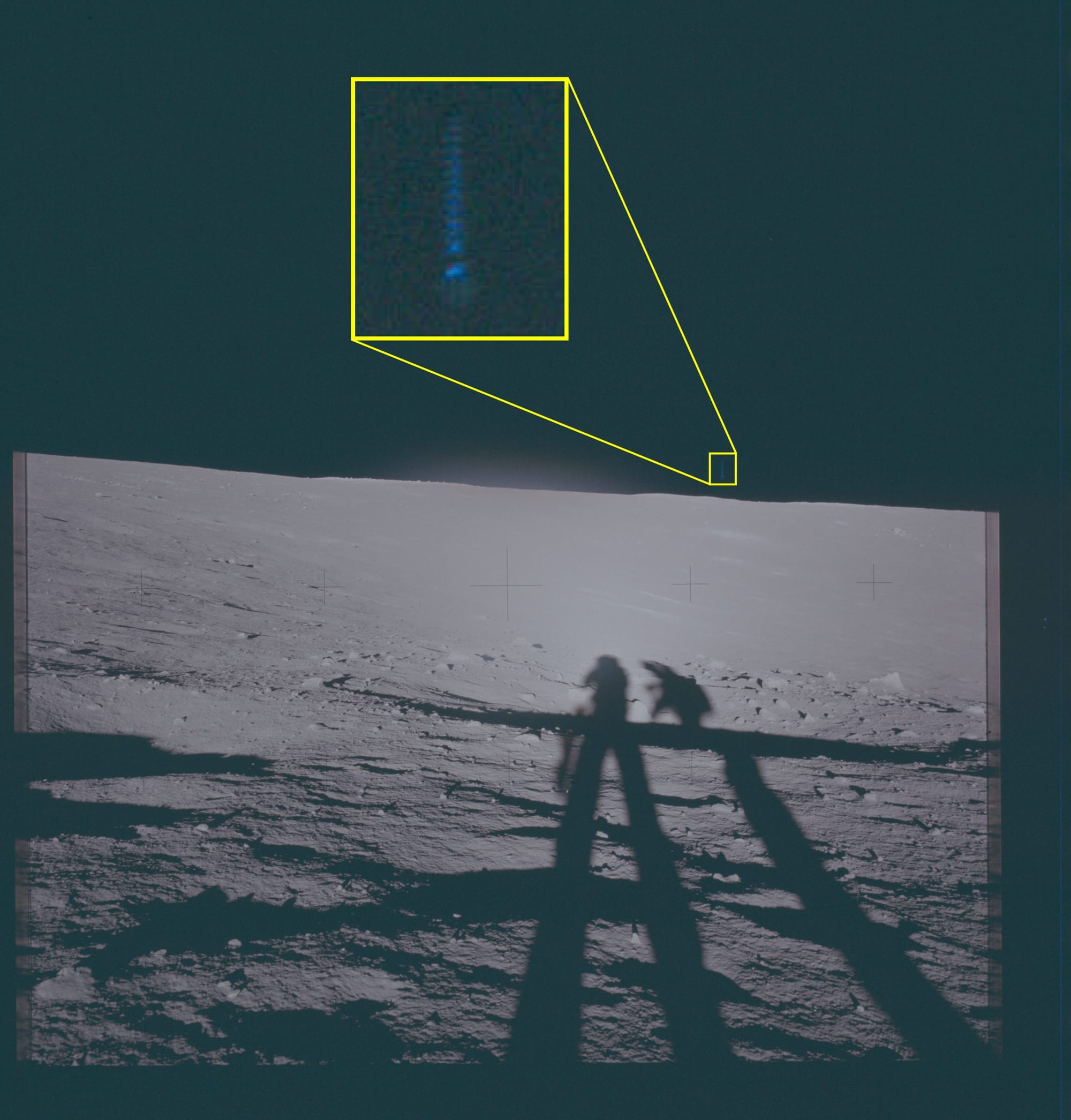
Such imagery unfolds within broader historical and scientific contexts involving military and space reconnaissance. During the Cold War, the Department of War and allied agencies frequently engaged in aerial and satellite surveillance where unidentified objects were sometimes spotted but often remained classified or unexplained to the public. The photographic technique of using crosshair reticules is consistent with targeting and observation protocols for tracking airborne or spaceborne objects. Meanwhile, the Apollo missions marked key milestones in manned lunar exploration during which NASA’s photographic archives occasionally captured anomalies that sparked debate among ufologists and aerospace experts.
The Moon has been generating anomalous evidence for considerably longer than the archive images suggest The Moon's Mysterious Composition Fuels Speculation of Artificial Origin examines the compositional irregularities that led serious researchers to propose the Moon may not be a natural formation at all, a hypothesis the newly released archive material does nothing to resolve.
These images align with known categories of unexplained aerial phenomena (UAP) detected by military and civilian sources worldwide, supporting ongoing discussions about the presence of unknown objects in controlled airspace and extraterrestrial environments. The newly released images invite renewed scrutiny by researchers aiming to clarify the nature of these persistent visual anomalies with rigorous analysis informed by advances in imaging technology and historical intelligence context.
Source: MUFON