Congressman Eric Burlison has publicly criticised the US government’s handling of UFO disclosures, asserting that the material released so far is largely unremarkable and already in the public domain. Burlison noted that most files made available involve mundane explanations such as balloons or atmospheric phenomena and do not contain the more compelling evidence reportedly held back. He revealed that much of the classified information is in the possession of private contractors and federally funded research centres like MIT Lincoln Laboratory, RAND, and MITRE, beyond the reach of Congressional public records requests. Burlison described witnessing footage of glowing orbs and plasma-like spheres exhibiting seemingly intelligent movement, hovering without visible propulsion and capable of sudden acceleration. Despite this, he cautions that even these sightings do not constitute conclusive proof of extraterrestrial origin. Efforts are ongoing to encourage the release of more substantive material.
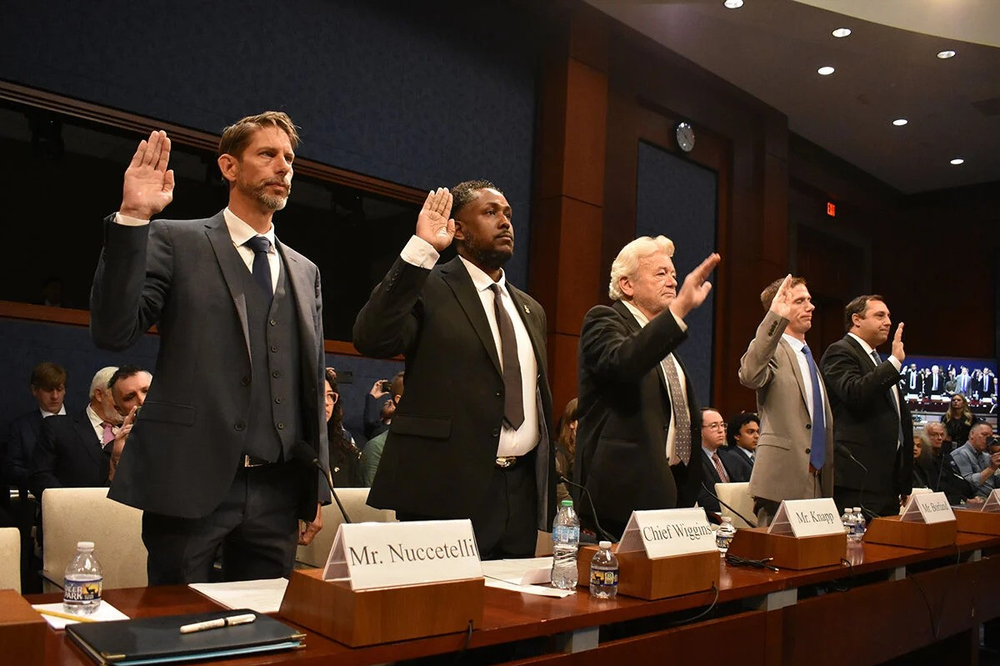
Parallel to Burlison’s statements, whistleblower testimonies presented during a recent panel also highlight the profound personal risks faced by those who disclose sensitive UFO information. Former intelligence contractor Matthew Brown described stumbling upon a secret UAP programme termed the ‘Immaculate Constellation’ while working on a classified server, subsequently reporting it to Congress in confidence. Brown alleged that his home was ransacked during a nighttime break-in in which only his late grandfather’s ashes, from a World War II Navy veteran, were taken, which he interprets as an intimidation tactic.
Similarly, active-duty sailor Senior Chief Alexandro Wiggins, who captured video of the iconic Tic Tac shaped UAPs over Southern California, reports pressure from the All-domain Anomaly Resolution Office (AARO) even after refusing further questioning. Investigative journalists George Knapp and Jeremy Corbell described these efforts alongside attempts to discredit other whistleblowers through fabricated evidence, underscoring the hostile environment surrounding disclosure. In response, Brown and fellow whistleblower Borland have established a nonprofit group called Vanguard to support those coming forward.
The institutional resistance documented here has already failed to prevent at least one significant disclosure a White House-backed visit to a Naval Air Station confirmed the existence of a hangar linked to UAP materials, in circumstances examined in White House-Backed Visit Confirms Hangar at Naval Air Station Linked to UFO Materials, where the confirmation came only after considerable pressure from outside the normal chain of command.
These developments occur against a broader backdrop where UFO research has transitioned from fringe intrigue to a subject of official inquiry and Congressional hearings. The US government has formally acknowledged UAPs (Unidentified Aerial Phenomena) as a legitimate phenomenon requiring investigation, distinct from previous dismissive attitudes. However, the retention of critical evidence within private and research institutions complicates transparency efforts and fuels suspicion regarding the government’s true knowledge and intentions.
The reported advanced behaviour of certain UAPs—such as hovering without conventional propulsion and instant acceleration—aligns with previously documented patterns that defy current aerospace capabilities, raising questions about their origin and purpose. Regional folklore and prior episodes of whistleblower backlash further indicate a culture of secrecy and intimidation that continues to impact credible reporting from insiders. As legislative efforts press on to secure fuller disclosure, the situation highlights the enduring tension between national security concerns and the public’s right to know.
Source: UFO News