A controversial theory suggesting that Chinese explorers may have reached North America thousands of years before Christopher Columbus has resurfaced following renewed attention to archaeological discoveries in eastern China.
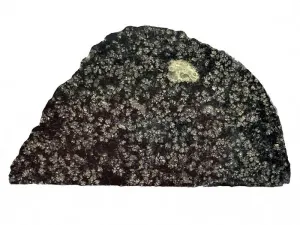
At the centre of the debate is a collection of stone anchors recovered from the waters around the Zhoushan Archipelago, south of Shanghai. Researchers studying the artefacts argue that some may date back as far as 3,000 years, potentially indicating a far more sophisticated maritime capability than traditionally attributed to ancient Chinese societies of the period.
The claim has generated interest because it touches on one of history's most enduring questions: how early did humans establish long-distance oceanic contact between continents?
According to researchers involved in the study, the anchors demonstrate that ancient Chinese seafarers were capable of navigating substantial distances along complex coastal routes. Some proponents of the theory argue that if such vessels existed, voyages extending beyond East Asia may have been possible much earlier than previously believed.
However, the leap from advanced coastal navigation to trans-Pacific exploration remains highly contentious.
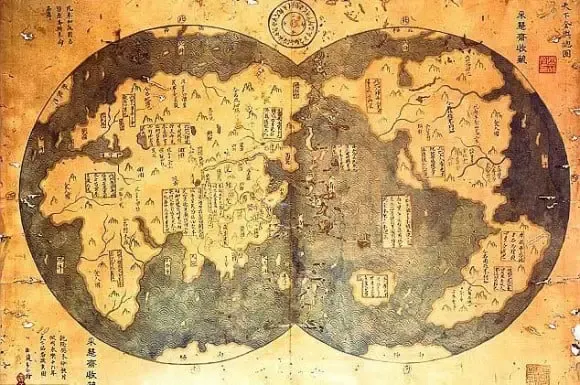
The idea that Chinese explorers reached the Americas before Columbus is not new. It gained widespread attention in 2002 following the publication of Gavin Menzies' book 1421: The Year China Discovered America. Menzies argued that fleets commanded by the Ming admiral Zheng He circumnavigated the globe decades before European explorers crossed the Atlantic.
While the book became an international bestseller, its conclusions were rejected by most professional historians and archaeologists, who noted the absence of convincing archaeological, genetic or documentary evidence linking Chinese fleets to pre-Columbian America.
The latest discussion differs in one important respect. The Chinese anchors themselves are genuine archaeological finds rather than speculative interpretations of historical texts. The question is not whether the artefacts exist, but what they reveal about the maritime capabilities of the people who made them.
Most mainstream scholars view the discoveries as evidence of increasingly sophisticated seafaring along the Chinese coast rather than proof of transoceanic exploration. Ancient China possessed a long maritime tradition, with extensive trade networks developing across East and Southeast Asia centuries before European powers entered the region.
Yet the broader question of pre-Columbian contact remains surprisingly open.
Over the past several decades, archaeologists have accumulated evidence demonstrating that long-distance voyages occurred far earlier than once believed. The Polynesian settlement of remote Pacific islands, Viking exploration of Newfoundland around AD 1000, and evidence of contact between Polynesians and South America before European arrival have all forced historians to reconsider assumptions about the limitations of ancient navigation.
These discoveries have encouraged some researchers to ask whether other forgotten voyages may have occurred, leaving traces too fragmentary to be easily recognised today.
The debate also intersects with a growing body of evidence showing that human migration and exploration were often more complex than traditional historical narratives suggest. Ancient mariners crossed thousands of miles of open ocean without modern instruments, using stars, currents, wind patterns and accumulated navigational knowledge passed down through generations.
The Columbus feature at Did Columbus Already Know? The Knights Templar, the Secret Maps, and the World Before 1492 maps the wider tradition of pre-Columbian contact evidence the Templar maps, the Vinland sagas, the anomalous artefacts — that the Chinese sailor research now extends eastward, suggesting that the Americas were not so much discovered as repeatedly visited by civilisations that the official historical record has collectively declined to acknowledge.
That does not mean Chinese sailors reached America three thousand years ago. At present, no accepted archaeological evidence demonstrates such a voyage. No confirmed Chinese artefacts from that period have been found in North America, nor have researchers identified genetic or cultural signatures that would establish direct contact.
Nevertheless, the discovery of ancient anchors and other maritime artefacts continues to reshape understanding of early seafaring in East Asia. While they fall far short of proving that China discovered America before Columbus, they serve as a reminder that the oceans may have connected ancient cultures far more extensively than historians once imagined.
For now, the evidence supports a more cautious conclusion: ancient Chinese sailors were likely more capable and adventurous than many older histories acknowledged. Whether any of them reached the shores of the Americas remains an open question awaiting stronger evidence.
Source Ancient Code