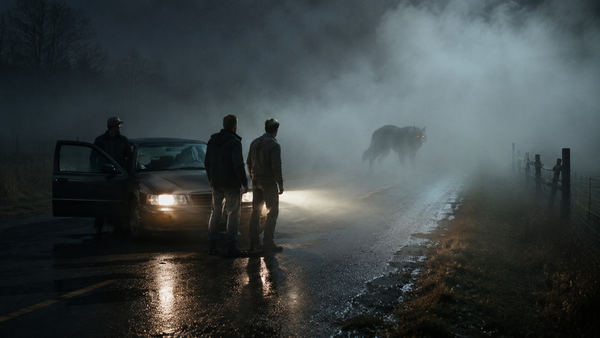
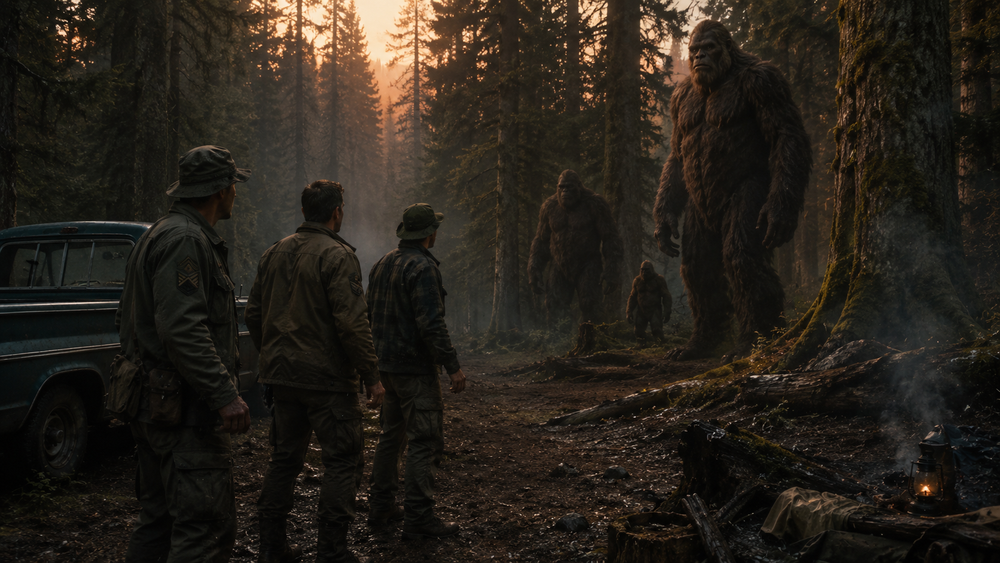
In 2004, two Vietnam veterans were returning to Estacada, Oregon, following a Veterans Affairs appointment in Portland when they took an alternative route through the Cascade foothills. During this journey, they purportedly witnessed a family group of Sasquatch at close range. The encounter reportedly occurred in a densely wooded area, adding difficulty to clear visual confirmation, yet the witnesses claim the experience was vivid and undeniable. Both men, experienced outdoorsmen, described the creatures as large, covered in hair, and moving with an unusual gait. This sighting has since attracted attention due to the credibility of the witnesses and the specificity of the locale. The event remains one of the most detailed Bigfoot encounters in the Oregon region.
The two veterans provided consistent descriptions of the Sasquatch group, citing at least two adults and a juvenile, which aligns with other reported familial group sightings rather than solitary creatures. They reported the creatures appeared curious but non-aggressive, observing the men from a short distance before retreating into the underbrush. Photographic evidence was not obtained, a common limitation in Sasquatch cases, but the men’s military backgrounds and detailed account lend weight to their report. The location itself, the Cascade foothills, is a known hotspot for Bigfoot sightings, featuring extensive old-growth forest ideal for such cryptids. Some sceptics suggest the possibility of misidentification of known wildlife, such as bears, yet the witnesses insist the proportions and behaviour differed significantly. Importantly, the report occurred at a time when interest in Bigfoot research was undergoing a resurgence, contributing to the ongoing dialogue concerning the creature’s existence.
Sasquatch, or Bigfoot, sightings in the Pacific Northwest have a long history, deeply intertwined with indigenous folklore and contemporary cryptozoology. The region’s environment characterised by vast forests, rugged terrain, and limited human presence in certain areas supports the plausibility of a large unknown primate persisting. Sightings frequently involve family groups, which some researchers interpret as indicative of a social species rather than solitary individuals.
Oregon's Union Creek produced a strikingly similar close-range encounter documented in Father and Son Encounter Mysterious Gray, Furry Humanoids Near Union Creek, Oregon where two witnesses observed the animals at a distance that made misidentification effectively impossible, in the same densely forested Pacific Northwest terrain that has consistently generated the most credible large-humanoid reports in the North American
The 2004 Estacada case fits the broader pattern of reports from Oregon and Washington, which include both eyewitness testimonies and physical footprint evidence. Military veterans, due to their observational skills and discipline, often lend credibility to such encounters when they come forward, contrasting with more anecdotal civilian accounts. While definitive proof remains elusive, encounters like this contribute valuable data for ongoing field investigations, highlighting the need for continued scrutiny of atmospheric and environmental conditions alongside witness reliability.
No independent documentation has yet surfaced to corroborate the account beyond its circulation within Sasquatch research and paranormal media communities. As with many wilderness encounter narratives, the report exists primarily as witness testimony rather than as a verifiable historical incident.
Source: Phantoms and Monsters