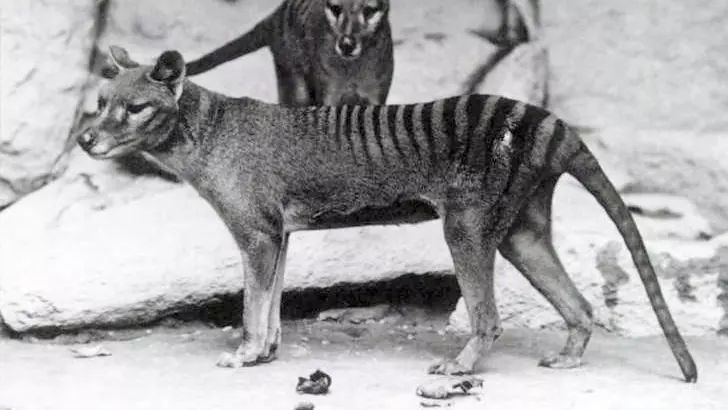
In the late 20th century, media magnate Ted Turner sparked renewed interest in the existence of the Tasmanian tiger, or thylacine, a carnivorous marsupial declared extinct in 1936. Turner, who owns vast tracts of land in Tasmania, reportedly claimed to have encountered evidence suggesting the creature might still survive in the wild. These claims emerged around the 1990s and early 2000s during Turner's conservation efforts on his Tasmanian properties. Multiple sightings of thylacine-like animals have been reported across Tasmania, particularly in remote forested and mountainous regions. Despite no confirmed photographic proof since the 1930s, local enthusiasts and some naturalists have maintained belief in the species’ persistence. Turner's high-profile involvement lent some legitimacy to these anecdotal accounts, contributing to ongoing searches and scientific interest. The thylacine remains one of the most compelling lost species in modern Australian natural history.
Key details from various reports include alleged sightings by bushwalkers, hunters, and conservationists describing a dog-sized animal with distinctive striped markings on its lower back. Some eyewitnesses provide consistent descriptions matching the known physical traits of the thylacine: large head, stiff tail, and a stiff-legged gait. However, efforts to secure undeniable evidence such as clear photographs or biological samples have repeatedly failed. Camera traps, which became increasingly used in recent decades, have captured many unknown creatures but none conclusively identified as thylacines. Critics argue that many sightings could be misidentifications of other native wildlife, such as quolls or feral dogs. The difficulty in verifying the animal’s existence is compounded by the rugged Tasmanian terrain and sparse human population, which limits systematic surveys. Despite lack of conclusive proof, interest persists partly due to the historical significance of the thylacine and the possibility of rediscovering an extinct species.
Contextually, the Tasmanian tiger holds a unique place in Australian fauna as the largest known carnivorous marsupial of modern times. Native to Tasmania and formerly mainland Australia and New Guinea, it was driven to extinction primarily by hunting, habitat destruction, and competition with introduced species like dingoes. The thylacine’s extinction is often cited in environmental discussions as a cautionary example of human impact on native wildlife. The species’ apparent disappearance in the early 20th century preceded the widespread adoption of conservation legislation, making it emblematic of lost opportunities for species protection. In the realm of cryptozoology, the thylacine remains perhaps the most famous “Lazarus species” candidate—those believed extinct but possibly still extant. Continued sightings, while unconfirmed, keep the thylacine relevant in discussions of survival possibilities for other supposedly extinct animals worldwide. As such, Turner’s claims and the ongoing mystery inspire further research, highlighting challenges in distinguishing folklore from scientific evidence in wildlife studies.
Source: Coast to Coast